How Businesses Use AI to Increase Sales: Effective Methods
Published: 26 Dec 2025
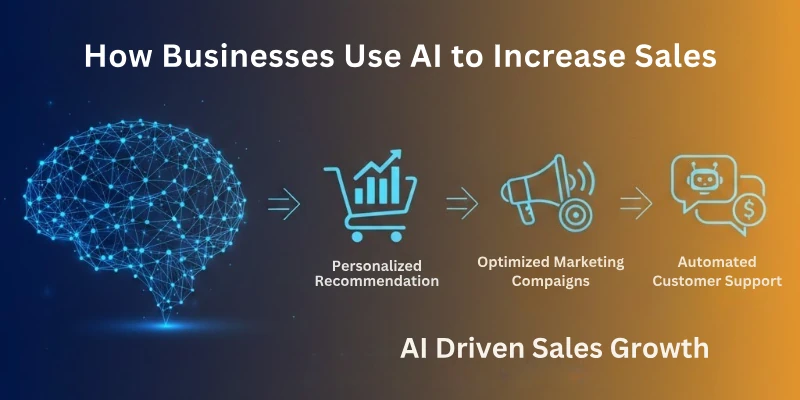
Businesses want to increase revenue and attract more customers. Artificial intelligence helps them understand customer behavior, optimize sales strategies, and improve marketing. This guide explains how businesses use AI to increase sales with practical strategies and tools to get better results.
But before heading that direction, you need to understand the role of AI in sales.
Understanding AI in Sales
AI allows businesses to process large amounts of data and make decisions faster. It identifies trends in customer behavior and sales patterns.
- Analyze customer data to identify trends
- Forecast demand and product popularity
- Improve pricing, marketing, and sales strategies
Tools:
- Salesforce Einstein: for sales predictions and insights
- HubSpot AI: for customer data analysis and automation
- Zoho CRM AI: for lead scoring and trend analysis
AI helps teams focus on high-value strategies and make informed decisions.
Personalizing Customer Experience
AI allows businesses to give every customer a unique experience. It studies browsing history, past purchases, and interactions to create personalized offers.
- Send targeted emails based on customer preferences
- Recommend products on websites or apps
- Offer personalized discounts or loyalty rewards
Tools
The major AI tools used in this are:
- Dynamic Yield – for website personalization and product recommendations
- Mailchimp – for AI-driven email marketing
- Segment – for customer behavior tracking and segmentation
Personalized experiences increase sales and create customer loyalty.
Using Predictive Analytics
Predictive analytics lets businesses forecast future customer behavior. Companies can plan inventory, promotions, and marketing campaigns efficiently.
- Predict products customers are likely to buy
- Identify high-value customers before they make a purchase
- Plan marketing campaigns based on data trends
Tools
The major AI tools used in this are:
- IBM Watson Analytics – for predictive modeling
- SAS Advanced Analytics – for customer insights
- Microsoft Azure Machine Learning – for sales forecasting
Predictive analytics allows businesses to act proactively and maximize sales.
Automating Sales Processes
Automation saves time and improves efficiency. AI can handle repetitive tasks so sales teams can focus on closing deals.
- Score leads automatically based on purchase probability
- Schedule follow-ups and reminders
- Update CRM records in real-time
Tools
The major AI tools used in this are:
- Pipedrive – for AI-powered sales automation
- Salesforce Flow – for automated workflows
- Freshsales – for lead tracking and automated follow-ups
Automation ensures no leads are missed and boosts overall sales performance.
Enhancing Customer Support with Chatbots
Chatbots provide instant customer support and guide buyers through the sales process.
- Respond to customer queries 24/7
- Help customers choose products or services
- Gather customer data for improving services
Tools
The major AI tools used in this are:
- Intercom – for chatbots and customer engagement
- Drift – for AI-driven customer conversations
- Tidio – for live chat and automated responses
Quick responses from chatbots increase customer satisfaction and conversion rates.
Improving Lead Generation
AI helps identify leads that are most likely to convert. Businesses can focus resources on high-potential customers.
- Analyze customer behavior and engagement
- Identify leads with the highest purchase probability
- Reduce marketing costs while improving conversion
Tools
The major AI tools used in this are:
- LinkedIn Sales Navigator – for targeted lead identification
- Leadfeeder – for tracking potential customers visiting websites
- ZoomInfo – for AI-driven lead intelligence
Targeted lead generation increases the chances of closing deals and growing revenue.
Optimizing Pricing Strategies
AI helps businesses set competitive prices and maximize revenue. It analyzes demand, competition, and market trends.
- Adjust prices dynamically based on demand
- Offer discounts for specific segments
- Increase revenue without losing customers
Tools
The major AI tools used in this are:
- Prisync – for competitor price tracking
- Wiser Solutions – for dynamic pricing and analytics
- Omnia Retail – for AI pricing optimization
Smart pricing attracts customers and improves profits.
Analyzing Customer Feedback
AI studies customer reviews, surveys, and social media to identify trends in satisfaction.
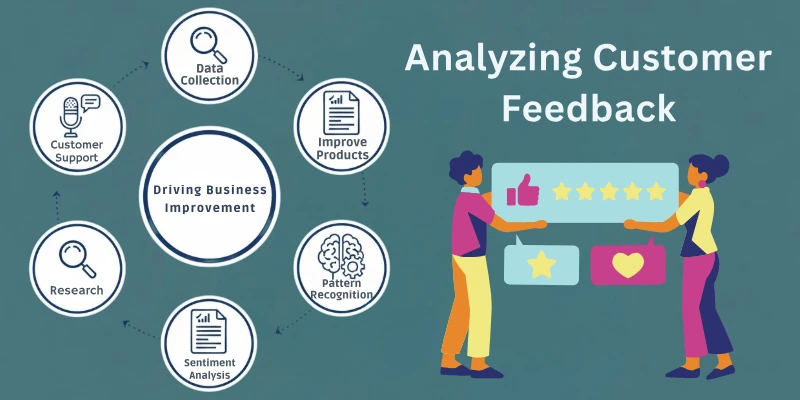
- Understand what customers like or dislike
- Improve products and services based on feedback
- Plan campaigns to encourage repeat purchases
Tools
The major AI tools used in this are:
- MonkeyLearn – for sentiment analysis
- Clarabridge – for customer experience insights
- Sprinklr – for social media and feedback monitoring
Listening to customers helps businesses improve offerings and increase sales.
Tracking Sales Performance
AI tracks sales performance in real time. Businesses can measure campaigns, products, and team performance.
- Monitor which products sell best
- Analyze marketing campaign results
- Make quick adjustments to meet sales targets
Tools
The major AI tools used in this are:
- Tableau – for sales dashboards and visualization
- Looker – for performance tracking
- Google Analytics 4 – for web-based sales tracking
Real-time tracking ensures continuous improvement and higher revenue.
Advantages & Disadvantages of Using AI in Increasing Business Sales
Here are the benefits and limitations of using smart tools in increasing your business sales:
Advantages of Using AI in Increasing Business Sales
Here are the main advantages of using AI in business sales:
- AI improves customer targeting and personalization to boost sales effectively.
- AI automates repetitive sales tasks, saving time and increasing efficiency.
- AI quickly analyzes large amounts of data to support better decisions.
- AI forecasts demand and predicts customer behavior for smarter planning.
- AI optimizes pricing strategies to maximize revenue and profits.
- AI enhances customer support using chatbots for faster responses.
- AI identifies high-potential leads for better conversion rates.
- AI tracks and monitors sales performance in real-time for instant insights.
Disadvantages of Using AI in Increasing Business Sales
Here are the main disadvantages of using AI in business sales:
- AI tools and software often come with a high initial cost for businesses.
- Implementing AI requires technical expertise to manage effectively.
- AI may reduce human interaction with customers, affecting relationships.
- AI can make errors if the data it uses is inaccurate or incomplete.
- Over-reliance on AI may reduce creativity in sales strategies.
- AI can raise privacy concerns when handling sensitive customer data.
- AI may not capture emotional or complex aspects of customer behavior.
Final Note
In this guide, we have covered how businesses use AI to increase sales, including personalization, predictive analytics, sales automation, chatbots, lead generation, pricing strategies, and customer feedback analysis. Using the right tools can help businesses optimize every step of the sales process and improve revenue.
Personally, I recommend starting with AI tools for personalization and lead generation, as these provide quick results and build a strong foundation for long-term growth.
FAQs
Here are some of the most commonly asked questions related to how to use AI tools for increasing business sales:
AI in sales uses technology to analyze customer data, predict behavior, and automate tasks. It helps businesses improve marketing, target the right audience, and increase revenue. AI makes sales processes faster and more efficient.
AI identifies leads that are most likely to buy. It analyzes customer behavior, engagement, and interests. This allows sales teams to focus on high-potential leads and increase conversions.
Yes, AI can create personalized campaigns for each customer. It studies past purchases and browsing activity to suggest relevant products. Personalized marketing improves engagement and boosts sales.
Tools like Salesforce, HubSpot, and Tableau track sales data and performance in real-time. They show which products and campaigns perform best. Businesses can adjust strategies quickly to improve results.
AI analyzes customer demand, market trends, and competitors to suggest optimal prices. Dynamic pricing attracts more customers and maximizes profits. Businesses can respond to market changes faster.
Yes, chatbots provide instant support and guide customers to make purchases. They answer questions, recommend products, and collect customer data. This improves satisfaction and increases conversions.
AI can benefit small businesses by automating tasks and improving marketing. Affordable tools like Zoho CRM or Mailchimp can help even with limited budgets. Small businesses can increase sales and save time using AI.





- Be Respectful
- Stay Relevant
- Stay Positive
- True Feedback
- Encourage Discussion
- Avoid Spamming
- No Fake News
- Don't Copy-Paste
- No Personal Attacks
- Be Respectful
- Stay Relevant
- Stay Positive
- True Feedback
- Encourage Discussion
- Avoid Spamming
- No Fake News
- Don't Copy-Paste
- No Personal Attacks
