AI in E-commerce – Applications of AI in Online Shopping
Published: 26 Dec 2025
Artificial Intelligence (AI) is changing how people shop online. From product recommendations to customer service, AI is making e-commerce faster, smarter, and more personalized.
Today, almost every major online store uses AI to improve user experience, boost sales, and understand customer behavior.
In this detailed guide, we’ll explore AI in e-commerce and online shopping, its main benefits, real-life examples, and the future of AI in this fast-growing industry.
What is AI in E-commerce?
AI in e-commerce means using artificial intelligence technologies to make online shopping smarter and more efficient. It helps online stores learn from customer data, predict what shoppers want, and offer them personalized experiences.
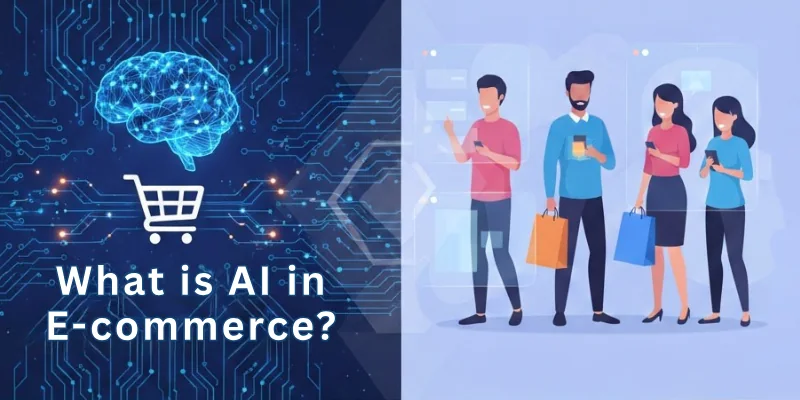
AI doesn’t just make shopping easy, it also helps businesses increase profits, manage inventory, and improve marketing.
1. AI Improves Product Recommendations
AI uses data from your past searches, clicks, and purchases to suggest what you might like next. These AI-powered recommendation engines analyze your behavior and recommend similar or related products.
How it Helps:
- Shoppers find what they want quickly.
- Stores increase sales with smart recommendations.
- AI learns from each visit to make future suggestions better.
Example: Amazon and Netflix use AI algorithms to recommend products or shows that match your interests.
2. AI Chatbots and Virtual Shopping Assistants
AI chatbots are now replacing human support in many online stores. They help customers find products, track orders, and get answers instantly.
How it Helps:
- Works 24/7 without breaks.
- Reduces customer waiting time.
- Handles multiple queries at once.
- Makes online shopping more interactive and fun.
Example: Sephora’s AI chatbot helps users find makeup products that match their skin tone and budget.
3. AI in Personalized Shopping Experience
Every shopper is different. AI studies customer data, like browsing history, age, and interests, to create a personalized online shopping experience.
How it Helps:
- Shows customized homepages and offers.
- Suggests items based on behavior and trends.
- Improves customer satisfaction and repeat purchases.
Example: eBay and Shopify use AI to personalize product feeds for each customer.
4. AI in E-commerce Marketing and Advertising
AI has become the heart of digital marketing. It helps businesses target the right audience and spend their ad budget smartly.
How it Helps:
- AI studies customer behavior to show relevant ads.
- It predicts which users are most likely to buy.
- AI tools like Google Ads and Meta Ads use AI to optimize ad performance.
Example: Coca-Cola uses AI-powered marketing tools to create and test ad campaigns that match customer emotions and preferences.
5. AI in Inventory and Supply Chain Management
AI not only helps with sales but also keeps e-commerce operations smooth. It predicts how much stock is needed and when.
How it Helps:
- Prevents overstocking or understocking.
- Analyzes sales trends and predicts demand.
- Reduces delivery delays and waste.
- Helps companies plan shipments smartly.
Example: Walmart uses AI to forecast demand and manage stock levels across thousands of stores.
6. AI in Dynamic Pricing
AI changes prices in real time based on market demand, competitor pricing, and customer interest. This process is known as dynamic pricing.
How it Helps:
- Keeps prices competitive and fair.
- Increases profit without losing customers.
- Offers discounts to the right people at the right time.
Example: Amazon updates product prices every few minutes using AI-based algorithms.
7. AI in Visual Search
AI now allows customers to search using images instead of words. This feature, known as visual search, is helping users find exactly what they see or like.
How it Helps:
- Shoppers upload a photo, and AI finds similar products.
- Saves time for users who don’t know product names.
- Improves product discovery and sales.
Example: Pinterest Lens and Google Lens let users take a picture and find matching products online.
8. AI in Fraud Detection and Cybersecurity
E-commerce involves thousands of online payments every day. AI protects both customers and stores from fraud.
How it Helps:
- AI detects suspicious payments and fake accounts.
- It tracks unusual login attempts or high-risk transactions.
- AI tools block fake reviews, spam, and refund scams.
Example: PayPal and Stripe use AI to detect fraud before it affects users.
9. AI in Customer Behavior Analysis
AI studies how customers behave online, what they search, how long they stay, and what makes them buy or leave.
How it Helps:
- Businesses understand customer needs.
- It improves website design and product placement.
- AI identifies what drives customer loyalty.
Example: Shopify and BigCommerce use AI analytics to help sellers understand which products perform best.
10. AI in Voice Commerce
Voice commerce is the next big thing in online shopping.
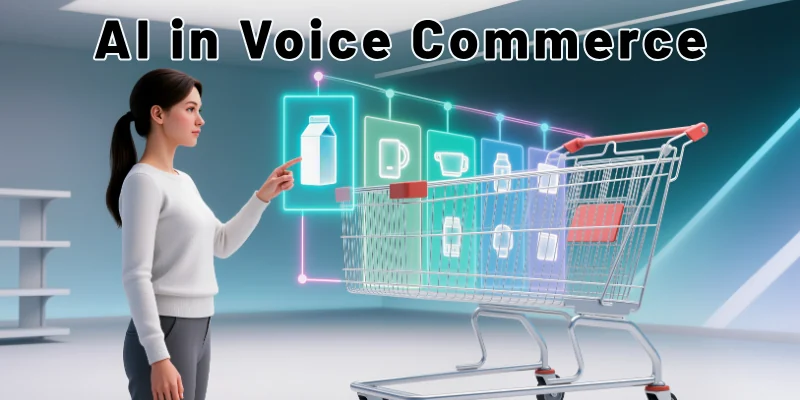
People now use voice assistants like Alexa or Google Assistant to shop online using simple commands.
How it Helps:
- Makes online shopping faster and hands-free.
- AI understands voice commands to find products or reorder items.
- Improves accessibility for older users.
Example: Walmart and Amazon let customers order groceries using Alexa voice commands.
11. AI in Product Reviews and Sentiment Analysis
AI tools read thousands of product reviews and understand what customers like or dislike. This process is called sentiment analysis.
How it Helps:
- Businesses learn about product quality.
- Helps identify and remove fake reviews.
- Gives insights into what customers truly feel.
Example: Amazon uses AI to highlight “most helpful” reviews based on positive sentiment and real experiences.
12. AI in Predictive Analytics for E-commerce
AI predicts future trends by studying past data. It helps e-commerce companies make better business decisions.
How it Helps:
- Predicts which products will sell more next month.
- Suggests when to launch discounts or new collections.
- Helps plan inventory and marketing ahead of time.
Example: H&M uses predictive AI to identify fashion trends and produce clothing accordingly.
Challenges of AI in E-commerce
Even though AI is powerful, it has some challenges:
- It requires huge amounts of customer data.
- Privacy and data security are major concerns.
- Small businesses find AI tools expensive.
- Over-reliance on AI may reduce human creativity in marketing.
Future of AI in E-commerce and Online Shopping
The future of AI in e-commerce is very bright. Soon, AI will create a complete smart shopping environment where every user gets a personalized experience from start to finish.
What to Expect:
- Smarter voice and visual shopping.
- Real-time virtual fitting rooms using AR + AI.
- Fully automated warehouses.
- Predictive delivery systems powered by AI drones.
AI will continue to make online shopping faster, safer, and more enjoyable for customers and more profitable for businesses.
Final Thoughts
AI has completely changed how e-commerce and online shopping work. It powers product recommendations, personalized ads, dynamic pricing, and even fraud protection. Every part of online business, from marketing to delivery, is now supported by AI.
As AI keeps evolving, online shopping will become more human-like, interactive, and personalized. The future belongs to AI-powered e-commerce, where smart technology meets customer satisfaction.
FAQs: AI in E-commerce & Online Shopping
Here are some of the most commonly asked questions related to the role of artificial intelligence in e-commerce and online shopping:
AI in e-commerce means using artificial intelligence to make online shopping smarter. It helps stores understand customer behavior and automate many tasks. From searching to checkout, AI makes every step faster and easier.
AI studies what customers browse, like, and buy. Then, it suggests products that match their interests. This makes every shopper feel the store is made just for them.
AI chatbots talk to customers anytime, day or night. They answer common questions, track orders, and solve problems quickly. This reduces waiting time and improves customer satisfaction.
AI tracks demand, season, and competitor prices to adjust prices in real time. It helps stores offer the best deals without losing profit. Customers also benefit by getting fair and timely discounts.
Yes, AI can easily spot fake transactions or suspicious patterns. It checks user activity, payment behavior, and location data. This keeps both buyers and sellers safe from scams.
AI predicts which products will sell more based on data and trends. It helps stores restock popular items and avoid overbuying slow ones. This keeps supply and demand balanced.
AI will make online shopping even more personalized and visual. Voice assistants and virtual try-ons will become common. The goal is to make shopping easier, faster, and more fun for everyone.






- Be Respectful
- Stay Relevant
- Stay Positive
- True Feedback
- Encourage Discussion
- Avoid Spamming
- No Fake News
- Don't Copy-Paste
- No Personal Attacks
- Be Respectful
- Stay Relevant
- Stay Positive
- True Feedback
- Encourage Discussion
- Avoid Spamming
- No Fake News
- Don't Copy-Paste
- No Personal Attacks
