Types of Artificial Intelligence: Beginner Friendly Guide
Published: 25 Dec 2025
Artificial Intelligence means making machines or computers that can think and learn like people. These smart machines can understand things, learn from what they see or hear, and make their own choices.
It works by learning from information. It studies data, finds patterns, and then solves problems or gives answers… almost like how humans learn from practice.
In this guide, you will learn about different types of artificial intelligence with easy examples from real life. Each type shows how these smart systems help in many parts of our world.
Major Categories of Artificial Intelligence
Artificial Intelligence can be grouped in two main ways. The first is based on how powerful or intelligent a system is. The second is based on how it works or behaves. These two methods help people understand how machines learn, make decisions, and improve over time.
- The first way is called functionality-based classification. It focuses on how a system acts, learns, and reacts to the world around it. This group includes four main types: Reactive Machines, Limited Memory, Theory of Mind, and Self-Aware systems.
- The second way is called capability-based classification. It shows how smart a system is when compared to a human. There are three main levels in this group: Narrow, General, and Super.
Both groups give a clear picture of how smart systems work and grow. One explains how capable they are, and the other explains how they function. Together, they show how machines are developing and what role they play in the modern world.
Classification Based on Functionality
There are four main types in this group.
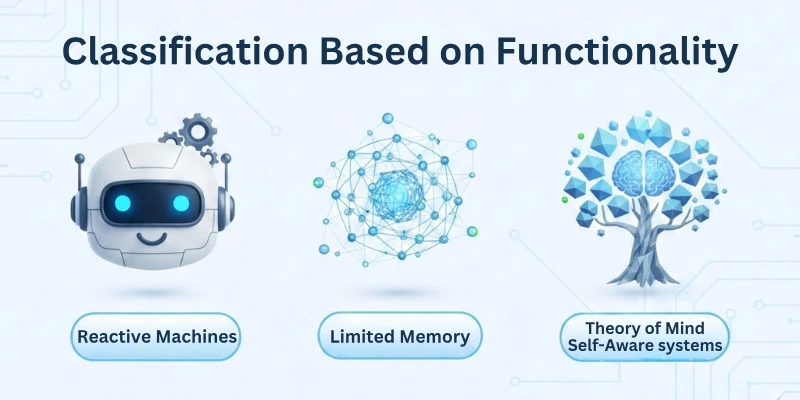
Each type shows a different stage in how intelligent systems behave, starting from basic response and moving toward independent thought and awareness.
- Reactive Machines
- Limited Memory
- Theory of Mind
- Self-Aware systems
1. Reactive Machines
Reactive Machines are the simplest type of intelligent system. They do not have memory or the ability to learn from past actions. They only respond to the information given to them at that moment. These systems follow fixed rules and make decisions based on the current input. They are fast, reliable, and good at repeating the same task, but they cannot adapt or improve over time.
Examples:
Here are some of the major examples of reactive machines:
- IBM Deep Blue – a chess program that defeated world champion Garry Kasparov
- Google AlphaGo – a board game system that beat top Go players
Pros:
Here are some of the major advantages of reactive machines:
- High speed in decision-making
- Consistent performance without errors
- Reliable in simple, rule-based tasks
- Easy to build and maintain
- Useful for stable, controlled environments
Cons:
Here are some of the major disadvantages of reactive machines:
- Cannot learn from experience
- Cannot handle new or unexpected situations
- No memory or data storage ability
- Limited use for complex decision-making
- Lacks reasoning and creativity
2. Limited Memory
Limited Memory systems can use past information to make better decisions. They remember data for a short time and use it to improve their responses. These systems learn from previous inputs, actions, and outcomes to adjust their performance. Most modern systems use this method to recognize patterns and predict future results.
Examples:
Here are some of the major examples of limited memory:
- Self-driving cars – remember road and traffic data to make safe driving choices
- Virtual assistants – learn user habits to give better answers
- Fraud detection systems – use past records to identify unusual behavior
Pros:
Here are some of the major advantages of limited memory:
- Learns from recent data to improve accuracy
- Makes smarter and safer decisions
- Adapts to small changes in the environment
- Useful for real-world applications like driving or security
- Offers better predictions over time
Cons:
Here are some of the major disadvantages of limited memory:
- Limited memory storage and learning capacity
- Needs constant data updates to stay accurate
- Can make errors with incomplete or old data
- Expensive to maintain large data systems
- Cannot think beyond learned information
3. Theory of Mind
Theory of Mind systems are designed to understand human thoughts, feelings, and intentions. They can recognize emotions and respond in a more human-like way. These systems aim to communicate naturally, predict human reactions, and adjust their behavior accordingly. This stage is still being developed and not yet fully used in real life.
Examples:
Here are some of the major examples of theory of mind:
- Advanced robots that read facial expressions or tone of voice
- Interactive learning programs that respond to student emotions
- Social robots that show empathy during conversations
Pros:
Here are some of the major advantages of theory of mind:
- Understands human emotions and behavior
- Improves communication between humans and machines
- Can be used in healthcare and education
- Builds trust through natural interactions
- Helps in creating more personal and supportive systems
Cons:
Here are some of the major disadvantages of theory of mind:
- Very complex to build and train
- Still under research and not fully practical
- Privacy risks in reading emotions and personal data
- High cost and long development time
- Ethical concerns about emotional influence
4. Self-Aware Systems
Self-Aware systems represent the highest stage of intelligent development. They understand their own existence, thoughts, and emotions. These systems can make independent decisions and think about their goals. They can adjust behavior, understand human emotions deeply, and even plan for future outcomes. This type is still a theory and does not exist in real-world use today.
Examples:
Here are some of the major examples of self-aware systems:
- No real examples yet, but seen in science fiction movies and books
- Imagined systems that can think and feel like humans
Pros:
Here are some of the major advantages of self-aware systems:
- Can make completely independent decisions
- Understands and manages emotions
- Could solve complex global problems
- Works efficiently without human input
- Has self-improving ability
Cons:
Here are some of the major disadvantages of self-aware systems:
- Only a theory, not yet possible
- Raises moral and safety concerns
- Hard to control or predict actions
- Risk of surpassing human control
- Could cause social and ethical challenges
Classification Based on Capability
It consists of three types. Let us discuss each category in detail:
- Narrow Systems
- General Systems
- Super Systems
1. Narrow Systems
Narrow systems are built to do one specific job with great accuracy. They can answer questions, recognize objects, or make recommendations but only within a limited area. These systems learn from large sets of data using patterns and rules to make quick and correct decisions. They cannot work outside the task they are trained for.
Examples:
Here are some of the major examples of narrow systems:
- Siri and Alexa – voice assistants
- Netflix and YouTube – show and video suggestions
- Tesla Autopilot – driving support system
- Gmail – spam filter
- Chatbots – online help tools
Pros:
Here are some of the major advantages of narrow systems:
- High speed and accuracy
- Fewer mistakes in routine work
- Low cost and easy to maintain
- Works all day without rest
- Gives personalized results
Cons:
Here are some of the major disadvantages of narrow systems:
- Works only in one field
- Has no real understanding of tasks
- Needs large and clean data to work well
- No creative or emotional skills
- Can replace some human jobs
2. General Systems
General systems are designed to think and learn like people. They can understand, reason, plan, and make decisions in many different areas. These systems can learn from experience and use that knowledge to solve new problems. They can handle complex tasks, adapt to changes, and work across different fields without needing new training.
Examples:
Here are some of the major examples of general systems:
- Still under research and not yet in real use
- Imagined systems that can read, talk, and think like humans
- Robots or programs shown in movies that can plan and make independent decisions
Pros:
Here are some of the major advantages of general systems:
- Can learn and adapt to new situations
- Can solve many types of problems
- Works well in changing environments
- Has better decision-making and reasoning ability
- Can combine logic with learning for complex tasks
Cons:
Here are some of the major disadvantages of general systems:
- Still not developed for real-world use
- Very hard and costly to create
- Needs massive data and processing power
- Raises moral and safety questions
- Can be unpredictable in behavior
3. Super Systems
Super systems are imagined systems that are smarter and faster than humans in every way. They can think, plan, and create better than people. These systems would have full control over learning, emotions, and decision-making.
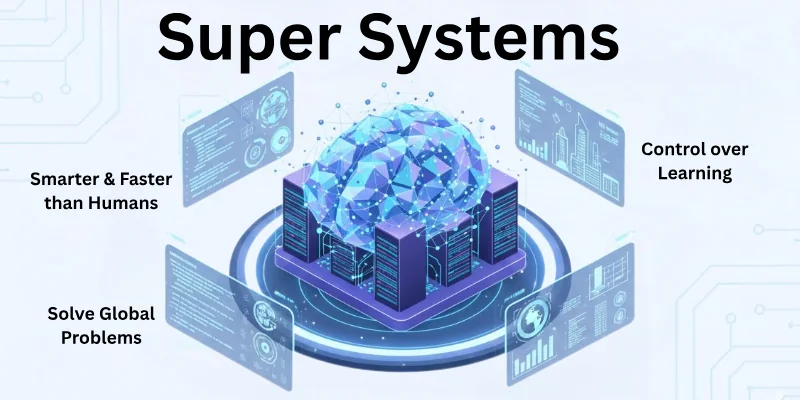
They could solve global problems, make discoveries, and operate without human help. This level is still only an idea and does not exist today.
Examples:
Here are some of the major examples of super systems:
- No real examples yet, only seen in science fiction
- Imagined systems that can outthink and outperform humans in every field
Pros:
Here are some of the major advantages of general systems:
- Can solve very complex global challenges
- Makes perfect and fast decisions
- Works without rest or error
- Can improve itself without human help
- Can bring major progress in science and technology
Cons:
Here are some of the major disadvantages of general systems:
- Only theoretical and not real yet
- Hard to control or predict actions
- May cause moral and safety risks
- Could harm human jobs and independence
- May lead to loss of human control if developed too far
Comparison Table: Functionality vs. Capability Types
Here is a quick comparison of all the types of AI:
| Basis of Comparison | Functionality-Based Types | Capability-Based Types |
| Meaning | Groups systems by how they work, learn, and react to data | Groups systems by how intelligent or capable they are compared to humans |
| Main Focus | Focuses on system behavior and working process | Focuses on the level of thinking and problem-solving ability |
| Main Categories | Reactive Machines, Limited Memory, Theory of Mind, Self-Aware | Narrow, General, Super |
| Learning Ability | Some can learn, some cannot (depends on type) | Increases from Narrow to Super as learning power grows |
| Use of Memory | Varies from no memory to full awareness | Grows with capability level; higher systems remember and learn more |
| Complexity Level | Starts from simple actions and moves to emotional understanding | Starts from limited thinking and grows to full independent intelligence |
| Current Existence | Reactive and Limited Memory types exist today | Only Narrow systems exist today |
| Example Fields | Games, robotics, healthcare, personal assistants | Voice systems, recommendation tools, research programs |
| Goal | To understand how systems act and interact | To measure how smart and advanced systems can become |
| Future Stage | Aims to reach Self-Aware systems | Aims to reach Super systems |
Real-Life Applications of AI
Smart systems are now used in many parts of daily life to make work easier, faster, and safer. Here are some simple examples:
- Healthcare: Smart tools help doctors find diseases early and keep patient records safe. They also help in reading medical reports and planning treatments.
- Education: Learning tools now adjust lessons based on each student’s speed and need. They help teachers give better support and students learn in a fun way.
- Finance: Banks use smart systems to catch fraud and plan safe money moves. They also help in predicting stock changes and giving money advice.
- Transportation: Self-driving systems help cars move safely without human control. They use sensors and cameras to avoid accidents and follow traffic rules.
- Marketing: Smart tools study user habits to show better ads. They help companies reach the right people at the right time.
- Entertainment: Recommendation tools suggest movies, songs, or videos people may like. Some systems can even create new content like stories, music, or art.
Future of Artificial Intelligence
Smart machines are changing many kinds of work. They help in health, travel, study, and business by doing jobs quickly and without many mistakes. Many people and companies now use them to save time and work better.
By 2030, we may see better self-driving cars, helpful robots, and smarter learning tools. These machines will do more jobs and make life easier.
In the end, we should keep a balance between machines and people. Smart tools should help humans, not control them.
Conclusion
In this guide, you learned about all main types of artificial intelligence, from simple ones that do one task to advanced systems that can think, learn, and even create new things. You also saw how they work in real life, like in health, study, transport, and business.
I personally recommend that you keep learning about modern smart AI tools because they are growing very fast and can open new career and learning paths for you.
You can find more easy and useful guides on this site, where I share clear explanations, real examples, and simple lessons about modern technology and smart systems. Keep exploring and stay updated with the latest trends.
FAQs
Here are some of the most commonly asked questions related to types of AI:
There are three main types of Artificial Intelligence … Narrow, General, and Super. Each type works at a different level and does a different kind of job. These types help us see how smart systems learn, think, and act in real life. They also show how machines are becoming more useful in many areas.
The levels of AI tell how much a smart system can think and learn. Some systems only follow set rules, while others can solve problems and make their own choices. Each level shows how machines grow from weak to strong forms of intelligence.
Artificial Narrow Intelligence is the most common type used today. It can do one fixed job, such as voice help, photo reading, or giving product ideas. These systems cannot think beyond their limits but are fast, correct, and very helpful in daily life.
When we talk about AI vs General AI, the main difference is in how much they can do. Simple systems can do one job only, but General systems can think and learn like people. General AI is still a future idea that scientists are working to make real.
The main areas of AI are health, study, business, travel, and money systems. Smart tools help doctors find diseases, teachers guide students, and companies plan better. Each area uses technology to save time, improve work, and make life easier.
Weak AI means systems that can only do simple or small jobs, like talking bots or voice helpers. Super Work AI or Super AI means systems that could be smarter than humans one day. These two types show the lowest and highest levels of smart power.
There are seven different types of AI when we count both learning levels and working styles. Each type has a special role — from basic rule-based tools to systems that can plan and create. This classification of Artificial Intelligence helps us understand how far smart systems have come.

- Be Respectful
- Stay Relevant
- Stay Positive
- True Feedback
- Encourage Discussion
- Avoid Spamming
- No Fake News
- Don't Copy-Paste
- No Personal Attacks
- Be Respectful
- Stay Relevant
- Stay Positive
- True Feedback
- Encourage Discussion
- Avoid Spamming
- No Fake News
- Don't Copy-Paste
- No Personal Attacks
