AI in SEO: How Artificial Intelligence Enhances Optimization
Published: 12 Mar 2026
SEO is no longer only about keywords and backlinks. With AI, search engine optimization becomes smarter, faster, and data-driven. AI helps marketers understand search intent, optimize content, analyze competitors, and predict trends, all while saving time and improving website performance.
So here is how AI in SEO works, its major applications, and tools that make optimization effortless and effective.
Main Ways AI Is Used in SEO
Here are the major key roles of AI in search engine optimization:
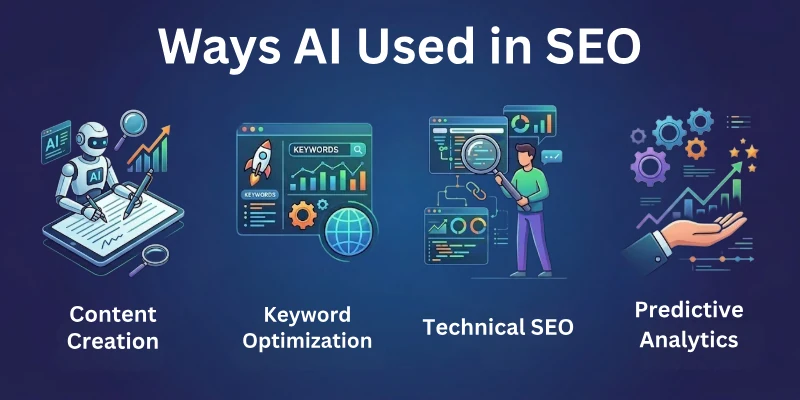
- AI-Powered Keyword Research
- Content Optimization & Creation
- Voice Search Optimization
- Predictive SEO & Trend Analysis
- AI-Driven Competitor Analysis
- Automated Technical SEO Audits
- User Behavior & Engagement Analysis
- Rank Tracking & SERP Analysis
- Backlink Analysis & Link Building
- SEO Performance Reporting & Forecasting
Let us learn about each in detail.
1. AI-Powered Keyword Research
AI analyzes search volume, competition, and user intent to suggest the best keywords. It finds long-tail keywords and hidden opportunities faster than manual research. This ensures your content reaches the right audience and ranks higher.
Key benefits:
- Identifies high-value and low-competition keywords
- Suggests related and semantically linked topics
- Saves hours of manual keyword research
- Improves targeting for both short- and long-tail searches
Recommended Tools:
- SEMrush (keyword suggestions, competition analysis)
- Ahrefs (keyword difficulty, search volume)
- Frase (AI-powered keyword clustering)
2. Content Optimization & Creation
AI evaluates top-ranking content, readability, and SEO elements. It provides suggestions for headings, meta descriptions, and content structure. Some AI tools even generate draft content based on search intent.
Benefits:
- Improves content relevance and SEO friendliness
- Enhances readability and structure
- Optimizes on-page elements automatically
- Reduces writer’s block
Recommended Tools:
- SurferSEO (content optimization and keyword placement)
- Jarvis/ChatGPT (AI content generation)
- MarketMuse (topic modeling and content scoring)
3. Voice Search Optimization
AI understands natural language queries and conversational phrases. Optimizing for voice search boosts mobile traffic and local SEO, as more users ask questions verbally to digital assistants.
Benefits:
- Targets long-tail and question-based keywords
- Increases visibility in voice assistants like Google, Siri, Alexa
- Enhances local search ranking
Recommended Tools:
- AnswerThePublic (voice search query suggestions)
- SEMrush Voice Search Tool (content optimization for voice queries)
4. Predictive SEO & Trend Analysis
AI predicts which keywords, topics, and content formats will perform well in the future. It uses historical data and search trends to forecast opportunities.
Benefits:
- Identifies emerging trends early
- Helps plan content calendars efficiently
- Reduces risk of producing content with low ROI
- Keeps website ahead of competitors
Recommended Tools:
- Google Trends (trend analysis and search patterns)
- Clearscope (predictive content insights)
- BuzzSumo (content performance trends)
5. AI-Driven Competitor Analysis
AI scans competitor websites to identify their high-performing keywords, content gaps, and backlink strategies. This helps you make smarter SEO decisions and find untapped opportunities.
Benefits:
- Reveals competitor strengths and weaknesses
- Suggests keyword and content gaps
- Guides backlink strategies
- Improves your ranking relative to competitors
Recommended Tools:
- Ahrefs (backlink and competitor analysis)
- SEMrush (competitor keyword gap)
- SpyFu (competitor SEO strategy insights)
6. Automated Technical SEO Audits
AI tools can scan your website for technical SEO issues such as slow load speed, broken links, or missing schema. They generate reports and suggest fixes automatically.
Benefits:
- Identifies crawl errors and indexing issues
- Optimizes page speed and mobile usability
- Ensures proper schema markup for rich snippets
- Saves time on manual audits
Recommended Tools:
- Screaming Frog SEO Spider (site audit and crawling)
- Sitebulb (technical SEO analysis)
- DeepCrawl (automated SEO monitoring)
7. User Behavior & Engagement Analysis
AI tracks clicks, dwell time, and scroll depth to understand user behavior. It identifies which content engages visitors and where improvements are needed.
Benefits:
- Improves user experience and content performance
- Reduces bounce rate
- Enhances engagement metrics
- Optimizes conversion pathways
Recommended Tools:
- Hotjar (heatmaps and session recording)
- Crazy Egg (behavior analytics)
- Google Analytics 4 (AI-driven insights)
8. Rank Tracking & SERP Analysis
AI continuously monitors your rankings and evaluates changes in SERPs. It detects fluctuations and suggests improvements to maintain high visibility.
Benefits:
- Tracks keyword performance automatically
- Analyzes SERP features like snippets and local packs
- Helps adjust strategy proactively
- Saves manual monitoring effort
Recommended Tools:
- AccuRanker (real-time rank tracking)
- SE Ranking (SERP analysis)
- Moz Pro (ranking and visibility monitoring)
9. Backlink Analysis & Link Building
AI evaluates the quality of existing backlinks and identifies opportunities for high-authority links. It helps build a strong backlink profile faster and smarter.
Benefits:
- Identifies toxic or spammy backlinks
- Suggests link-building opportunities
- Supports outreach campaigns
- Improves domain authority
Recommended Tools:
- Ahrefs (backlink analysis and opportunities)
- Majestic SEO (link quality and trust flow)
- BuzzStream (link-building automation)
10. SEO Performance Reporting & Forecasting
AI generates detailed reports on traffic, keyword performance, and engagement. It predicts future performance based on current trends and historical data.
Benefits:
- Saves time on manual reporting
- Provides actionable insights
- Forecasts traffic and ranking potential
- Guides SEO strategy efficiently
Recommended Tools:
- Google Data Studio (automated reporting dashboards)
- SEMRush Analytics (SEO performance reports)
- DashThis (AI-powered SEO dashboards)
Why AI Is Essential for Modern SEO
Search engines now favor content relevance, user experience, and engagement metrics. AI helps analyze huge data sets, track competition, and predict trends. Using AI in SEO allows businesses to rank higher, save time, and achieve measurable results efficiently.
Future of AI in SEO
AI will soon automate almost all SEO tasks, including content creation, predictive analysis, and technical audits. Studies show that over 70% of SEO professionals plan to use AI tools in the next 3 years.
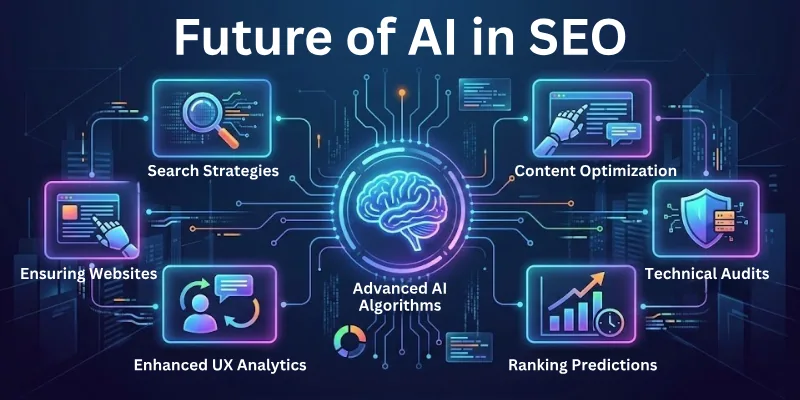
AI will make ranking predictions smarter, content optimization faster, and search strategies more accurate, ensuring websites stay ahead in highly competitive search results.
Final Note
In this guide, we explored how AI in SEO improves keyword research, content optimization, voice search, technical audits, competitor analysis, and performance tracking. You now understand how AI boosts visibility, engagement, and rankings while saving time and resources.
My personal Recommendation: Start with AI tools for keyword research, content optimization, and technical audits. These areas give immediate results. Gradually expand to AI-driven competitor analysis, trend prediction, and automated reporting to achieve full-scale SEO efficiency.
Thank you for reading! To learn more, check the FAQs below on AI in SEO.
FAQs: AI and Search Engine Optimization
Here are some of the most commonly asked questions related to the role of AI in SEO:
AI analyzes search volume, competition, and intent to suggest the best keywords. It finds long-tail and hidden opportunities quickly. This helps content rank higher and reach the right audience.
Yes, AI tools can suggest headings, meta descriptions, and relevant keywords. Some tools even generate draft content based on search intent. This saves time and ensures your content is SEO-friendly.
AI scans websites for broken links, slow pages, and crawl errors automatically. It generates reports and suggests fixes to keep your site optimized. This ensures search engines can index your website properly.
Yes, AI analyzes historical data to forecast search trends and user behavior. This allows you to optimize content before competitors do. Predictive SEO keeps your website ahead in rankings.
AI tools scan competitor websites for keywords, backlinks, and content performance. They reveal gaps and opportunities you can use. This helps you adjust strategies and outperform competitors.
Yes, AI identifies high-quality backlink opportunities and detects toxic links. It helps maintain a strong backlink profile. This improves domain authority and search engine ranking.
AI continuously monitors rankings, traffic, and engagement. It generates reports and predicts future performance. This saves time and provides actionable insights to improve your SEO strategy.




- Be Respectful
- Stay Relevant
- Stay Positive
- True Feedback
- Encourage Discussion
- Avoid Spamming
- No Fake News
- Don't Copy-Paste
- No Personal Attacks
- Be Respectful
- Stay Relevant
- Stay Positive
- True Feedback
- Encourage Discussion
- Avoid Spamming
- No Fake News
- Don't Copy-Paste
- No Personal Attacks
