Can AI Replace Human Jobs in the Future: Explained
Published: 21 Mar 2026
AI is transforming the way we work. From self-driving cars to smart assistants, AI is changing industries at lightning speed. This raises the question: Can AI replace human jobs in the future? The answer is complex. Some jobs will be replaced, some will change, and others will remain human-only.
This guide explores it all in detail.
Understanding AI
Artificial Intelligence (AI) refers to machines and systems that perform tasks requiring human intelligence.
- How it works: AI uses algorithms, big data, and machine learning to recognize patterns and make decisions.
Current examples:
- Chatbots answering customer queries
- AI algorithms analyzing financial markets
- Robots assembling cars in factories
- AI tools assisting doctors in diagnosis
Key Point: AI can mimic tasks but cannot feel, think, or create like humans.
How is AI Taking Over Jobs?
AI is increasingly automating tasks across various industries. Here’s how it is taking over jobs:
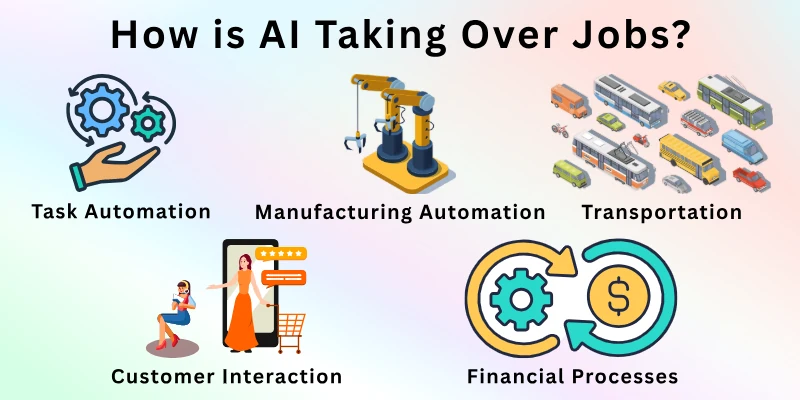
- Task Automation: Repetitive tasks like data entry, payroll processing, or simple calculations are now handled by AI.
- Customer Interaction: Chatbots and virtual assistants answer customer queries, reducing the need for human support staff.
- Manufacturing Automation: Robots perform assembly, inspection, and packaging work that humans used to do.
- Transportation: Self-driving vehicles are gradually replacing drivers in trucking, taxis, and delivery services.
- Financial Processes: AI can handle bookkeeping, report generation, and fraud detection faster and more accurately than humans.
Example: In warehouses, AI-powered robots can pick and pack thousands of items daily, a task that would take dozens of human workers.
Key Insight: AI often takes over tasks first, then gradually impacts entire job roles.
Jobs AI Will Likely Replace
Some jobs are highly repetitive, predictable, or rule-based, making them more vulnerable to AI automation. Here’s a detailed list:
Administrative and Clerical Jobs
- Data entry clerks
- Payroll processors
- Office receptionists
- Filing clerks
Customer Service and Support
- Call center operators
- Chat support agents for simple queries
- Front desk customer support for routine issues
Manufacturing and Production Jobs
- Assembly line workers
- Quality inspection roles
- Machine operators in factories
Transportation and Delivery
- Long-haul truck drivers (self-driving trucks)
- Taxi and ride-hailing drivers (autonomous vehicles)
- Delivery personnel for automated logistics systems
Finance and Accounting
- Bookkeepers
- Insurance claims processors
- Simple auditing tasks
- Transaction monitoring
Retail and Sales
- Cashiers
- Inventory stock checkers
- Simple online sales support (chatbots handling order queries)
Routine Analysis and Reporting
- Market research assistants generating basic reports
- Data analysts handling repetitive reports
- Basic legal documentation review
Insight: Any job that is predictable, repetitive, and can be codified is at risk. AI will replace parts of jobs first, then possibly entire roles over time.
Jobs AI Cannot Replace Easily
While AI is powerful, it cannot replicate human creativity, empathy, judgment, or complex decision-making. Here’s a detailed list:
Creative and Artistic Jobs
- Writers, journalists, and authors
- Designers and illustrators
- Musicians and composers
- Filmmakers and content creators
Social and Emotional Jobs
- Teachers and educators
- Psychologists, therapists, and counselors
- Social workers and caregivers
- Human resources managers
Leadership and Strategy Roles
- CEOs, managers, and executives
- Policy makers and strategists
- Project managers requiring human judgment
Technical Innovation Roles
- Engineers designing new systems
- Scientists conducting research and experiments
- Innovators solving complex problems
Skilled Trades That Require Dexterity and Adaptation
- Electricians and plumbers
- Carpenters and construction workers
- Surgeons performing delicate operations
Insight: These jobs require skills AI cannot fully learn, like empathy, creativity, ethics, and decision-making in unpredictable situations.
How AI Will Transform Jobs Instead of Replacing Them
AI will not always fully replace humans, it will often change how we work:
- Task Automation: AI can do repetitive parts of a job, letting humans focus on creative or complex parts
- Enhanced Productivity: AI tools help humans make faster and more accurate decisions
- Hybrid Roles: Humans work alongside AI to improve results
- New Careers: AI itself creates jobs in programming, AI ethics, data management, and maintenance
Example: Doctors using AI for diagnosing diseases but making final treatment decisions themselves.
Industries Most Impacted by AI
Here is the list:
| Industry | Jobs AI Replaces | Human-Centric Roles Remaining |
| Manufacturing | Assembly line workers, quality inspectors | Engineers, safety managers |
| Transportation | Truck drivers, taxi drivers | Logistics planners, vehicle designers |
| Retail | Cashiers, stock checkers | Store managers, customer experience strategists |
| Finance | Bookkeepers, claims processors | Financial analysts, investment strategists |
| Healthcare | Routine diagnostics, scheduling | Doctors, surgeons, nurses, therapists |
| Customer Service | Call center agents, chatbots | Customer relationship managers |
Key Point: AI may take over repetitive tasks, but humans remain essential in decision-making, strategy, creativity, and emotional intelligence.
Ethical and Social Considerations
The rise of AI in workplaces also brings ethical concerns:
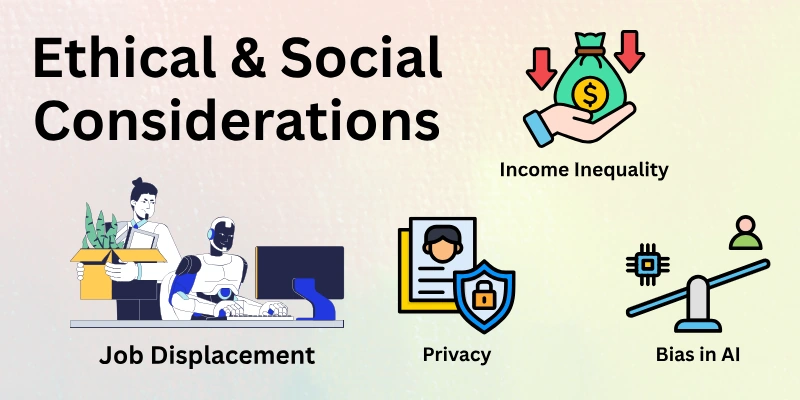
- Job Displacement: Support systems are needed for workers transitioning to new roles
- Income Inequality: Automation can widen the wealth gap if unregulated
- Bias in AI: AI systems may inherit biases from data, affecting fairness
- Privacy: Increased monitoring and tracking through AI tools
Insight: Policymakers, companies, and individuals need to plan for these challenges.
How Humans Can Stay Relevant in an AI Era
Humans must adapt to remain indispensable:
- Upskill: Learn AI, data analytics, programming, and other tech skills
- Focus on Soft Skills: Creativity, empathy, communication, and leadership
- Lifelong Learning: Keep updating skills as technology evolves
- Hybrid Skills: Combine human skills with AI tools for productivity
- Explore Human-Centric Roles: Jobs requiring judgment, ethics, and emotional intelligence
Pro Tip: People combining AI understanding with uniquely human skills will have the most secure future.
Can AI Replace Human Jobs in the Future – The Final Verdict
Directly answering the primary question: can AI replace human jobs in the future?
- Partial Replacement: Repetitive and predictable tasks will be automated
- Job Transformation: Most jobs will evolve with AI support
- New Opportunities: AI will create roles in programming, maintenance, and AI supervision
- Humans Remain Irreplaceable: Skills like creativity, empathy, and strategic thinking cannot be replaced
AI will replace some tasks, but humans remain essential. The future will involve collaboration between humans and AI, not full replacement.
Final Thoughts
AI is reshaping work, but it is not the end of human employment. To thrive:
- Focus on skills AI cannot replicate
- Stay adaptable and continuously learn
- Embrace AI as a collaborator, not a threat
The key question “can AI replace human jobs in the future?” has a nuanced answer: some jobs may disappear, many will change, and humans will continue to dominate areas requiring creativity, judgment, and empathy.
FAQs: AI Taking Over Jobs
Here are some of the most commonly asked questions related to the how AI is stealing jobs:
AI is changing the workplace by automating repetitive tasks and increasing productivity. While some jobs are replaced, others are transformed, creating opportunities for humans to focus on creative and complex work.
By 2030, AI is expected to replace routine and predictable roles like data entry, call center work, and assembly line tasks. Jobs requiring creativity, leadership, and emotional intelligence are less likely to be replaced.
AI will redefine the way humans work by creating hybrid roles where humans collaborate with machines. Future jobs will focus on decision-making, creativity, and managing AI systems rather than just manual tasks.
Yes, AI boosts efficiency by handling repetitive, time-consuming tasks quickly and accurately. This allows human employees to focus on more strategic, analytical, and creative work.
AI’s impact on employment varies by industry and country. Some sectors see job displacement, while others gain new roles in AI programming, maintenance, and supervision.
AI can create new jobs in fields like AI development, robotics, and data analysis. While some roles are lost, the demand for skilled workers in tech and human-centric jobs is growing.
No, industries with repetitive tasks, such as manufacturing and retail, are more affected. Sectors like healthcare, education, and creative arts remain largely human-driven.
Workers can adapt by learning AI-related skills, improving soft skills, and focusing on tasks that require human judgment and creativity. Lifelong learning is key to staying relevant in an AI-driven world.
Yes, AI is increasingly automating some white-collar tasks like bookkeeping, reporting, and scheduling. However, roles requiring critical thinking, strategic decisions, and leadership remain human-dominated.
The future of AI and future jobs involves collaboration between humans and machines. AI will replace some tasks, enhance others, and create opportunities for new, innovative careers.


- Be Respectful
- Stay Relevant
- Stay Positive
- True Feedback
- Encourage Discussion
- Avoid Spamming
- No Fake News
- Don't Copy-Paste
- No Personal Attacks
- Be Respectful
- Stay Relevant
- Stay Positive
- True Feedback
- Encourage Discussion
- Avoid Spamming
- No Fake News
- Don't Copy-Paste
- No Personal Attacks
