Uses of AI: Clear Guide to Daily Applications of AI
Published: 26 Dec 2025
Artificial Intelligence (AI) is no longer just a futuristic concept. You interact with it every single day, often without even realizing it. From your smartphone to your favorite social media app, AI quietly powers many tasks behind the scenes.
In this detailed guide, I’ll explain how AI is used in real life, with everyday examples of artificial intelligence that are transforming our homes, workplaces, and lifestyles.
Examples of AI (Artificial Intelligence)
AI touches almost every part of modern living, from work and communication to entertainment and travel.
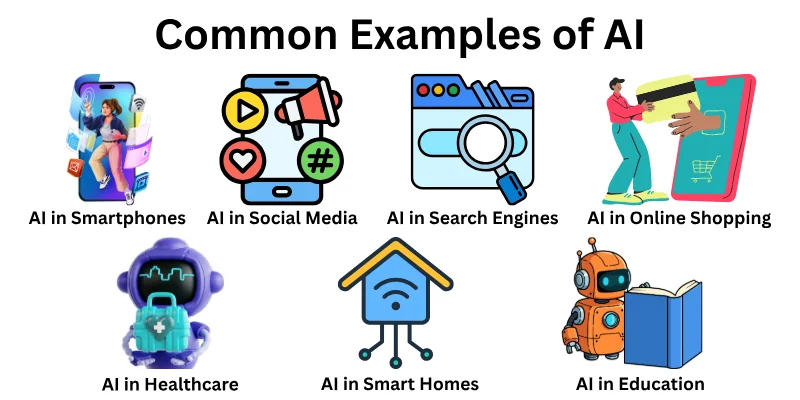
Here are the most common and powerful examples of AI in daily life that you experience regularly.
- AI in Smartphones
- AI in Social Media Platforms
- AI in Search Engines (Google, Bing, Yahoo)
- AI in Navigation and Maps
- AI in Online Shopping (E-Commerce)
- AI in Streaming Services (Netflix, Spotify, YouTube)
- AI in Banking and Finance
- AI in Healthcare
- AI in Smart Homes
- AI in Education
- AI in Email and Communication
- AI in Transportation and Self-Driving Cars
- AI in Customer Service (Chatbots)
- AI in Cybersecurity
- AI in Daily Personalization
Let us cover all the major applications of AI that we use in our daily life.
1. AI in Smartphones
Your smartphone is one of the most common examples of AI in daily life. Whenever you unlock your phone with Face ID, type a message using predictive text, or speak to voice assistants like Siri or Google Assistant, you are using AI.
How AI works in smartphones:
- Voice Assistants: Understand natural language using Natural Language Processing (NLP).
- Camera Enhancements: AI detects scenes, adjusts lighting, and enhances portraits automatically.
- App Recommendations: AI studies your habits to suggest relevant apps or shortcuts.
- Spam Detection: AI filters unwanted calls, texts, and spam emails.
This is one of the most common real-world applications of artificial intelligence we all use multiple times a day.
2. AI in Social Media Platforms
Social media platforms like Instagram, Facebook, TikTok, and YouTube use powerful AI algorithms. These systems learn what you like and keep showing you more similar content.
Examples of AI in social media:
- Personalized Feeds: AI analyzes your likes, comments, and time spent to recommend posts.
- Face Recognition: Facebook and Instagram use AI to identify people in your photos.
- Content Moderation: AI detects hate speech, nudity, and spam automatically.
- Ad Targeting: Businesses use AI-based marketing tools to reach specific users.
AI makes social media smarter, more engaging, and highly personalized.
3. AI in Search Engines (Google, Bing, Yahoo)
Every time you search something on Google, AI decides which results to show first. AI in search engines helps you find accurate and fast answers based on intent, location, and past searches.
Key AI features in search:
- Auto-Complete: AI predicts your search queries before you finish typing.
- Voice Search: Google Assistant uses speech recognition to answer your questions.
- Featured Snippets: AI understands context to give instant answers.
- Search Ranking Algorithms: AI uses machine learning to rank websites by relevance.
This is one of the most used examples of AI in real world, billions of searches rely on AI daily.
4. AI in Navigation and Maps
If you’ve ever used Google Maps, Waze, or Apple Maps, you’ve already experienced AI in action. These apps use machine learning algorithms and real-time data to guide you with the fastest routes.
AI in maps helps with:
- Real-time traffic updates
- Predicting the best route based on current conditions
- Estimating arrival time accurately
- Re-routing when an accident or delay occurs
This everyday use of AI saves millions of people time and fuel every single day.
5. AI in Online Shopping (E-Commerce)
When you shop online at Amazon, eBay, or AliExpress, AI shapes your entire experience.
AI analyzes your behavior to recommend the most relevant products.
AI in e-commerce includes:
- Product Recommendations: Based on your browsing and purchase history.
- Dynamic Pricing: AI adjusts prices depending on demand and competition.
- Chatbots: Provide instant support 24/7 using AI-based conversation models.
- Fraud Detection: AI identifies fake reviews and suspicious transactions.
This is one of the most profitable applications of artificial intelligence in business and customer service.
6. AI in Streaming Services (Netflix, Spotify, YouTube)
When Netflix suggests a new show or Spotify curates a playlist just for you, that’s AI.
These platforms use AI-driven recommendation systems to study your preferences.
AI applications in streaming:
- Suggests movies or songs you’ll likely enjoy.
- Adjusts recommendations based on your activity.
- Detects fake or spam accounts.
- Optimizes streaming quality depending on your internet speed.
AI makes entertainment feel personal, it learns your taste better than anyone else.
7. AI in Banking and Finance
Artificial intelligence plays a major role in how banks and financial apps operate today. From fraud detection to credit scoring, AI ensures speed, safety, and smarter decisions.
Examples of AI in finance:
- Fraud Detection: AI detects unusual transactions instantly.
- Credit Decisions: Banks use machine learning to evaluate your loan eligibility.
- Chatbots: AI-powered assistants answer banking queries 24/7.
- Stock Market Predictions: AI analyzes market trends for investment advice.
AI helps keep financial systems secure and efficient for millions of users worldwide.
8. AI in Healthcare
AI in healthcare is transforming diagnosis, treatment, and patient care. Doctors use AI tools to analyze scans, predict diseases, and even recommend medications.
Examples of AI in healthcare:
- Medical Imaging: AI reads X-rays and MRIs faster than humans.
- Virtual Health Assistants: Provide basic advice and appointment reminders.
- Predictive Analysis: Detects early signs of diseases like cancer or diabetes.
- Drug Development: AI speeds up research by analyzing millions of data points.
AI is improving medical accuracy and saving lives every single day.
9. AI in Smart Homes
Smart home devices like Alexa, Google Home, or smart thermostats rely on AI to make life easier.
Examples of AI in smart homes:
- Voice Commands: Control lights, fans, and appliances using voice.
- Energy Management: AI adjusts power usage automatically.
- Security Cameras: AI detects movement and sends instant alerts.
- Personalized Automation: AI learns your schedule and adapts accordingly.
This is one of the most practical uses of AI in everyday life for comfort and energy efficiency.
10. AI in Education
Modern education uses AI learning platforms to personalize lessons for students.
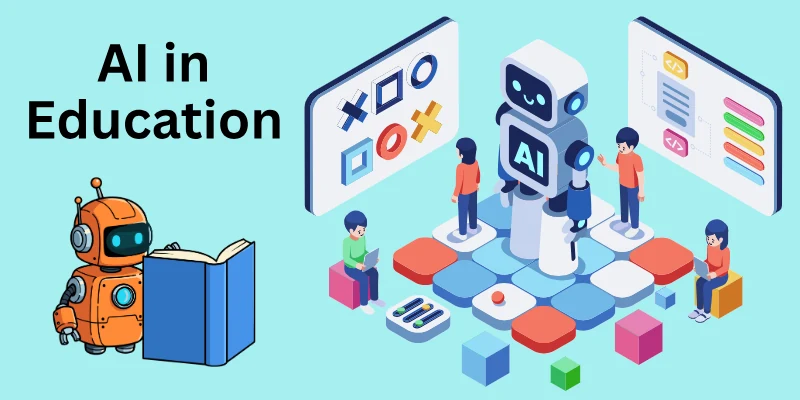
From smart tutoring to automatic grading, AI simplifies how students learn.
AI applications in education:
- Personalized Learning: Adapts to each student’s pace.
- Essay Scoring: AI checks grammar and structure automatically.
- Virtual Tutors: Offer help in real-time.
- Language Translation: AI tools like Google Translate help global students.
AI in education ensures no student is left behind by offering personalized help.
11. AI in Email and Communication
Your Gmail uses AI to filter spam, categorize emails, and even auto-reply. Every time you see “Promotions,” “Updates,” or “Primary” folders, AI sorts them.
AI communication examples:
- Smart Reply & Compose: Predicts responses as you type.
- Spam Detection: Filters phishing or scam emails.
- Email Prioritization: Identifies important messages automatically.
AI makes digital communication faster and smarter.
12. AI in Transportation and Self-Driving Cars
Self-driving cars are one of the most advanced real-life examples of artificial intelligence. Companies like Tesla, Waymo, and Uber use AI to make vehicles navigate safely.
AI helps with:
- Detecting pedestrians and objects
- Understanding traffic signals
- Making split-second driving decisions
- Preventing accidents
AI in transportation is paving the way for a safer and more automated future.
13. AI in Customer Service (Chatbots)
Businesses use AI-powered chatbots on websites and apps to help customers instantly. They understand queries, solve issues, and even process orders.
AI chatbot benefits:
- 24/7 support without human staff
- Instant responses to FAQs
- Multilingual support
- Improved customer satisfaction
This is one of the most common uses of AI in business today.
14. AI in Cybersecurity
AI protects users from online threats by identifying suspicious behavior. It constantly learns from new attacks to defend systems better.
AI cybersecurity applications:
- Detects malware and phishing attempts.
- Predicts data breaches before they happen.
- Protects user data using advanced algorithms.
- Improves network monitoring in real time.
AI acts as a digital guardian for both individuals and organizations.
15. AI in Daily Personalization
From your Netflix suggestions to your Google News feed, AI personalizes your online world. It studies your interests, habits, and search history to recommend what matters to you.
Everyday AI personalization:
- Custom ads
- News recommendations
- Fitness app insights
- Food delivery suggestions
AI creates a unique experience for each user, every time.
The Growing Impact of AI in Everyday Life
AI is growing rapidly across industries, from healthcare and education to entertainment and finance. It’s not just about automation anymore; it’s about creating smarter, more personalized experiences for users. As machine learning and deep learning evolve, AI will continue improving convenience, safety, and efficiency in daily life.
Examples like smart assistants, AI cameras, self-driving cars, and intelligent apps are just the beginning. The next decade will bring even more advanced forms of real-world AI applications that blend seamlessly into human life.
Final Thoughts
Artificial Intelligence is everywhere, in your phone, your home, and even your car. These real-life examples of AI show how deeply it’s woven into our daily routines. From simplifying tasks to making smarter decisions, AI enhances comfort, security, and productivity.
The more we understand and embrace these AI applications in daily life, the more we can use them to improve our work, health, and future.
FAQs
Here are some of the most commonly asked questions related to the AI examples:
We use AI in many simple ways every day, through smartphones, smart homes, and social media. AI helps in voice assistants, spam filters, navigation apps, and online shopping recommendations. It makes daily tasks faster, easier, and more personalized without us realizing it.
Some of the best examples of artificial intelligence in real life include Google Search, Siri, Alexa, Netflix, and Tesla’s self-driving cars. These tools use AI to understand commands, predict preferences, and make accurate decisions. They show how AI improves convenience, safety, and efficiency in everyday life.
AI in smartphones powers Face ID, voice recognition, camera optimization, and predictive text. It learns user behavior to suggest apps, detect spam, and manage battery life efficiently. This makes smartphones smarter and more responsive with every update.
AI in social media platforms like Instagram, YouTube, and TikTok helps personalize your feed. It studies your interests, removes fake content, and recommends videos or posts you’ll enjoy. AI also supports ad targeting and improves user engagement automatically.
AI supports doctors by analyzing medical images, predicting diseases, and suggesting treatments. It speeds up diagnosis, improves accuracy, and enhances patient monitoring. AI-powered tools also help with drug discovery and personalized care plans.
AI saves time, increases accuracy, and offers personalized experiences. It helps manage routines, improves decision-making, and supports businesses with automation. From smart homes to finance, AI makes everyday living more convenient and efficient.
Businesses use AI for customer support, marketing automation, data analysis, and fraud detection. AI chatbots handle customer queries instantly, while machine learning predicts buying trends. This improves productivity and customer satisfaction while reducing costs.
Yes, AI is safe when used responsibly. Most AI systems are designed to follow strict data protection and privacy standards. However, users should stay alert about sharing personal data with unknown apps or services.
AI powers devices like Alexa, Google Home, and smart thermostats. It automates tasks, adjusts lighting, and improves home security with real-time alerts. AI learns your habits to make your home more energy-efficient and comfortable.
The future of AI includes smarter healthcare, intelligent transportation, and more personalized experiences. AI will continue to grow in education, finance, and daily communication. It will make life more efficient, connected, and accessible for everyone.




- Be Respectful
- Stay Relevant
- Stay Positive
- True Feedback
- Encourage Discussion
- Avoid Spamming
- No Fake News
- Don't Copy-Paste
- No Personal Attacks
- Be Respectful
- Stay Relevant
- Stay Positive
- True Feedback
- Encourage Discussion
- Avoid Spamming
- No Fake News
- Don't Copy-Paste
- No Personal Attacks
