How AI Helps in Brand Monitoring: 15 Ways to Protect & Grow Your Brand
Published: 6 May 2026
Brand monitoring is essential for businesses to protect their reputation and understand public perception. Traditionally, monitoring relied on manual searches, surveys, and social media checks. This process was slow and often missed important mentions.
Today, AI scans online platforms, analyzes sentiment, and identifies trends in real time. This detailed guide explains how AI helps in brand monitoring in a practical and actionable way.
Let us cover all methods so you can protect and grow your brand effectively.
How AI Helps in Brand Monitoring
Here are the 15 proven ways AI improves brand monitoring for businesses and marketers:
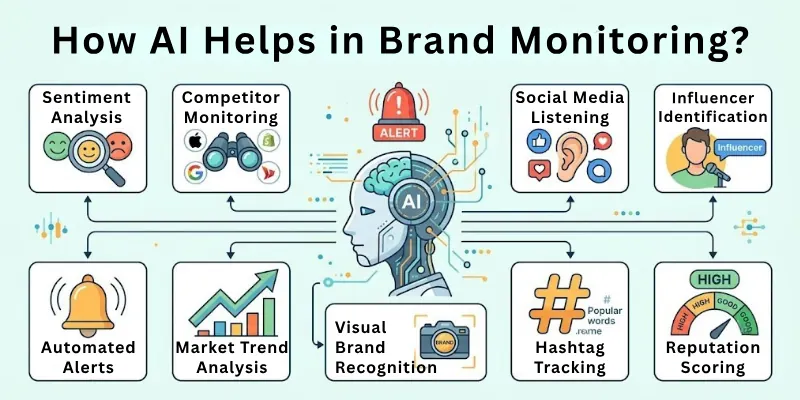
- Real-Time Mentions Tracking
- Sentiment Analysis
- Competitor Monitoring
- Crisis Detection
- Social Media Listening
- Influencer Identification
- Automated Alerts
- Market Trend Analysis
- Customer Feedback Analysis
- Visual Brand Recognition
- Hashtag Tracking
- Campaign Impact Analysis
- Content Performance Tracking
- Reputation Scoring
- Continuous Monitoring and Reporting
Let us learn about each method in detail.
1. Real-Time Mentions Tracking
Previously, tracking brand mentions required manual searching on multiple platforms. This was time-consuming and incomplete. AI now scans social media, forums, blogs, and news sites in real time. Businesses receive immediate insights when their brand is mentioned. Quick detection allows fast responses. Monitoring becomes comprehensive.
Prompts you can use:
- Track brand mentions online
- Analyze frequency of mentions
- Identify high-impact platforms
- Monitor trends in mentions
- Improve response time
2. Sentiment Analysis
Traditional methods relied on reading reviews manually. AI evaluates positive, negative, and neutral sentiments automatically. Businesses understand how audiences feel about the brand. Insights guide communication strategies. Customer perception improves. Brand reputation remains protected.
Prompts you can use:
- Analyze sentiment in reviews and comments
- Detect shifts in perception
- Monitor sentiment trends over time
- Adjust messaging strategies
- Identify potential issues early
3. Competitor Monitoring
Manual competitor analysis was limited and slow. AI tracks competitor mentions, campaigns, and content performance. Businesses see how competitors are perceived. Benchmarking becomes easier. Strategies adjust in real time. Market understanding improves.
Prompts you can use:
- Track competitor mentions
- Analyze competitor campaigns
- Compare audience sentiment
- Identify competitor strengths and weaknesses
- Adjust your own strategy
4. Crisis Detection
Crisis management relied on manual alerts and news monitoring. AI detects unusual spikes in negative mentions or sentiment. Early alerts prevent escalation. Businesses act quickly to mitigate impact. Reputation is protected. Response is proactive rather than reactive.
Prompts you can use:
- Detect negative sentiment spikes
- Alert for unusual mentions
- Identify potential crises
- Suggest mitigation strategies
- Protect brand reputation
5. Social Media Listening
Earlier, social media listening involved manually checking platforms. AI listens to conversations, hashtags, and mentions continuously. Insights on trends, opinions, and engagement are generated. Businesses understand audience needs better. Content and campaigns are optimized. Social presence improves.
Prompts you can use:
- Monitor brand conversations
- Track trending hashtags
- Analyze engagement metrics
- Identify audience interests
- Improve social strategy
6. Influencer Identification
Identifying relevant influencers manually was challenging. AI analyzes reach, engagement, and relevance. Top influencers who match the brand are highlighted. Collaboration opportunities increase. Campaign effectiveness improves. Brand visibility grows.
Prompts you can use:
- Identify influencers by engagement
- Analyze relevance to brand
- Track influencer mentions
- Suggest influencer partnerships
- Optimize campaigns
7. Automated Alerts
Manual monitoring delayed action. AI sends alerts instantly for mentions, sentiment changes, or trending topics. Teams respond faster. Issues are managed before escalation. Opportunities are acted on promptly. Brand monitoring becomes efficient.
Prompts you can use:
- Set alerts for brand mentions
- Receive notifications on sentiment changes
- Monitor competitor actions
- Trigger team notifications
- Improve response time
8. Market Trend Analysis
Market trends were analyzed with limited tools. AI identifies emerging topics and industry trends. Businesses adjust marketing and content strategies accordingly. Campaigns remain relevant. Insights help stay ahead of competitors. Strategic planning improves.
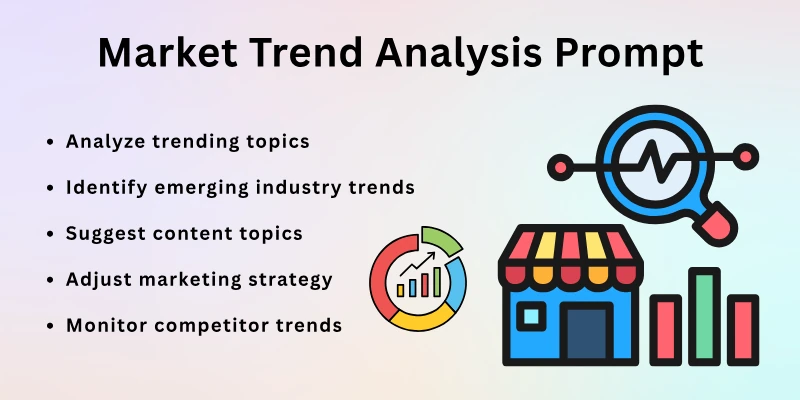
Prompts you can use:
- Analyze trending topics
- Identify emerging industry trends
- Suggest content topics
- Adjust marketing strategy
- Monitor competitor trends
9. Customer Feedback Analysis
Earlier, feedback was collected manually and slowly. AI analyzes reviews, surveys, and comments in bulk. Insights reveal satisfaction, complaints, and improvement areas. Products and services are optimized. Customer experience improves. Decision-making becomes data-driven.
Prompts you can use:
- Analyze reviews and surveys
- Identify recurring complaints
- Detect positive feedback patterns
- Suggest improvements
- Monitor satisfaction trends
10. Visual Brand Recognition
Traditional monitoring ignored images and logos. AI recognizes logos and brand visuals online. Mentions in images, videos, and memes are detected. Brand presence is tracked across platforms. Visual reputation is maintained. Awareness improves.
Prompts you can use:
- Detect logos in images
- Track visual mentions on social media
- Identify unauthorized use
- Monitor visual campaigns
- Improve brand visibility
11. Hashtag Tracking
Hashtags were monitored manually and inconsistently. AI tracks hashtag usage across platforms. It identifies popular and trending hashtags relevant to the brand. Campaigns are optimized. Engagement improves. Reach expands.
Prompts you can use:
- Track hashtag performance
- Identify trending hashtags
- Monitor competitor hashtag usage
- Optimize social campaigns
- Enhance audience reach
12. Campaign Impact Analysis
Earlier, measuring campaign impact required manual calculations. AI analyzes mentions, engagement, and sentiment during campaigns. Results show effectiveness clearly. Strategies are refined in real time. ROI improves. Campaigns become data-driven.
Prompts you can use:
- Measure campaign mentions
- Analyze sentiment and engagement
- Compare campaigns performance
- Suggest adjustments
- Optimize future campaigns
13. Content Performance Tracking
Traditional tracking relied on limited metrics. AI tracks which content generates mentions, engagement, and shares. High-performing content is identified. Strategies are adjusted accordingly. Audience response guides planning. Effectiveness increases.
Prompts you can use:
- Track content engagement
- Identify popular topics
- Analyze reach and shares
- Suggest content improvements
- Optimize content strategy
14. Reputation Scoring
Reputation was measured using surveys or basic metrics. AI calculates reputation scores based on sentiment, mentions, and engagement. Businesses quantify brand health. Alerts are triggered for low scores. Strategies are improved. Tracking becomes consistent.
Prompts you can use:
- Calculate overall brand reputation score
- Monitor changes over time
- Trigger alerts for low scores
- Suggest reputation improvement actions
- Benchmark against competitors
15. Continuous Monitoring and Reporting
Monitoring used to be periodic and static. AI continuously scans platforms and updates reports automatically. Insights are real-time. Decisions are timely and informed. Monitoring stays current. Brand protection and growth improve steadily.
Prompts you can use:
- Automate monitoring reports
- Track real-time mentions
- Update sentiment trends
- Generate actionable insights
- Maintain continuous oversight
Best AI Tools for Brand Monitoring
Here are the 10 best AI tools for brand monitoring.
- Brand24 for real-time tracking
- Mention for online monitoring
- Hootsuite Insights for sentiment
- Sprout Social for engagement analytics
- Talkwalker for visual and text monitoring
- Meltwater for media intelligence
- Awario for social listening
- Falcon.io for influencer tracking
- Reputology for review management
- NetBase Quid for trend analysis
Final Note
In this guide, we explained how AI helps in brand monitoring using practical and proven methods. We covered tracking, sentiment analysis, influencer identification, and continuous optimization. Each method helps protect and grow your brand.
My personal advice is to start monitoring key channels first and expand gradually. Combine AI insights with human judgment. Quick action and consistent oversight protect your brand effectively.
Thank you for reading. I hope this guide helps you maintain a strong and positive brand reputation.
FAQs
Here are some of the most commonly asked questions related to how AI helps in brand monitoring:
AI brand monitoring tracks online mentions, sentiment, and engagement. It analyzes data to provide actionable insights. Monitoring becomes faster and more accurate. Teams understand how people talk about their brand. Decisions are based on real-time information.
AI detects negative mentions early and alerts teams immediately. Responses can be timely and relevant. Brand perception stays positive. Teams prevent small issues from becoming big problems. Reputation management becomes proactive.
Yes, many tools are affordable and easy to use. Small businesses can track their brand efficiently. Insights help improve marketing and customer engagement. Teams save time and resources. Even small teams get professional-level monitoring.
AI supports human monitoring but does not replace humans. Humans interpret context and make final decisions. Efficiency and speed improve. Teams handle larger volumes of data without extra staff. Humans focus on strategy and judgment.
Yes, AI identifies spikes in negative sentiment quickly. Early alerts prevent escalation. Action can be taken immediately to manage issues. Teams avoid public backlash. Businesses stay prepared for unexpected events.
Insights appear in real time as AI monitors data continuously. Updates ensure information stays accurate. Teams can act quickly on trends and issues. Decisions become faster and smarter. Delays in response are minimized.
Costs vary depending on tools and plan features. Many platforms offer affordable options. ROI is usually positive as issues are detected early. Small businesses can start without high investment. Monitoring becomes a cost-effective solution.
Yes, AI recognizes logos, images, and visual mentions online. Visual content is monitored alongside text. Brand presence becomes comprehensive. Teams see where and how their brand appears. Marketing decisions are data-driven.
Yes, AI tracks competitor mentions, campaigns, and engagement. Businesses can benchmark performance easily. Strategy adjustments are informed by data. Teams learn what works in the market. Competitor insights improve decision-making.
Yes, AI evaluates positive, neutral, and negative mentions. Teams get a clear picture of brand perception. Insights guide marketing and customer service decisions. Trends are easy to spot. Brand strategy becomes more effective.



- Be Respectful
- Stay Relevant
- Stay Positive
- True Feedback
- Encourage Discussion
- Avoid Spamming
- No Fake News
- Don't Copy-Paste
- No Personal Attacks
- Be Respectful
- Stay Relevant
- Stay Positive
- True Feedback
- Encourage Discussion
- Avoid Spamming
- No Fake News
- Don't Copy-Paste
- No Personal Attacks
