AI Tools for SEO – Complete Guide to Top SEO Tools
Published: 28 Jun 2026
SEO continues to become more competitive every year. Businesses, bloggers, and marketers now use advanced tools to analyze keywords, optimize content, and improve search rankings more efficiently than before.
I have worked with SEO tools across different projects, and I have seen how the right solutions can reduce manual work and improve results. The best AI tools for SEO help users find opportunities, optimize content, and make better decisions based on data.
In this article, we will discuss AI tools for SEO in detail. We will also explore the best tools, features, benefits, and practical ways to improve your SEO strategy.
What Are AI Tools for SEO?
AI tools for SEO are software solutions that help users improve search engine optimization through automation, data analysis, keyword research, content optimization, and performance tracking. They help simplify SEO tasks and save time.
Definition: Tools that use advanced technology to assist with SEO tasks and decision-making.
How AI Works in SEO
- Analyzes large amounts of SEO data quickly.
- Identifies keyword opportunities and search trends.
- Provides content optimization recommendations.
- Helps understand user search intent.
Types of AI SEO Tools
- Keyword research tools.
- Content optimization tools.
- Competitor analysis tools.
- Rank tracking tools.
- Technical SEO tools.
Best AI Tools for SEO
AI SEO tools help simplify keyword research, content optimization, competitor analysis, and other important SEO tasks. Choosing the right tool can improve efficiency and support better search engine performance.
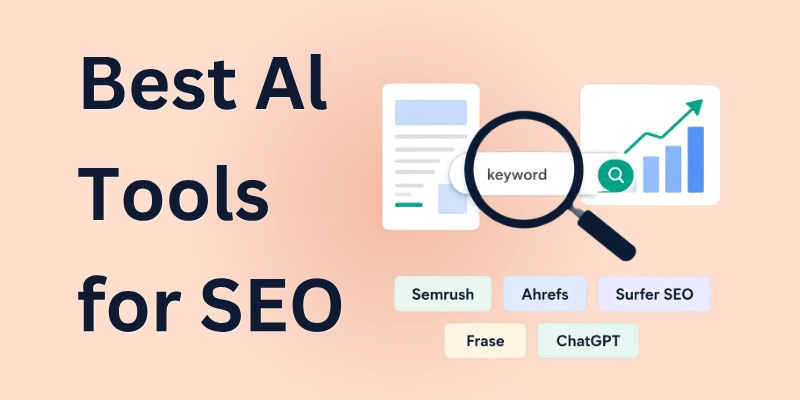
Below are the best AI tools for SEO in 2026, along with their key features, advantages, limitations, pricing, and ideal use cases.
- Semrush AI Features
- Ahrefs AI Features
- Surfer SEO
- Frase
- Clearscope
- MarketMuse
- Scalenut
- NeuronWriter
- Alli AI
- ChatGPT for SEO
1. Semrush AI Features – Best for Complete SEO Management
Semrush is one of the most comprehensive SEO platforms available. Its AI-powered features help users with keyword research, content planning, competitor analysis, rank tracking, and SEO recommendations from a single dashboard.
Key Features
Below are the key features that make Semrush a leading SEO tool.
- AI-assisted keyword research and clustering
- Content optimization recommendations
- Competitor analysis and traffic insights
- Position tracking and rank monitoring
- Site audit and technical SEO analysis
- Topic research and content planning tools
Pros and Cons
Here are the main benefits and drawbacks of using Semrush for SEO.
Pros
- All-in-one SEO platform
- Extensive keyword database
- Powerful competitor analysis
- Strong reporting features
- Suitable for businesses and agencies
Cons
- Higher pricing than some competitors
- Can feel overwhelming for beginners
- Some advanced features require premium plans
Pricing
- Limited free access available
- Paid plans start from approximately $140 per month
Best For
- SEO professionals
- Digital marketers
- Agencies
- Businesses managing large websites
2. Ahrefs AI Features – Best for Backlink and Competitor Research
Ahrefs combines powerful SEO data with AI-driven insights to help users discover keywords, analyze backlinks, and improve content performance.
Key Features
Below are the key features that make Ahrefs a popular SEO platform.
- Keyword explorer with difficulty analysis
- AI-assisted content suggestions
- Backlink analysis and monitoring
- Competitor traffic analysis
- Site audit tools
- Content gap identification
Pros and Cons
Here are the main benefits and drawbacks of using Ahrefs for SEO.
Pros
- Industry-leading backlink database
- Accurate SEO metrics
- Excellent competitor research tools
- Easy-to-understand reports
- Strong keyword discovery capabilities
Cons
- Premium pricing structure
- Limited free features
- Learning curve for new users
Pricing
- Free webmaster tools available
- Paid plans start from approximately $129 per month
Best For
- Link-building campaigns
- Competitor analysis
- SEO consultants
- Content marketer
3. Surfer SEO – Best for Content Optimization
Surfer SEO focuses on helping users create content that aligns with search engine ranking factors through data-driven optimization recommendations.
Key Features
Below are the key features that make Surfer SEO effective for content optimization.
- Real-time content scoring
- Keyword and NLP recommendations
- SERP analysis
- AI content editor
- Content audits
- Internal linking suggestions
Pros and Cons
Here are the main benefits and drawbacks of using Surfer SEO for SEO.
Pros
- Easy content optimization process
- Helpful content scoring system
- Strong on-page SEO guidance
- User-friendly interface
- Integrates with writing tools
Cons
- Primarily focused on content SEO
- Limited technical SEO capabilities
- Subscription costs can add up
Pricing
- Paid plans start from approximately $79 per month
Best For
- Bloggers
- Content creators
- SEO writers
- Niche website owners
4. Frase – Best for SEO Content Briefs
Frase helps users research, plan, and optimize content by analyzing search results and creating detailed content briefs.
Key Features
Below are the key features that make Frase valuable for content planning.
- AI-generated content briefs
- Search intent analysis
- Competitor content evaluation
- Outline generation
- Content optimization tools
- Question-based topic research
Pros and Cons
Here are the main benefits and drawbacks of using Frase for SEO.
Pros
- Saves time during content planning
- Strong search intent analysis
- Useful competitor insights
- Easy content brief creation
- Beginner-friendly interface
Cons
- Less comprehensive than all-in-one SEO suites
- Advanced features cost extra
- Not primarily a backlink tool
Pricing
- Paid plans start from approximately $45 per month
Best For
- Content strategists
- Bloggers
- SEO content teams
- Freelance writers
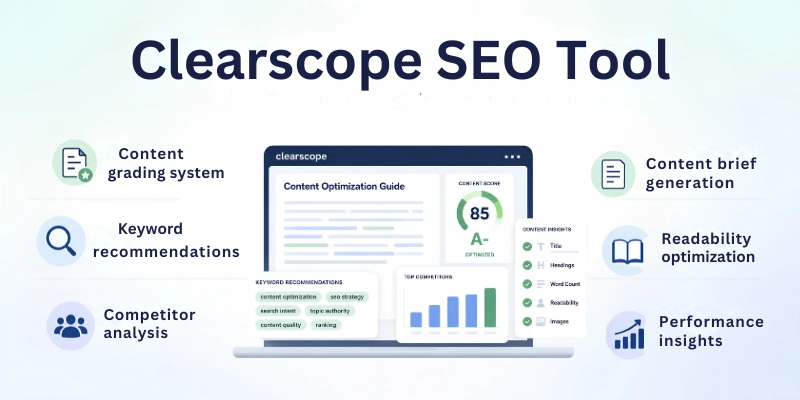
5. Clearscope – Best for Enterprise Content Optimization
Clearscope helps users create highly optimized content through keyword recommendations and content quality analysis.
Key Features
Below are the key features that make Clearscope a premium SEO solution.
- Content grading system
- Keyword relevance recommendations
- Competitor content analysis
- Content brief generation
- Readability optimization
- Content performance insights
Pros and Cons
Here are the main benefits and drawbacks of using Clearscope for SEO.
Pros
- Excellent optimization recommendations
- High-quality content grading
- Easy workflow integration
- Accurate keyword suggestions
- Trusted by large organizations
Cons
- Expensive for small businesses
- Limited keyword research capabilities
- Focuses mainly on content optimization
Pricing
- Paid plans start from approximately $189 per month
Best For
- Enterprise teams
- Large content websites
- Professional content marketers
- Agencies
6. MarketMuse – Best for Content Strategy
MarketMuse helps businesses develop comprehensive content strategies using topic modeling and content intelligence.
Key Features
Below are the key features that make MarketMuse effective for strategic SEO planning.
- Topic authority analysis
- Content inventory audits
- AI-generated content briefs
- Competitive content research
- Gap analysis
- Topic cluster recommendations
Pros and Cons
Here are the main benefits and drawbacks of using MarketMuse for SEO.
Pros
- Strong content strategy capabilities
- Excellent topic research tools
- Helps build topical authority
- Detailed content insights
- Useful for large websites
Cons
- Higher learning curve
- Premium pricing
- May be excessive for small blogs
Pricing
- Limited free plan available
- Paid plans start from approximately $99 per month
Best For
- Content strategists
- Publishers
- Enterprise websites
- SEO teams
7. Scalenut – Best for End-to-End SEO Content Creation
Scalenut combines keyword research, content planning, writing, and optimization into a single platform.
Key Features
Below are the key features that make Scalenut useful for SEO-focused content creation.
- Keyword planning tools
- AI content generation
- Content optimization recommendations
- Topic cluster creation
- SEO scoring
- Competitor analysis
Pros and Cons
Here are the main benefits and drawbacks of using Scalenut for SEO.
Pros
- Complete content workflow solution
- Helpful SEO recommendations
- User-friendly dashboard
- Supports content scaling
- Good value for money
Cons
- Some content requires editing
- Limited backlink features
- Advanced users may need additional SEO tools
Pricing
- Paid plans start from approximately $49 per month
Best For
- Content marketers
- Bloggers
- Small businesses
- SEO teams
8. NeuronWriter – Best Budget Content Optimization Tool
NeuronWriter helps users optimize content using semantic SEO recommendations and competitor analysis.
Key Features
Below are the key features that make NeuronWriter attractive for budget-conscious users.
- NLP-based optimization
- Content scoring system
- SERP competitor analysis
- Internal linking suggestions
- Content planning tools
- Keyword recommendations
Pros and Cons
Here are the main benefits and drawbacks of using NeuronWriter for SEO.
Pros
- Affordable pricing
- Strong semantic SEO capabilities
- Easy content optimization
- Useful competitor insights
- Beginner-friendly
Cons
- Smaller feature set than premium platforms
- Limited technical SEO tools
- Interface can feel basic
Pricing: Paid plans start from approximately $23 per month
Best For
- Bloggers
- Freelancers
- Small website owners
- Budget-conscious marketers
9. Alli AI – Best for Technical SEO Automation
Alli AI focuses on automating technical SEO improvements and website optimization tasks without requiring extensive coding knowledge.
Key Features
Below are the key features that make Alli AI valuable for technical SEO.
- Automated SEO recommendations
- On-page optimization automation
- Bulk SEO updates
- Schema implementation support
- Site monitoring
- Technical SEO analysis
Pros and Cons
Here are the main benefits and drawbacks of using Alli AI for SEO.
Pros
- Automates repetitive SEO tasks
- Reduces manual workload
- Supports large websites
- Useful technical SEO features
- Improves optimization efficiency
Cons
- Less content-focused
- Premium pricing
- May require technical understanding
Pricing: Paid plans start from approximately $169 per month
Best For
- SEO agencies
- Enterprise websites
- Technical SEO specialists
- Large-scale projects
10. ChatGPT for SEO – Best for SEO Research and Content Assistance
ChatGPT helps SEO professionals with content ideation, keyword analysis, search intent research, content optimization, and workflow automation.
Key Features
Below are the key features that make ChatGPT useful for SEO tasks.
- Keyword brainstorming
- Search intent analysis
- Content outline generation
- Meta title and description creation
- Topic clustering assistance
- Content optimization suggestions
Pros and Cons
Here are the main benefits and drawbacks of using ChatGPT for SEO.
Pros
- Flexible SEO assistance
- Easy to use
- Supports multiple SEO tasks
- Fast content ideation
- Free version available
Cons
- Requires human review
- Does not provide proprietary SEO data
- Not a replacement for dedicated SEO platforms
Pricing
- Free plan available
- Paid plans start from approximately $20 per month
Best For
- Bloggers
- Content marketers
- SEO beginners
- Website owners
Best AI Tools for Keyword Research
AI keyword research tools help bloggers and SEO professionals find profitable keywords, understand search behavior, and improve content targeting. Below are the main areas of AI-powered keyword research and how they work.
- AI-Powered Keyword Discovery: AI tools scan large datasets to discover relevant keywords based on your niche and content goals. They help uncover new opportunities that are often missed in manual research.
- Search Intent Identification: These tools analyze what users actually want when they search a keyword. This helps you create content that matches informational, navigational, or commercial intent.
- Long-Tail Keyword Generation: AI systems generate long-tail keywords that are more specific and less competitive. These keywords are easier to rank and often bring highly targeted traffic.
- Competitor Keyword Analysis: This feature studies competitor websites to find the keywords they are ranking for. It helps you identify gaps and improve your own SEO strategy.
Recommended Tools
- Semrush: A powerful SEO platform that offers keyword research, difficulty analysis, and competitor insights.
- Ahrefs: Known for its large keyword and backlink database with accurate search volume data.
- Keyword Insights: Helps group keywords, analyze intent, and build content clusters.
- LowFruits: Focuses on finding low-competition keywords that are easier to rank for.
Best AI Tools for SEO Content Writing
AI content writing tools help bloggers create optimized articles, improve structure, and produce SEO-friendly content faster. Below are the main types of AI tools used for SEO content writing.
- AI Blog Writing Tools: These tools generate complete blog posts, introductions, and sections based on your topic. They help speed up content creation while maintaining readability.
- AI Content Brief Generators: These tools create detailed content briefs with keywords, headings, and structure suggestions. They help writers plan content that ranks better in search results.
- AI Outline Creation Tools: AI outline tools generate structured blog outlines with headings and subheadings. They make content more organized and easier to write.
- AI Content Refresh Tools: These tools update old blog posts by improving SEO, adding new keywords, and enhancing readability. They help improve rankings of existing content.
Recommended Tools
- ChatGPT: A flexible AI assistant for writing, editing, and content ideation.
- Jasper: A long-form content writing tool designed for marketers and bloggers.
- Copy.ai: Useful for generating marketing copy, blog ideas, and short-form content.
- Writesonic: An SEO-focused writing tool for blogs, landing pages, and articles.
Best AI Tools for Technical SEO
Technical SEO tools help improve website structure, fix errors, and ensure search engines can properly crawl and index your site. Below are the key areas where AI supports technical SEO tasks.
- Site Audits: AI-powered site audit tools scan your website for errors, broken links, speed issues, and SEO problems. They provide actionable recommendations to improve overall site health.
- Crawl Analysis: These tools analyze how search engines crawl your website. They help identify indexing issues, duplicate pages, and crawl inefficiencies.
- Internal Linking Suggestions: AI tools suggest relevant internal links between pages to improve navigation and distribute page authority effectively across your site.
- Schema Markup Automation: These tools help generate and implement structured data automatically. This improves search visibility and enhances rich results in search engines.
Recommended Tools
- Screaming Frog AI Integrations: A powerful crawler tool that now integrates AI features for deeper SEO insights and technical analysis.
- Alli AI: Automates on-page SEO changes, including technical fixes and schema implementation.
- Semrush Site Audit: A comprehensive tool that identifies technical SEO issues and provides optimization recommendations.
- JetOctopus: A cloud-based crawler focused on large-scale technical SEO analysis and log file insights.
Best AI Tools for Link Building
AI link building tools help users find backlink opportunities, analyze competitors, and streamline outreach campaigns. Below are the key ways AI can support modern link building strategies.
- Prospect Discovery: AI tools identify relevant websites, blogs, and publishers that may be suitable for backlink opportunities. This helps reduce the time spent on manual research.
- Outreach Personalization: These tools help create personalized outreach emails based on website data and contact information. Personalized messages often improve response rates.
- Competitor Backlink Analysis: AI-powered backlink analysis tools examine competitor link profiles to uncover websites that may also link to your content.
- Link Opportunity Identification: These tools discover broken links, unlinked brand mentions, and other backlink opportunities that can help improve website authority.
Recommended Tools
- Pitchbox: A link building and outreach platform that helps automate prospecting and email campaigns.
- Respona: An outreach tool designed for backlink acquisition, digital PR, and relationship building.
- Semrush: Offers backlink analysis, competitor research, and link-building opportunities within its SEO toolkit.
- Ahrefs: Provides detailed backlink data, competitor link analysis, and backlink growth tracking.
AI Tools for Local SEO
AI tools help businesses improve their visibility in local search results and attract nearby customers. Below are the key areas where AI can support local SEO efforts.
- Local Keyword Research: AI tools identify location-specific keywords and search trends that help businesses target local audiences more effectively.
- Google Business Profile Optimization: These tools assist with optimizing business descriptions, categories, posts, and other profile elements to improve local search visibility.
- Review Management: AI-powered platforms monitor customer reviews, analyze feedback, and help create timely responses to maintain a strong online reputation.
- Local Citation Building: These tools help create and manage business listings across directories while ensuring information remains accurate and consistent.
Recommended Tools
- Semrush Local: Helps manage local listings, track rankings, and monitor online reputation.
- BrightLocal: Provides local SEO reporting, citation management, review monitoring, and rank tracking.
- Whitespark: Specializes in local citation building, local rank tracking, and reputation management.
- Moz Local: Helps businesses maintain accurate listings and improve local search visibility across directories.
How to Choose the Right AI SEO Tool
Choosing the right AI SEO tool can make your SEO efforts more effective and help you achieve better results. The best option depends on your goals, experience level, budget, and the specific SEO tasks you want to improve.
With so many tools available, it is important to compare features carefully before making a decision. Below are some key factors to consider when selecting an AI SEO tool.
- Based on Your SEO Goals: Choose a tool that aligns with your primary objective, whether it is keyword research, content optimization, technical SEO, link building, or local SEO.
- Based on Budget and Features: Compare pricing plans and features to ensure you get the functionality you need without exceeding your budget.
- For Beginners vs Professionals: Beginners may prefer user-friendly tools with simple dashboards, while experienced SEO professionals often need advanced analytics and customization options.
- All-in-One Tools vs Specialized Tools: All-in-one platforms provide multiple SEO features in one place, whereas specialized tools focus on specific tasks such as content optimization, backlink analysis, or technical SEO.
Common Mistakes to Avoid When Using AI for SEO
AI SEO tools can save time and improve efficiency, but they do not guarantee success on their own. Using these tools incorrectly can lead to weak content, poor rankings, and missed SEO opportunities.
To get the best results, it is important to combine AI recommendations with human expertise and a well-planned SEO strategy. Below are some common mistakes that users should avoid.
- Over-Automating SEO Tasks: Depending entirely on automation can reduce content quality and cause important SEO details to be overlooked.
- Missing Search Intent: Targeting keywords without understanding what users actually want can make content less relevant and harder to rank.
- Skipping Recommendation Checks: AI suggestions are helpful, but they should always be reviewed to ensure accuracy and relevance.
- Publishing Without Optimization: AI-generated content often needs additional optimization, editing, and refinement before publication.
- Prioritizing Tools Over Strategy: SEO success comes from a strong strategy, while tools should be used to support and improve that strategy.
Conclusion
In this guide, we have covered AI tools for SEO and explored how they help with keyword research, content creation, technical SEO, link building, local SEO, and content optimization. The right tool can simplify complex SEO tasks and help improve overall search performance.
Whether you are a beginner or an experienced SEO professional, AI SEO tools can help save time and make data-driven decisions. When combined with a strong SEO strategy, these tools can support long-term growth and better search visibility.
My Recommendation: If you are new to SEO, start with a user-friendly tool like ChatGPT or Semrush to learn the basics and streamline your workflow. As your SEO needs grow, consider combining multiple tools to cover content, technical SEO, and competitor research more effectively.
Thank you for reading this guide. I hope it helps you choose the best SEO tools for your goals and achieve better results.
💬 Have a favorite SEO tool or strategy? Share your thoughts and experiences in the comments below! 🚀✨
FAQs
Many users have questions about choosing and using AI SEO tools effectively. Below are some frequently asked questions about AI tools for SEO along with simple answers for beginners.
The best AI tools for SEO depend on your goals and budget. Popular options include Semrush, Ahrefs, Surfer SEO, Frase, and ChatGPT. These tools help with keyword research, content optimization, technical SEO, and competitor analysis.
Yes, AI SEO tools can support ranking improvements when used correctly. Below are some ways they help:
- Find better keyword opportunities.
- Optimize content for search intent.
- Identify technical SEO issues.
They work best when combined with a solid SEO strategy.
Several AI-powered keyword research tools offer advanced features for finding ranking opportunities.
- Semrush for comprehensive keyword data.
- Ahrefs for competitor keyword analysis.
- Keyword Insights for clustering and intent analysis.
- LowFruits for low-competition keywords.
Choose the tool that matches your SEO objectives.
Yes, many AI SEO platforms are designed for beginners. They provide easy-to-understand recommendations, dashboards, and reports. Tools like ChatGPT, Surfer SEO, and Semrush offer features that help new users learn SEO faster.
AI tools analyze top-ranking pages and suggest improvements. They recommend keywords, headings, content structure, and readability enhancements. This helps create content that better aligns with search engine expectations.
When comparing AI SEO software, consider the following features:
- Keyword research capabilities.
- Content optimization tools.
- Competitor analysis.
- Technical SEO audits.
- Rank tracking and reporting.
The right combination depends on your SEO needs.
No, AI tools support SEO professionals but do not replace them. Strategic planning, creativity, and decision-making still require human expertise. AI works best as an assistant that improves efficiency.
Several tools help create SEO-friendly content efficiently.
- ChatGPT for content ideas and outlines.
- Jasper for long-form articles.
- Writesonic for SEO-focused content.
- Frase for content briefs and optimization.
Each tool serves a different part of the content creation process.
AI-powered technical SEO tools identify website issues that may affect rankings. They can detect broken links, crawl errors, indexing problems, and page performance concerns. This helps maintain a healthier website structure.
Free AI SEO tools can be useful for beginners and small websites. They provide basic keyword research, content assistance, and SEO recommendations. As your website grows, premium tools often offer more advanced data and features.





- Be Respectful
- Stay Relevant
- Stay Positive
- True Feedback
- Encourage Discussion
- Avoid Spamming
- No Fake News
- Don't Copy-Paste
- No Personal Attacks
- Be Respectful
- Stay Relevant
- Stay Positive
- True Feedback
- Encourage Discussion
- Avoid Spamming
- No Fake News
- Don't Copy-Paste
- No Personal Attacks
