Difference Between AI and Automation – Key Differences Guide
Published: 2 Jul 2026
Why do people often confuse artificial intelligence with automation when both perform very different roles in technology? This confusion grows as both appear in similar tools and apps.
Many systems use AI and automation together, so users cannot easily tell the difference. Both also work behind the scenes, which makes them look the same. Simple tasks and smart decisions often run in one process, which adds more confusion.
The AI and automation difference is not always clear at first glance, but once you understand their working style, the gap becomes obvious.
In this article, we will discuss the difference between AI and automation in detail and break it down in a very simple way for better understanding.
What is AI?
Artificial intelligence refers to systems that are designed to simulate human intelligence. These systems can analyze data, recognize patterns, and make decisions based on inputs.
It is now used in many real-world applications across different industries.
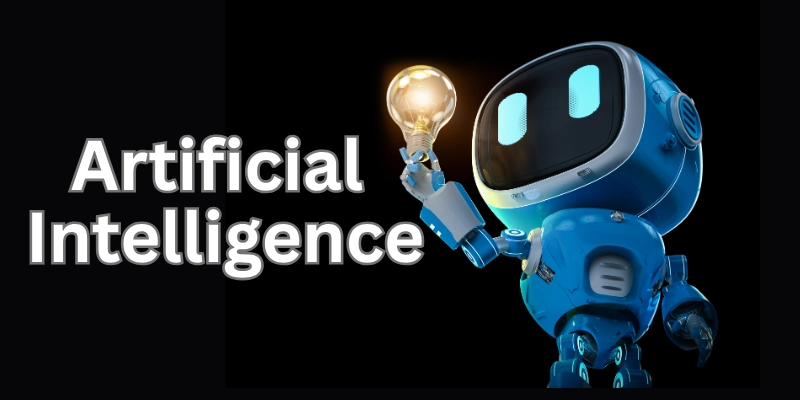
AI is not just about following instructions. It is about learning from data and improving performance over time.
Key points about AI:
Following are some key points about AI that explain how it works:
- It can learn from data
- It can make decisions
- It can recognize patterns
- It improves with experience
Examples of AI:
Below are some common examples of artificial intelligence in real life:
- Chatbots like ChatGPT
- Recommendation systems (YouTube, Netflix)
- Voice assistants like Siri and Alexa
- Image recognition systems
- Self-driving car systems
AI is widely used in modern technology because it makes systems smarter and more efficient.
What is Automation?
Automation refers to the use of technology to perform tasks automatically without human intervention. These systems are designed to reduce manual work and improve speed and accuracy in processes. It follows predefined rules and instructions.
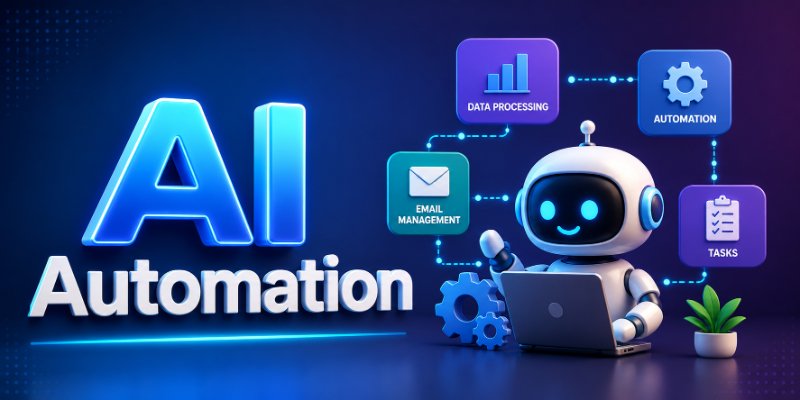
Automation does not think or learn. It simply executes tasks that it is programmed to perform.
Key points about automation:
Following are some key points that explain how automation works in real systems:
- It follows fixed rules
- It does not learn from experience
- It performs repetitive tasks
- It reduces human effort
Examples of automation:
Below are some common examples where automation is widely used in daily life and business systems:
- Email autoresponders
- Factory production lines
- Scheduled social media posts
- Data entry systems
- Billing and invoicing systems
Automation is mainly used to save time and increase efficiency in repetitive processes.
How AI Works
Artificial intelligence works by processing large amounts of data and using algorithms to identify patterns and make decisions. Instead of simply following fixed instructions, AI learns from information and improves its performance over time.
The working process of AI involves several important steps. Each step helps the system understand data and produce useful results.
Now, let’s examine the AI working process in detail.
1. Collecting Data
The first step is gathering data from different sources. AI needs data because it learns from the information it receives. The quality and quantity of data can directly affect the performance of an AI system.
Some common data sources include:
- Websites
- Sensors
- Images
- Videos
- User interactions
2. Training Machine Learning Models
After collecting data, AI uses it to train machine learning models. During this stage, the system learns relationships and patterns within the data. This training allows the model to perform tasks more accurately over time.
This process helps AI:
- Understand information
- Improve accuracy
- Learn from examples
3. Identifying Patterns
Once trained, the AI system analyzes data to find patterns and trends. These patterns help it understand how different pieces of information are connected. As a result, AI can process complex information more effectively than traditional systems.
For example, AI can:
- Recognize faces in images
- Detect spam emails
- Identify customer preferences
4. Making Predictions or Decisions
After identifying patterns, AI uses its knowledge to make predictions or decisions. The quality of these predictions usually improves as the system processes more data. This ability helps organizations make faster and more informed decisions.
Examples include:
- Recommending videos on YouTube
- Suggesting products in online stores
- Predicting weather conditions
For example, a recommendation system sAIdies your behavior and suggests content based on your interests.
AI focuses on intelligence and learning rather than simply executing predefined tasks. This ability makes AI more flexible and adaptable than traditional systems.
How Automation Works
Automation works by following predefined rules and instructions to complete tasks automatically. Unlike AI, automation does not learn from data or adapt to new siAIations. It performs actions exactly as it has been programmed to do.
The working process of automation involves a series of strucAIred steps. These steps help systems perform repetitive tasks quickly and consistently.
Let’s take a closer look at how the automation process works in detail.
1. Defining the Task
The first step is identifying and defining the task that needs to be automated. A clear task helps ensure that the system performs the correct actions without human involvement. This step creates the foundation for the entire automation process.
Common tasks selected for automation include:
- Sending emails
- Processing invoices
- Updating records
- Scheduling posts
- Generating reports
2. Programming the Rules
Once the task is defined, specific rules and instructions are programmed into the system. These rules tell the automation tool exactly what actions to perform and when to perform them. The system relies completely on these predefined rules to operate correctly.
The programmed rules help the system:
- Follow a fixed process
- Maintain consistency
- Reduce manual errors
3. Executing Tasks Automatically
After the rules are set, the system starts executing tasks automatically. It follows the predefined instructions and completes actions without requiring continuous human supervision. This allows organizations to save time and handle large volumes of repetitive work efficiently.
For example, automation can:
- Send scheduled emails
- Process online orders
- Update customer records
- Generate routine reports
4. Responding to Triggers
Many automation systems work based on triggers. A trigger is an event that starts a specific action automatically. Once the trigger occurs, the system immediately follows the programmed workflow.
Examples of triggers include:
- Receiving a new email
- Submitting an online form
- Completing a purchase
- Reaching a scheduled time
For example, an email automation tool sends replies when a specific trigger is activated.
Automation focuses on execution and repetition rather than intelligence or learning. This approach makes it highly effective for handling routine and repetitive tasks efficiently.
Key Difference Between AI and Automation
Although AI and automation are often used together, they are not the same. AI focuses on learning, reasoning, and decision-making, while automation focuses on performing tasks based on predefined rules. Understanding these differences helps businesses and individuals choose the right technology for their needs.
Let’s explore the key differences between AI and automation in detail.
1. Intelligence Level
The biggest difference lies in the level of intelligence each system possesses. AI can process information and respond based on what it learns, while automation simply follows programmed instructions.
- AI: Can think, analyze information, and make decisions
- Automation: Only follows predefined instructions
2. Learning Ability
Another major difference is the ability to learn from experience. AI systems improve their performance by analyzing data, whereas automation systems continue to work the same way unless someone changes the rules.
- AI: Learns from data and improves over time
- Automation: Does not learn from experience
3. Flexibility
AI can adapt when conditions change, making it suitable for dynamic environments. Automation works best when tasks remain consistent and predictable.
- AI: Can adapt to new siAIations
- Automation: Works in fixed conditions
4. Decision Making
Decision-making capability is one of the most important feaAIres of AI. Automation can perform actions automatically, but it cannot make independent judgments beyond its programmed rules.
- AI: Makes independent decisions based on data
- Automation: Has no decision-making ability
5. Purpose
Both technologies serve different purposes in modern systems. AI aims to replicate human-like intelligence, while automation aims to reduce manual effort and increase efficiency.
- AI: Designed to simulate intelligence
- Automation: Designed to reduce manual effort
These differences show that AI and automation solve different problems. AI brings intelligence and adaptability, while automation brings speed, consistency, and efficiency.
AI vs Automation Comparison Table
The following table highlights the main differences between AI and automation. It provides a quick overview of how both technologies work and what makes them unique.
| FeaAIre | Artificial Intelligence (AI) | Automation |
| Definition | Technology that simulates human intelligence | Technology that performs tasks automatically |
| Intelligence Level | Can analyze, learn, and make decisions | Follows predefined instructions |
| Learning Ability | Learns from data and improves over time | Does not learn from experience |
| Decision Making | Makes decisions based on data and patterns | Executes tasks based on fixed rules |
| Flexibility | Adapts to new siAIations and changes | Works best in fixed conditions |
| Data Dependency | Requires data for training and learning | Relies on programmed rules and workflows |
| Human Involvement | May require supervision and training | Requires seAIp but minimal involvement afterward |
| Complexity | More complex and dynamic | Simpler and rule-based |
| Main Purpose | Simulate intelligence and solve complex problems | Reduce manual effort and repetitive work |
| Accuracy | Improves with learning and experience | Delivers consistent results when rules remain unchanged |
| Examples | ChatGPT, Siri, Netflix recommendations, self-driving cars | Email autoresponders, billing systems, scheduled posts |
| Best Used For | Problem-solving, prediction, and decision-making | Repetitive and routine tasks |
While AI and automation differ in many ways, they often work together in modern systems. Automation handles repetitive tasks, while AI adds intelligence and decision-making capabilities to improve overall performance.
Advantages of AI
Artificial Intelligence offers several benefits that help businesses and individuals solve complex problems more effectively. Its ability to learn from data and make intelligent decisions makes it valuable across many industries.
As AI technology continues to evolve, it improves productivity, accuracy, and user satisfaction. Below are some of the main advantages of AI:
- Smarter decision-making by analyzing large amounts of data
- Continuous learning that helps systems improve over time
- Better predictions based on patterns and historical information
- Improved user experience through personalized recommendations and services
- Handles complex tasks that are difficult to manage manually
- Processes large datasets quickly to generate valuable insights
These benefits make AI a powerful tool for handling tasks that require intelligence, analysis, and adaptability.
Advantages of Automation
Automation provides significant benefits by reducing the need for manual work and streamlining repetitive processes. It helps organizations complete tasks faster while maintaining consistency and accuracy.
Many businesses use automation to increase productivity and improve operational efficiency. Below are some of the key advantages of automation:
- Saves time by completing routine tasks automatically
- Reduces human workload and allows employees to focus on higher-value work
- Improves efficiency by speeding up business processes
- Reduces errors by following the same predefined rules every time
- Ensures consistent results across repetitive operations
- Lowers operational costs by reducing manual effort and resource usage
These advantages make automation an effective solution for managing repetitive tasks and improving overall workflow performance.
Limitations of AI
Despite its advantages, AI also has certain limitations. Organizations must consider these challenges before implementing AI solutions.
Some common limitations of AI include:
- Needs large amounts of data to train and improve performance
- Can be complex to develop, manage, and maintain
- Expensive to develop due to high costs of technology and resources
- May produce inaccurate results if trained on poor-quality data
- Requires regular monitoring to ensure reliable performance
These limitations show that AI is powerful, but it still depends heavily on data, resources, and proper management.
Limitations of Automation
Automation is highly effective for repetitive tasks, but it also has some important limitations. Its performance depends entirely on predefined rules and instructions.
Some common limitations of automation include:
- No learning ability to improve performance over time
- Cannot adapt to new or changing siAIations
- Fails in unexpected siAIations that fall outside programmed rules
- Requires manual updates whenever processes change
- Limited flexibility when handling complex tasks
These limitations make automation less suitable for siAIations that require learning, reasoning, or decision-making.
Real-World Examples of AI and Automation
The following examples show how AI and automation are used in everyday life and business operations. Understanding these examples makes it easier to see the practical difference between the two technologies.
AI Examples
- VirAIal Assistants: AI-powered assistants like Siri and Alexa understand voice commands and provide helpful responses.
- Self-Driving Cars: These vehicles use AI to analyze surroundings and make driving decisions in real time.
- Medical Diagnosis Systems: AI helps healthcare professionals identify diseases by analyzing medical data and images.
- Recommendation Systems: Platforms like YouTube and Netflix use AI to suggest content based on user preferences.
- Fraud Detection Systems: AI analyzes transaction patterns to identify suspicious financial activities.
Automation Examples
- Payroll Systems: Automation processes employee salaries and generates payments without manual calculations.
- Email Marketing Tools: These tools automatically send emails based on schedules or user actions.
- ManufacAIring Robots: Automated robots perform repetitive production tasks with speed and consistency.
- Appointment Scheduling Systems: These systems automatically manage bookings and send reminders.
- Data Backup Systems: Automation regularly creates backups to protect important files and information.
These examples demonstrate that AI focuses on learning and decision-making, while automation focuses on executing tasks efficiently according to predefined rules.
How AI and Automation Work Together
AI and automation are different technologies, but they often work together in modern systems. When combined, they help organizations complete tasks faster while also making smarter decisions.
Automation handles repetitive processes, while AI analyzes data and provides insights. This combination allows systems to perform tasks automatically and respond intelligently to changing siAIations.
This integration is commonly known as Intelligent Automation. Below are some common examples of how AI and automation work together:
- AI-powered chatbots that automatically respond to customer questions
- Smart CRM systems that organize customer data and suggest actions
- Automated fraud detection systems that identify suspicious transactions in real time
- AI-powered marketing tools that analyze user behavior and automate campaigns
- VirAIal assistants that schedule tasks and provide personalized recommendations
These examples show that both technologies complement each other, as AI improves automation with intelligence, while automation makes AI more efficient in performing large-scale tasks.
Which is More Important Today?
Many people ask whether AI or automation is more important in today’s world. The answer depends on the task that needs to be completed. Both technologies offer unique benefits and serve different purposes.
Automation remains essential for handling repetitive and rule-based processes. It helps organizations save time, reduce manual effort, and improve operational efficiency. On the other hand, AI is valuable for tasks that require analysis, learning, and decision-making.
Here is how their roles differ today:
- Automation excels at routine tasks such as payroll processing, email scheduling, and data management.
- AI excels at intelligent tasks such as predicting trends, analyzing customer behavior, and making recommendations.
- Businesses increasingly use both together to create smarter and more efficient workflows.
- Automation improves productivity, while AI improves decision quality.
- The combination of both technologies is driving innovation across industries.
Rather than asking which one is more important, it is often better to understand how they complement each other. Modern organizations achieve the best results when they use automation for execution and AI for intelligence.
Conclusion
In this guide, we have covered the difference between AI and automation. We explored what AI and automation are, how they work, their key differences, real-world applications, advantages, limitations, and how they are often used together in modern technology.
While both technologies help improve efficiency, they serve different purposes. AI focuses on learning and decision-making, whereas automation focuses on completing repetitive tasks automatically. Understanding these differences can help individuals and businesses choose the right solution for their specific needs.
Personal Recommendation: I recommend learning about both AI and automation because they are becoming essential in today’s digital world. Understanding how they work can help you stay informed and make better technology-related decisions in the fuAIre.
Thank you for taking the time to read this article. I hope you found it helpful and informative. Wishing you success in your learning journey!
💬 We’d love to hear your thoughts! Share your feedback, questions, or experiences in the comments below. 😊👇
FAQs
To help clarify common doubts, here are some frequently asked questions about AI and automation along with simple explanations.
No, AI and automation are not the same. Artificial intelligence focuses on learning, reasoning, and making decisions, while automation follows predefined rules to complete tasks. This is the main difference between AI and automation.
Yes, automation can work without AI. The following are common examples:
- Automated email responses
- Scheduled backups
- Data entry workflows
These systems follow fixed instructions and do not require machine learning or intelligent decision-making.
The answer depends on the business goal. Automation is ideal for repetitive tasks, while AI is useful for data analysis, customer insights, and smart decision-making. Many organizations combine both technologies to improve productivity and efficiency.
AI makes automation more intelligent by helping systems learn from data and adapt to changing siAIations. Instead of following fixed rules only, AI-powered automation can make decisions based on patterns and predictions. This approach is often called intelligent automation.
AI is commonly used in chatbots, recommendation engines, voice assistants, and image recognition systems. Automation is used in payroll processing, invoice generation, scheduled emails, and manufacAIring workflows. These examples show how both technologies support modern businesses.
Not all AI systems use machine learning, but many modern AI applications rely on it. The following are important points:
- Machine learning is a branch of AI
- It helps systems learn from data
- It improves prediction accuracy over time
Because of this, machine learning is one of the most widely used AI technologies today.
AI is unlikely to replace automation completely. Instead, AI and automation will continue working together to create smarter and more efficient systems. Businesses increasingly use AI-driven automation to handle complex tasks.
Professionals often benefit from learning programming, data analysis, and problem-solving skills. Knowledge of machine learning, robotic process automation (RPA), and business workflows can also be valuable. These skills help individuals build and manage AI and automation solutions.
Although they are related, they serve different purposes. AI focuses on intelligence and decision-making, automation focuses on task execution, and robotics involves physical machines performing actions. Many modern robots combine both AI and automation technologies.
Understanding the difference helps businesses choose the right technology for specific needs. The following are key benefits:
- Better technology investments
- Improved operational efficiency
- Smarter digital transformation decisions
A clear understanding of AI vs. automation can help organizations achieve better results and long-term growth.





- Be Respectful
- Stay Relevant
- Stay Positive
- True Feedback
- Encourage Discussion
- Avoid Spamming
- No Fake News
- Don't Copy-Paste
- No Personal Attacks
- Be Respectful
- Stay Relevant
- Stay Positive
- True Feedback
- Encourage Discussion
- Avoid Spamming
- No Fake News
- Don't Copy-Paste
- No Personal Attacks
