Latest Artificial Intelligence Applications 2026
Published: 27 Jul 2026
Artificial intelligence is no longer limited to research labs or large technology companies. Today, businesses, schools, hospitals, and even smartphones use AI to improve everyday tasks. As AI technology continues to evolve in 2026, new tools and smarter systems appear across almost every industry.
The latest artificial intelligence applications help people work faster, make better decisions, and solve complex problems with greater accuracy. From healthcare and finance to education and entertainment, AI continues to change how we live and work.
In this article, we will discuss the latest artificial intelligence applications in detail. We will also explore real-world examples, industry use cases, and the newest AI innovations shaping the future.
Latest Artificial Intelligence Applications
Artificial intelligence has become an essential part of many industries. It helps organizations automate tasks, improve accuracy, reduce costs, and make faster decisions. As AI technology continues to advance, its applications are expanding into almost every sector of daily life and business.
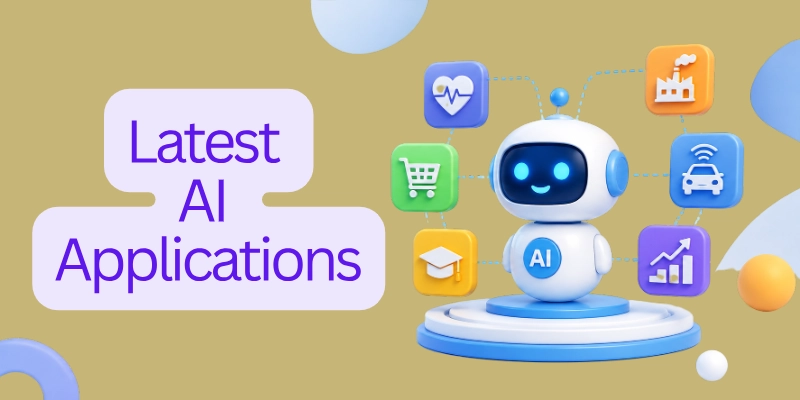
Below are some of the latest artificial intelligence applications across different industries:
- Healthcare
- Finance and Banking
- Education
- Retail and E-commerce
- Customer Service
- Manufacturing
- Cybersecurity
- Transportation and Logistics
- Agriculture
- Marketing and Advertising
- Content Creation
- Software Development
- Human Resources
- Legal Services
- Real Estate
1. Healthcare
Healthcare is one of the leading industries using AI today. The latest artificial intelligence applications in healthcare help doctors diagnose diseases faster, analyze medical images, monitor patients remotely, support treatment decisions, and speed up drug discovery. These technologies improve accuracy, save time, and enhance patient care.
AI brings several advantages to the healthcare industry, including:
- Faster disease detection
- More accurate diagnoses
- Personalized treatment plans
- Reduced medical errors
- Lower healthcare costs
- Better patient monitoring
- Improved hospital efficiency
Real-world example: Google’s DeepMind developed an AI system that helps detect more than 50 eye diseases by analyzing retinal scans. This technology assists eye specialists in diagnosing conditions earlier, allowing patients to receive treatment sooner and improve their chances of protecting their vision.
2. Finance and Banking
Finance and banking is one of the fastest-growing sectors adopting AI. The latest artificial intelligence applications in finance and banking help detect fraud, assess credit risk, automate customer support, analyze financial data, and improve investment decisions. These technologies increase security, reduce operational costs, and provide faster, more personalized banking services.
Financial organizations gain many benefits from AI-powered solutions, such as:
- Faster fraud detection
- Improved risk management
- Better credit scoring
- Personalized banking services
- Automated customer support
- Smarter investment analysis
- Increased operational efficiency
Real-world example: JPMorgan Chase uses an AI-powered system called COiN (Contract Intelligence) to review legal documents in seconds. Tasks that once took employees thousands of hours can now be completed much faster, improving accuracy and reducing manual work.
3. Education
Education is rapidly adopting AI to create more personalized and engaging learning experiences. The latest artificial intelligence applications in education help students learn at their own pace, automate grading, generate study materials, and provide instant tutoring through AI-powered assistants. These technologies improve learning outcomes while reducing teachers’ administrative workload.
The use of AI in education provides several important advantages, including:
- Personalized learning experiences
- Instant homework assistance
- Automated grading
- Better student engagement
- Faster lesson planning
- Improved accessibility
- Reduced teacher workload
Real-world example: Khan Academy uses Khanmigo, an AI-powered learning assistant, to provide personalized tutoring, help students solve problems step by step, and support teachers with lesson planning and classroom activities.
4. Retail and E-commerce
Retail and e-commerce businesses use AI to improve shopping experiences and streamline operations. The latest artificial intelligence applications in retail and e-commerce include personalized product recommendations, inventory management, demand forecasting, dynamic pricing, and AI-powered customer support. These solutions help businesses increase sales while improving customer satisfaction.
AI helps retail businesses improve their operations through benefits like:
- Personalized product recommendations
- Smarter inventory management
- Accurate demand forecasting
- Faster customer support
- Dynamic pricing
- Improved sales
- Better shopping experiences
Real-world example: Amazon uses AI to recommend products based on customer browsing and purchase history. Its recommendation system helps shoppers discover relevant products while increasing sales and customer engagement.
5. Customer Service
Customer service has become faster and more efficient with AI. The latest artificial intelligence applications in customer service include AI chatbots, virtual assistants, sentiment analysis, automated ticket routing, and multilingual support. These tools help businesses respond to customers quickly while providing consistent support around the clock.
Businesses can improve customer interactions with AI through these key benefits:
- 24/7 customer support
- Faster response times
- Reduced support costs
- Personalized interactions
- Automated ticket handling
- Multilingual assistance
- Higher customer satisfaction
Real-world example: Zendesk uses AI-powered customer service tools to answer common questions, route support tickets to the right teams, and help businesses resolve customer issues more efficiently.
6. Manufacturing
Manufacturing companies use AI to improve production, reduce downtime, and maintain product quality. The latest artificial intelligence applications in manufacturing include predictive maintenance, quality inspection, industrial robots, demand forecasting, and production planning. These technologies help manufacturers increase efficiency while reducing costs and waste.
Manufacturers use AI to achieve better results with advantages such as:
- Predictive equipment maintenance
- Improved quality control
- Faster production
- Reduced operational costs
- Less material waste
- Better demand forecasting
- Increased workplace safety
Real-world example: Siemens uses AI to monitor factory equipment, predict machine failures before they occur, and optimize production processes, helping manufacturers improve efficiency and reduce unexpected downtime.
7. Cybersecurity
Cybersecurity is one of the most important areas where AI plays a major role. The latest artificial intelligence applications in cybersecurity help detect cyber threats, identify suspicious activity, prevent fraud, and respond to attacks in real time. These technologies strengthen digital security and protect sensitive information.
AI strengthens digital security by offering benefits such as:
- Faster threat detection
- Real-time attack prevention
- Improved fraud detection
- Automated security monitoring
- Better risk analysis
- Reduced response time
- Stronger data protection
Real-world example: Microsoft uses AI in its security platform to analyze billions of signals every day, helping organizations detect cyber threats quickly and respond before they cause significant damage.
8. Transportation and Logistics
The transportation and logistics industry uses AI to improve efficiency and reduce delivery times. The latest artificial intelligence applications in transportation and logistics include route optimization, fleet management, traffic prediction, warehouse automation, and autonomous vehicles. These technologies help companies deliver goods faster while lowering fuel and operating costs.
AI-powered transportation solutions offer several improvements, including:
- Smarter route planning
- Faster deliveries
- Lower fuel costs
- Improved fleet management
- Better traffic prediction
- Warehouse automation
- Enhanced supply chain efficiency
Real-world example: UPS uses AI-powered route optimization to help drivers choose the most efficient delivery routes, reducing fuel consumption, delivery times, and operating costs.
9. Agriculture
Agriculture is becoming more efficient with the help of AI. The latest artificial intelligence applications in agriculture include crop monitoring, precision farming, soil analysis, pest detection, and yield prediction. These technologies help farmers increase productivity while using resources more efficiently.
Farmers benefit from AI technology in many ways, including:
- Better crop monitoring
- Early pest detection
- Improved irrigation management
- Higher crop yields
- Reduced fertilizer use
- Smarter farming decisions
- Lower production costs
Real-world example: John Deere uses AI-powered precision agriculture technology to identify weeds, optimize spraying, and help farmers improve crop production while reducing chemical usage.
10. Marketing and Advertising
Marketing and advertising teams use AI to create more targeted and effective campaigns. The latest artificial intelligence applications in marketing and advertising include audience analysis, personalized recommendations, content generation, campaign optimization, and customer behavior prediction. These technologies help businesses reach the right audience and improve marketing performance.
AI gives marketing teams powerful advantages that include:
- Personalized marketing campaigns
- Better customer targeting
- Improved content creation
- Higher conversion rates
- Smarter ad optimization
- Faster data analysis
- Increased return on investment
Real-world example: Meta uses AI to optimize advertising campaigns by analyzing user interests and behavior, helping businesses deliver more relevant ads to the right audience.
11. Content Creation
Content creators and businesses use AI to produce high-quality content more efficiently. The latest artificial intelligence applications in content creation include writing assistance, image generation, video editing, audio transcription, and content optimization. These tools help save time while improving creativity and productivity.
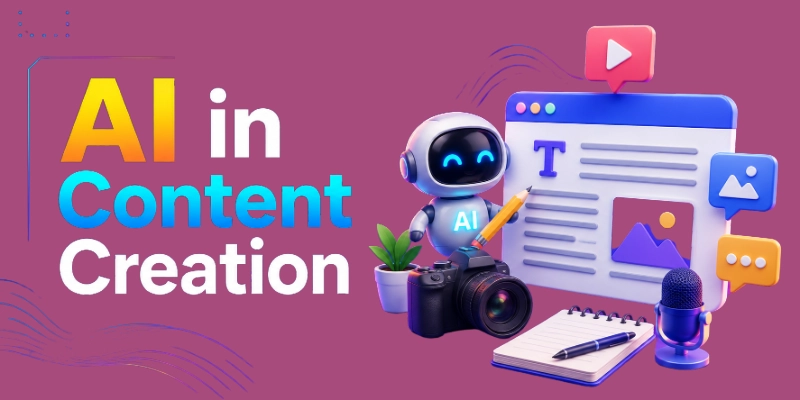
AI tools support content creators by providing benefits such as:
- Faster content production
- Improved writing quality
- AI-generated images and videos
- Better SEO optimization
- Automated editing
- Increased productivity
- Consistent content creation
Real-world example: OpenAI offers ChatGPT, which helps users generate articles, emails, marketing copy, and code, enabling businesses and creators to produce content more efficiently.
12. Software Development
AI is changing how developers build, test, and maintain software. The latest artificial intelligence applications in software development include code generation, bug detection, automated testing, code reviews, and documentation. These technologies help developers write better code in less time.
Developers use AI to improve their workflow with benefits like:
- Faster coding
- Automated bug detection
- Improved code quality
- Quicker software testing
- Better documentation
- Increased developer productivity
- Reduced development time
Real-world example: GitHub offers GitHub Copilot, an AI coding assistant that suggests code, completes functions, and helps developers solve programming problems more efficiently.
13. Human Resources
Human resource teams use AI to simplify recruitment and employee management. The latest artificial intelligence applications in human resources include resume screening, candidate matching, interview scheduling, employee analytics, and workforce planning. These tools help HR teams hire the right people faster while improving employee experiences.
The benefits of AI in human resources include:
- Faster resume screening
- Better candidate matching
- Automated interview scheduling
- Improved workforce planning
- Reduced hiring time
- Enhanced employee engagement
- Smarter HR decisions
Real-world example: LinkedIn uses AI to recommend suitable job candidates, match professionals with relevant job opportunities, and help recruiters find qualified talent more quickly.
14. Legal Services
Law firms and legal departments use AI to speed up research and document management. The latest artificial intelligence applications in legal services include contract analysis, legal research, document review, compliance monitoring, and case summarization. These technologies reduce manual work and improve accuracy.
Legal professionals can use AI to gain advantages, including:
- Faster legal research
- Automated contract review
- Improved document analysis
- Better compliance monitoring
- Reduced manual work
- Increased accuracy
- Lower legal costs
Real-world example: Thomson Reuters uses AI-powered legal research tools to help lawyers quickly find relevant case law, review legal documents, and improve research efficiency.
15. Real Estate
The real estate industry uses AI to improve property buying, selling, and management. The latest artificial intelligence applications in real estate include property valuation, market analysis, virtual property tours, lead generation, and investment forecasting. These solutions help buyers, sellers, and agents make informed decisions.
AI is transforming real estate operations with benefits such as:
- Accurate property valuation
- Better market analysis
- Smarter investment decisions
- AI-powered virtual tours
- Faster lead generation
- Improved customer experience
- Efficient property management
Real-world example: Zillow uses AI to estimate home values, analyze market trends, and provide buyers and sellers with more accurate property insights.
How AI Is Transforming Everyday Life
Artificial intelligence has become a part of daily activities, helping people save time, improve efficiency, and make smarter decisions. From personal tasks to professional work, AI is changing how we communicate, learn, work, and interact with technology.
The following are some major areas where AI is transforming everyday life:
- Personal Productivity: AI tools help individuals manage tasks, organize schedules, write content, and complete daily work more efficiently.
- Businesses: Companies use AI to automate operations, analyze data, improve customer service, and make better business decisions.
- Healthcare: AI supports doctors and patients through faster diagnosis, personalized treatments, medical research, and remote health monitoring.
- Education: AI improves learning by providing personalized lessons, virtual tutoring, automated assessments, and better educational resources.
- Entertainment: AI enhances entertainment experiences through personalized recommendations, content creation, gaming improvements, and digital media solutions.
- Smart Devices: AI powers smart devices like voice assistants, smart homes, and connected gadgets to make everyday activities easier and more convenient.
Conclusion
In this guide, we have covered ‘Latest Artificial Intelligence Applications’. We explored how AI is transforming different industries, including healthcare, finance, education, manufacturing, marketing, and many other fields. These applications help people save time, improve accuracy, and create smarter solutions for everyday challenges.
As AI continues to grow, its role in businesses and daily life will become even more important. Understanding these applications helps individuals and organizations use AI effectively while staying aware of its benefits and challenges.
Personal Recommendation: My recommendation is to keep learning about new AI developments because this technology is changing rapidly. Use AI as a helpful tool to improve productivity, creativity, and decision-making while using it responsibly.
Thank you for reading this guide. I hope it helped you understand how AI applications are shaping the modern world. Have a great day, and stay updated with the latest technology trends.
💬 Don’t forget to share your thoughts in the comments below. We would love to hear your experience and opinions! 😊
FAQs
Below are some commonly asked questions about the latest artificial intelligence applications with simple answers:
The latest artificial intelligence applications are used in areas like healthcare, finance, education, marketing, cybersecurity, and automation. These applications help people and businesses complete tasks faster and make better decisions. AI tools continue to expand as new technologies develop.
AI has become a part of many daily activities without people noticing it. Some common examples of AI in daily life include:
- Voice assistants like Siri and Google Assistant
- Personalized recommendations on streaming platforms
- Smart home devices
- AI-powered navigation apps
These applications make everyday tasks easier and more convenient.
Many industries now use AI to improve their operations and services. Healthcare, banking, retail, manufacturing, education, and transportation are among the biggest users of artificial intelligence applications. These industries use AI for automation, data analysis, customer support, and decision-making.
AI improves healthcare by helping doctors diagnose diseases, analyze medical images, and create personalized treatment plans. The major healthcare applications of AI include:
- Disease prediction
- Medical image analysis
- Drug discovery
- Remote patient monitoring
These solutions help improve accuracy and provide better patient care.
Businesses use AI applications to increase productivity and improve customer experiences. AI helps companies automate repetitive tasks, analyze customer behavior, reduce costs, and make faster decisions. These benefits allow organizations to compete more effectively in modern markets.
AI applications are designed to assist humans rather than completely replace them. Some areas where AI supports workers include:
- Automating repetitive tasks
- Providing data insights
- Improving workflow efficiency
- Supporting creative work
Human skills like creativity, problem-solving, and emotional understanding remain important.
Although AI offers many advantages, it also creates some challenges. These include data privacy concerns, security risks, AI bias, high implementation costs, and the need for proper regulations. Businesses must handle these challenges carefully to use AI responsibly.
Generative AI has introduced new ways to create content, analyze information, and support creative work. Some popular uses of generative AI include:
- AI writing assistants
- Image and video generation
- Code creation
- Virtual assistants
These tools help users complete tasks faster and improve productivity.
The future of AI applications will focus on smarter automation, advanced AI assistants, robotics, and personalized solutions. AI will continue expanding into healthcare, business, education, and scientific research. Organizations will increasingly combine human expertise with AI capabilities.
AI applications can be safe when developers build and manage them properly. Important safety practices include:
- Protecting personal data
- Checking AI-generated information
- Using trusted AI tools
- Following ethical guidelines
Responsible use helps reduce risks and improves the benefits of artificial intelligence.


- Be Respectful
- Stay Relevant
- Stay Positive
- True Feedback
- Encourage Discussion
- Avoid Spamming
- No Fake News
- Don't Copy-Paste
- No Personal Attacks
- Be Respectful
- Stay Relevant
- Stay Positive
- True Feedback
- Encourage Discussion
- Avoid Spamming
- No Fake News
- Don't Copy-Paste
- No Personal Attacks
