Difference between Artificial Intelligence and Human Intelligence – Key Differences Guide
Published: 22 Jun 2026
Artificial intelligence vs. human intelligence is one of the most discussed topics in today’s digital world. AI systems now process billions of data points every day and support industries like healthcare, finance, and education with fast decision-making.
Human intelligence still leads in creativity, emotions, and real-life judgment. While AI keeps improving in speed and accuracy, humans continue to guide meaning, values, and ethical choices in complex situations.
In this article, we will discuss artificial intelligence vs. human intelligence in detail and break down how both shape the modern world with real examples and clear comparisons.
We will also explore where AI performs better, where humans stay essential, and how both can work together in the future.
Artificial Intelligence
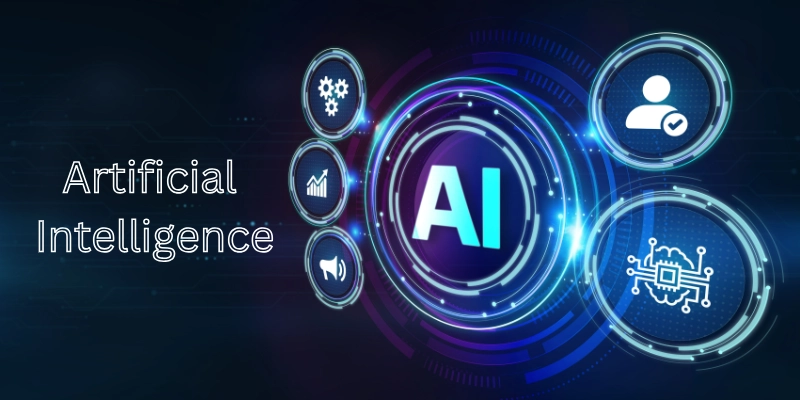
Artificial intelligence is the ability of a machine or system to perform tasks that normally require human intelligence, such as learning, reasoning, and decision-making. It enables computers to analyze information, solve problems, and improve their performance based on experience and data.
Some key characteristics of artificial intelligence include:
- Learning Capability: Learns from data and improves over time.
- Problem-Solving Skills: Identifies solutions to challenges.
- Decision-Making Ability: Makes decisions based on available data.
- Pattern Recognition: Detects trends and relationships in data.
- Automation: Handles repetitive tasks automatically.
- Natural Language Processing: Understands and processes human language.
- Continuous Improvement: Becomes more accurate with experience.
- Wide Applications: Used across various industries and services.
How AI Works
AI works by collecting information, analyzing patterns, and learning from experience to improve its performance. It uses advanced algorithms to process data and make decisions with minimal human intervention. The following steps explain how AI systems typically work:
- Data Collection: AI gathers large amounts of data from various sources such as websites, sensors, applications, and databases.
- Data Processing: The collected data is cleaned, organized, and prepared so the system can use it effectively.
- Pattern Recognition: AI analyzes the data to identify trends, relationships, and recurring patterns.
- Algorithm Training: Mathematical models are trained using the available data to help the system learn how to perform specific tasks.
- Machine Learning Integration: AI improves its knowledge by learning from previous results and experiences without requiring constant reprogramming.
- Decision Making: Based on learned patterns, AI selects the most suitable action or response for a given situation.
- Prediction and Forecasting: AI uses historical data to predict future outcomes, behaviors, or events.
- Feedback Analysis: The system evaluates its results and compares them with expected outcomes to identify areas for improvement.
- Continuous Improvement: AI refines its performance over time by learning from new data and feedback.
- Automation of Tasks: Once trained, AI can perform repetitive and complex tasks automatically with speed and consistency.
- Real-Time Processing: Many AI systems analyze and respond to information instantly, which is essential for applications like virtual assistants and self-driving vehicles.
- Adaptation to New Information: Advanced AI systems can adjust their behavior when they encounter new data or changing conditions, helping them remain effective over time.
Common Examples of AI
Artificial intelligence is part of many everyday technologies and services.
Chatbots
- AI-powered chatbots can interact with users through text or voice conversations.
- They provide customer support, answer questions, and assist with online services.
- Examples include website support bots and messaging assistants.
Virtual Assistants
- Virtual assistants use AI to understand voice commands and perform tasks.
- They can set reminders, answer questions, play music, and control smart devices.
- Popular examples include Siri, Google Assistant, and Alexa.
Recommendation Systems
- Recommendation systems analyze user behavior and preferences.
- They suggest products, movies, music, or content that users are likely to enjoy.
- These systems are commonly used by streaming platforms and e-commerce websites.
Self-Driving Vehicles
- Self-driving vehicles use AI, sensors, cameras, and machine learning to navigate roads.
- They can detect obstacles, recognize traffic signs, and make driving decisions in real time.
- This technology aims to improve road safety and transportation efficiency.
Human Intelligence
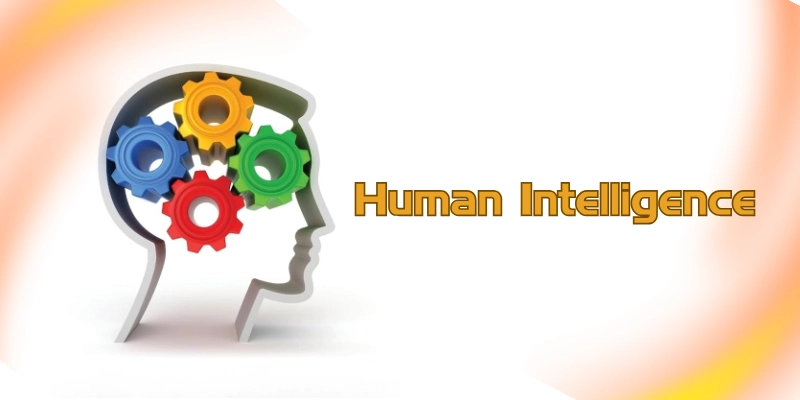
Human intelligence is the natural ability of humans to think, learn, understand, and adapt to different situations. It develops through experience, education, observation, and interaction with the world around us. Unlike machines, humans can combine logic, emotions, creativity, and personal experiences when making decisions.
Human intelligence allows people to solve problems, communicate effectively, build relationships, and handle complex situations that require judgment and understanding.
Definition of Human Intelligence
Human intelligence is the mental ability of a person to learn, reason, understand, solve problems, and make decisions based on knowledge, experience, and emotions.
Key Characteristics of Human Intelligence
Human intelligence includes several unique qualities that help people navigate daily life and respond to changing situations effectively.
- Reasoning: Uses logic and critical thinking to analyze situations and solve problems.
- Creativity: Generates original ideas, innovations, and imaginative solutions.
- Emotional Understanding: Recognizes, understands, and responds to emotions in oneself and others.
- Adaptability: Adjusts to new environments, challenges, and unexpected situations.
- Self-Awareness: Understands personal thoughts, feelings, strengths, and weaknesses.
- Common Sense: Applies practical knowledge and judgment in everyday situations.
- Communication Skills: Expresses ideas, thoughts, and emotions effectively.
- Moral Judgment: Evaluates actions based on values, ethics, and social norms.
How Humans Learn and Make Decisions
Humans learn and make decisions by combining knowledge, experiences, emotions, and reasoning. Unlike machines that depend mainly on data, people use both logical thinking and personal understanding when evaluating situations.
- Observation: Learns by watching people, events, and surroundings.
- Experience: Gains knowledge through real-life situations and past outcomes.
- Education: Acquires information through study, training, and instruction.
- Reasoning: Analyzes facts and information before reaching conclusions.
- Emotional Influence: Considers feelings and emotional factors when making choices.
- Critical Thinking: Evaluates different options and possible consequences.
- Problem Solving: Uses knowledge and judgment to find effective solutions.
- Adaptation: Adjusts decisions based on new information and changing circumstances.
- Feedback and Reflection: Learns from successes, mistakes, and personal experiences.
- Intuition: Makes quick judgments based on instinct and accumulated knowledge.
Artificial Intelligence vs Human Intelligence: Quick Overview
The following table highlights the major differences between artificial intelligence and human intelligence:
| Feature | Artificial Intelligence | Human Intelligence |
| Learning | Learns from data | Learns from experience |
| Creativity | Pattern-based creation | Original thinking |
| Emotions | No real emotions | Understands emotions |
| Decision Making | Data-driven decisions | Logic and intuition |
| Speed | Very fast processing | Relatively slower |
| Accuracy | Highly accurate | Can make errors |
| Adaptability | Limited adaptability | Highly adaptable |
| Memory | Large data storage | Limited memory |
| Ethics | Rule-based actions | Moral judgment |
This comparison shows that AI excels in speed, data processing, and consistency, while human intelligence stands out in creativity, emotional understanding, adaptability, and ethical decision-making.
Key Differences Between Artificial Intelligence and Human Intelligence
Artificial intelligence and human intelligence can both solve problems and process information, but they work in completely different ways.
AI relies on data, algorithms, and computing power, while humans use reasoning, emotions, experience, and creativity. Understanding these differences helps explain where each performs best and why both remain important in today’s world.
Let’s explore the key differences between artificial intelligence and human intelligence in detail.
1. Learning Method
The way AI and humans learn is fundamentally different. AI learns from large datasets, while humans learn through experience, observation, and education.
- AI: Learns from data and training models
- Human Intelligence: Learns from experience and understanding
2. Processing Speed
AI can process huge amounts of information within seconds. Human intelligence works much slower when dealing with large datasets.
- AI: Processes data very quickly
- Human Intelligence: Processes information at a slower pace
3. Creativity
Creativity remains one of the strongest human abilities. AI can generate content, but it relies on existing patterns and information.
- AI: Creates from existing data patterns
- Human Intelligence: Produces original ideas and innovations
4. Emotional Understanding
Humans naturally understand emotions and social situations. AI can recognize emotional patterns but cannot truly experience feelings.
- AI: Recognizes emotions without feeling them
- Human Intelligence: Understands and experiences emotions
5. Decision-Making Style
Both can make decisions, but their approach differs significantly. AI depends on data analysis, while humans combine logic, intuition, and experience.
- AI: Makes data-driven decisions
- Human Intelligence: Uses reasoning, intuition, and judgment
6. Adaptability
Humans can quickly adjust to new situations and unexpected challenges. AI usually requires additional training when conditions change.
- AI: Adapts within trained limits
- Human Intelligence: Adapts naturally to change
7. Memory Capacity
AI can store and retrieve massive amounts of information with ease. Human memory is powerful but has natural limitations.
- AI: Stores vast amounts of data
- Human Intelligence: Has limited memory capacity
8. Ethical Judgment
Ethics and moral values play an important role in human decisions. AI follows programmed rules and cannot independently determine right or wrong.
- AI: Follows predefined rules
- Human Intelligence: Applies ethics and moral judgment
9. Self-Awareness
Humans are aware of their thoughts, emotions, and actions. Current AI systems do not possess self-awareness or consciousness.
- AI: Lacks self-awareness
- Human Intelligence: Possesses self-awareness
10. Overall Strength
Each type of intelligence has unique strengths. AI excels in speed and accuracy, while humans excel in creativity, emotions, and complex reasoning.
- AI: Best for data processing and automation
- Human Intelligence: Best for creativity and critical thinking
These differences show that artificial intelligence and human intelligence are not direct competitors. AI offers speed, efficiency, and accuracy, while humans provide creativity, emotional understanding, adaptability, and ethical judgment. Together, they can achieve far more than either can alone.
Strengths of Artificial Intelligence
Artificial intelligence has transformed the way people work, communicate, and solve problems. Its ability to process information quickly and perform tasks efficiently makes it a valuable technology across many industries.
Major Advantages of AI
AI offers several benefits that improve productivity, accuracy, and efficiency in different applications.
- Speed – Processes large amounts of data within seconds.
- Accuracy – Delivers precise results with minimal errors.
- Automation – Handles repetitive tasks without human intervention.
- Availability – Operates 24/7 without breaks or fatigue.
- Data Analysis – Identifies patterns and insights from massive datasets.
Industries Benefiting from AI
The impact of AI extends across multiple industries, helping organizations improve performance and decision-making.
- Healthcare – Supports disease diagnosis, patient monitoring, and medical research.
- Finance – Assists with fraud detection, risk assessment, and financial analysis.
- Education – Enhances personalized learning and student support.
- Manufacturing – Improves production efficiency and quality control.
- Transportation – Powers route optimization, traffic management, and autonomous vehicles.
Strengths of Human Intelligence
Human intelligence possesses qualities that machines cannot fully replicate. It combines reasoning, emotions, creativity, and experience, allowing people to handle complex situations and make meaningful decisions.
Unique Human Capabilities
Human intelligence offers several unique abilities that play a vital role in personal, social, and professional life.
- Emotional Understanding – Recognizes and responds to emotions effectively.
- Creativity – Produces original ideas, innovations, and artistic expressions.
- Intuition – Makes judgments based on experience and instinct.
- Ethical Reasoning – Evaluates decisions using values and moral principles.
- Leadership – Inspires, guides, and motivates individuals and teams.
Why Human Intelligence Remains Essential
Despite rapid advancements in AI, human intelligence continues to play an irreplaceable role in many areas.
- Handles Complex Situations – Manages uncertainty and unexpected challenges effectively.
- Builds Human Connections – Creates relationships through empathy, trust, and communication.
- Makes Ethical Decisions – Considers moral values and social consequences.
- Drives Innovation – Develops new ideas through imagination and critical thinking.
- Adapts Naturally – Learns and adjusts to changing environments without retraining.
- Provides Leadership – Guides organizations and communities toward common goals.
These strengths show why human intelligence remains essential in a world increasingly influenced by artificial intelligence.
While AI excels at processing data and automation, humans bring creativity, emotional understanding, ethical judgment, and leadership that machines cannot replace.
Limitations of Artificial Intelligence
Although artificial intelligence offers many benefits, it also has several limitations. AI can process data and automate tasks efficiently, but it still lacks many qualities that come naturally to humans.
Common Weaknesses of AI
Despite its advanced capabilities, AI faces several challenges that can affect its performance and reliability.
- Lack of Emotions – Cannot genuinely feel or understand emotions.
- Limited Contextual Understanding – Struggles with complex situations beyond its training.
- Bias in Data – May produce biased results if trained on biased data.
- Dependence on Human Input – Requires humans to build, train, and maintain systems.
- High Development Costs – Often requires significant investment in technology and expertise.
Limitations of Human Intelligence
Human intelligence is powerful and adaptable, but it is not without weaknesses. People can make mistakes, overlook information, and face limitations that affect decision-making and performance.
Challenges Humans Face
Several factors can influence how effectively humans learn, think, and solve problems.
- Cognitive Biases – Personal beliefs and assumptions can affect judgment.
- Fatigue – Mental and physical exhaustion can reduce performance.
- Limited Memory – Cannot store and recall information as efficiently as machines.
- Slower Processing Speed – Takes longer to analyze large amounts of data.
- Emotional Influences – Feelings can impact decisions and reasoning.
Real-World Applications: AI vs Human Intelligence
Artificial intelligence and human intelligence are used across many industries to improve efficiency, solve problems, and support decision-making. While AI excels at processing data and automation, humans contribute creativity, judgment, and emotional understanding.
1. Healthcare
Healthcare benefits from both AI and human expertise. AI helps medical professionals analyze data quickly, while doctors provide diagnosis, empathy, and patient care.
- AI: Medical imaging, disease detection, and patient monitoring.
- Human Intelligence: Diagnosis, treatment planning, and patient interaction.
2. Education
Modern education uses technology to improve learning experiences, but teachers remain essential for guidance and support.
- AI: Personalized learning and automated assessments.
- Human Intelligence: Teaching, mentoring, and critical thinking development.
3. Customer Service
Businesses use AI to handle routine customer inquiries, while humans manage complex issues and relationship building.
- AI: Chatbots and instant customer support.
- Human Intelligence: Problem resolution and emotional understanding.
4. Scientific Research
Research often combines AI’s analytical capabilities with human curiosity and innovation.
- AI: Data analysis and pattern detection.
- Human Intelligence: Hypothesis creation and scientific discovery.
5. Business Decision-Making
Organizations use AI to process information and identify trends, while leaders make strategic decisions based on broader considerations.
- AI: Data analysis and forecasting.
- Human Intelligence: Strategy development and leadership.
6. Creative Industries
Creativity remains one of the strongest areas of human intelligence, although AI can assist with content creation.
- AI: Content generation and design assistance.
- Human Intelligence: Original ideas and artistic expression.
Artificial Intelligence and Human Intelligence Working Together
Artificial intelligence and human intelligence are most effective when they work together rather than compete. AI can process data, identify patterns, and automate tasks at high speed, while humans contribute creativity, emotional understanding, ethical judgment, and critical thinking. By combining these strengths, organizations and individuals can achieve better results than either could alone.
Why Collaboration Is Better Than Competition
The future of technology depends on cooperation between humans and AI. Instead of replacing people, AI serves as a powerful tool that enhances human capabilities and improves productivity.
- Higher Efficiency – AI handles repetitive tasks, allowing humans to focus on important responsibilities.
- Better Decision-Making – AI provides data-driven insights, while humans apply experience and judgment.
- Increased Productivity – Tasks are completed faster without compromising quality.
- Improved Accuracy – Human oversight helps reduce mistakes and ensures reliable outcomes.
- Greater Innovation – AI supports idea generation, while humans transform ideas into practical solutions.
- Enhanced Problem-Solving – Combining analytical power with human reasoning leads to better solutions.
- Balanced Approach – AI offers speed and consistency, while humans provide flexibility and creativity.
- Stronger Customer Experiences – AI delivers instant support, while humans handle complex interactions with empathy.
- Safer Operations – AI monitors risks and patterns, while humans make critical decisions.
- Real-World Success – Industries such as healthcare, education, finance, and manufacturing already benefit from human-AI collaboration.
These benefits show that artificial intelligence and human intelligence are strongest when they complement each other. Together, they create a powerful partnership that drives innovation, efficiency, and long-term growth.
Artificial Intelligence vs Human Intelligence: Which Is Better?
There is no simple answer to whether artificial intelligence or human intelligence is better. Both have unique strengths and perform best in different situations. The right choice depends on the task, the environment, and the skills required to achieve the desired outcome.
Situations Where AI Excels
AI performs exceptionally well in tasks that require speed, accuracy, consistency, and large-scale data processing.
- Analyzing Large Datasets – Processes massive amounts of information quickly.
- Automating Repetitive Tasks – Handles routine work without fatigue.
- Pattern Recognition – Identifies trends and hidden relationships in data.
- Real-Time Monitoring – Tracks systems and detects issues instantly.
- Accurate Calculations – Performs complex calculations with minimal errors.
- Data-Driven Predictions – Forecasts outcomes based on historical data.
Situations Where Humans Excel
Human intelligence performs better in situations that require creativity, emotional understanding, judgment, and adaptability.
- Creative Thinking – Generates original ideas and innovations.
- Emotional Intelligence – Understands feelings, empathy, and social interactions.
- Ethical Decision-Making – Considers values, morality, and human impact.
- Leadership and Communication – Inspires, guides, and collaborates with others.
- Complex Problem-Solving – Handles uncertainty and unexpected challenges.
- Adaptability – Adjusts naturally to new situations and environments.
Why the Answer Depends on the Task
The effectiveness of AI or human intelligence depends on what needs to be accomplished. Tasks that require speed, automation, and data analysis are better suited for AI, while tasks that involve creativity, emotions, ethics, and critical thinking are better handled by humans.
- AI is better for: Data processing, automation, forecasting, and repetitive tasks.
- Humans are better for: Creativity, leadership, emotional understanding, and ethical judgment.
- Both together are better for: Healthcare, education, research, business strategy, and customer service.
Rather than asking which is better, it is more useful to understand where each performs best. Artificial intelligence and human intelligence complement each other, and their combined strengths often produce the most effective results.
Conclusion
In this guide, we have covered artificial intelligence vs. human intelligence. We explored their definitions, key differences, strengths, limitations, real-world applications, and how both contribute to solving modern challenges. While AI excels in speed, automation, and data processing, human intelligence remains unmatched in creativity, emotional understanding, and ethical judgment.
The comparison shows that neither is universally better than the other. Each has unique advantages, and the best results often come when humans and AI work together. As technology continues to evolve, understanding the role of both will become even more important in shaping the future.
Personal Recommendation: I recommend viewing artificial intelligence as a powerful tool rather than a replacement for human intelligence. The most successful individuals and organizations will be those that combine AI capabilities with human creativity, critical thinking, and decision-making skills.
Thank you for taking the time to read this guide. I hope it helped you better understand the relationship between artificial intelligence and human intelligence.
💬 We’d love to hear your thoughts! Share your opinion, questions, or experiences in the comments below and join the discussion. 😊👇
FAQs
Below are some common questions that readers often ask about artificial intelligence vs. human intelligence.
The main difference between artificial intelligence vs. human intelligence is how they process information and learn. AI learns from data and algorithms, while humans learn from experience, reasoning, and emotions. Human intelligence also includes creativity and ethical judgment that AI currently lacks.
Many people wonder whether AI can fully replace humans. The answer depends on the task:
- AI can automate repetitive work.
- AI can analyze large datasets quickly.
- Human creativity, empathy, and leadership remain difficult to replace.
Both have strengths in different areas. AI is more powerful for speed, accuracy, and data processing. Human intelligence is stronger in creativity, emotional understanding, and complex decision-making.
AI can recognize emotional patterns, but it does not actually feel emotions. Human emotions develop through life experiences, relationships, and self-awareness. This is why emotional intelligence remains a key advantage of humans.
Machine learning is one of the technologies that allows AI to improve over time. It works by analyzing data and identifying patterns. The following benefits make it important:
- Improves accuracy
- Learns from previous results
- Supports predictions and recommendations
Artificial intelligence already exists in many everyday applications. Virtual assistants, recommendation systems, chatbots, and self-driving vehicles all use AI technologies. These tools help automate tasks and improve user experiences.
Even as AI becomes more advanced, human intelligence remains essential. Humans provide ethical reasoning, creativity, and social understanding. These qualities help people make decisions that go beyond data and calculations.
AI mostly impacts jobs that involve repetitive and predictable tasks. Some common examples include:
- Data entry
- Basic customer support
- Routine manufacturing tasks
However, careers that require creativity, leadership, and emotional intelligence remain highly valuable.
The future will likely focus on collaboration rather than competition. AI will handle data-heavy tasks, while humans will focus on strategy, innovation, and decision-making. This partnership can improve productivity across many industries.
Several industries already combine the strengths of both. Healthcare uses AI for analysis while doctors make treatment decisions. Education, finance, scientific research, and business management also benefit from human-AI collaboration.

- Be Respectful
- Stay Relevant
- Stay Positive
- True Feedback
- Encourage Discussion
- Avoid Spamming
- No Fake News
- Don't Copy-Paste
- No Personal Attacks
- Be Respectful
- Stay Relevant
- Stay Positive
- True Feedback
- Encourage Discussion
- Avoid Spamming
- No Fake News
- Don't Copy-Paste
- No Personal Attacks
