How to Use AI for Translation – Step-by-Step Guide
Published: 9 Aug 2026
More than half of online users prefer to read content in their own language. Businesses, bloggers, and students now reach global audiences faster by using AI translation tools. These tools help users translate text, documents, websites, and messages in seconds while saving both time and money.
Still, many people do not know how to get accurate results from these tools. They often translate text directly without adding context, tone, or instructions. This leads to mistakes that affect quality and meaning.
In this article, we will discuss how to use AI for translation in detail and explain every important step clearly.
We will also explore useful tips, common mistakes, and practical methods that help you get better translation results.
How to Use AI for Translation Step by Step
Using AI for translation is not only about copying text and clicking a button. The quality of your results depends on the steps you follow before and after the translation process. A good workflow helps you improve accuracy, maintain the original meaning, and create content that feels natural in the target language.
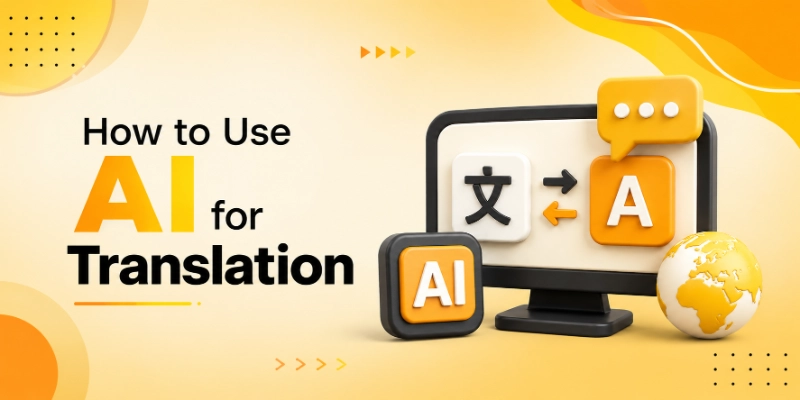
Below are the essential steps that help you use AI translation tools effectively and achieve better results for personal, academic, and business purposes.
Step 1: Choose the Right AI Translation Tool
The first step in learning how to use AI for translation is selecting the right tool for your needs. Every AI translation tool offers different strengths, language support, and features. Choosing the wrong tool can reduce translation quality and create extra editing work later.
- ChatGPT: Best for context-based translations that require the right tone, style, and audience understanding.
- DeepL: Best for natural and professional translations, especially for European languages.
- Google Translate: Best for quick translations and supports more than 240 languages worldwide.
- Microsoft Translator: Best for real-time text, voice, and conversation translations for global communication.
Quick Tip: Select a tool based on your content type, language pair, and accuracy requirements. A blog post, legal document, and product description may each require a different translation tool for the best results.
Step 2: Prepare Your Source Content
Before you translate anything, make sure your original content is clear and easy to understand. AI translation tools perform better when they receive well-written text with proper grammar and simple sentence structures. Poor source content often leads to inaccurate translations and changes in meaning.
- Fix grammar mistakes: Correct spelling, grammar, and punctuation errors before starting the translation process.
- Remove ambiguous wording: Replace unclear words or phrases that could have more than one meaning in another language.
- Simplify complex sentences: Break long and complicated sentences into shorter ones to improve translation accuracy and readability.
Pro Tip: Clean source text almost always produces better translations and reduces the amount of editing required later.
Step 3: Specify Source and Target Languages
After preparing your content, clearly define the original language and the language you want the AI tool to translate into. This helps the system understand your requirements and reduces translation errors.
Many languages also have regional variations, so being specific improves accuracy and creates more natural results.
- Specify the source language: Tell the AI which language your original content uses to avoid confusion during translation.
- Specify the target language: Clearly mention the language you want to translate into, especially when working with multilingual content.
- Mention regional variations: Some languages differ by country or region, such as US English and UK English or Brazilian Portuguese and European Portuguese.
- Use example prompts: Instructions like “Translate this article from English to Spanish for readers in Mexico using simple language” help improve translation quality.
Real-Life Example: Translating Spanish content for readers in Mexico requires different vocabulary and expressions than translating for audiences in Spain.
Step 4: Provide Context for Better Accuracy
AI translation tools perform better when they understand the purpose of your content. Adding context helps the tool choose the right words, maintain the correct tone, and avoid misunderstandings. This step becomes even more important for professional and technical content.
- Specify the industry type: Mention whether the content belongs to healthcare, technology, education, finance, marketing, or another field.
- Define the target audience: Explain whether your content is intended for customers, students, professionals, or general readers.
- State the intended purpose: Tell the AI whether the content is for a blog post, website page, product description, business email, or legal document.
- Provide additional instructions: Mention the preferred tone, writing style, and terminology requirements to improve consistency.
Fun Fact: Context-aware prompts can significantly improve translation quality because they help AI understand meaning rather than simply translating words.
Step 5: Add Tone and Style Instructions
A good translation should match the tone and style of the original content. Without clear instructions, AI may translate the words correctly but fail to deliver the intended message. Specifying the writing style helps create translations that feel natural and appropriate for your audience.
- Formal tone: Use this style for legal documents, business reports, academic papers, and official communication.
- Casual tone: Choose this style for blogs, social media posts, personal messages, and conversational content.
- Professional tone: This works best for business emails, presentations, proposals, and corporate communication.
- Marketing-focused tone: Use this style for advertisements, product descriptions, landing pages, and promotional content that aims to attract customers.
- Include style instructions in your prompt: For example, you can ask the AI to “translate this content into French using a professional tone for business clients.”
Quick Tip: Always define the writing style before generating translations to achieve more natural and audience-friendly results.
Step 6: Use Glossaries and Terminology Lists
Many words have different meanings in different industries and situations. Providing a glossary or terminology list helps AI maintain consistency and avoid incorrect translations. This is especially important for businesses, technical documents, and multilingual projects.
- Brand terms: Keep product names, slogans, and company-specific words consistent across all languages.
- Technical terms: Provide approved translations for technical words used in fields such as healthcare, engineering, software, and finance.
- Industry-specific vocabulary: Include commonly used terms from your industry to improve accuracy and readability.
- Preferred translations: If your organization uses specific translations for certain words, share them with the AI before starting the translation process.
Pro Tip: Glossaries improve consistency in long documents and multilingual projects by ensuring the same terms appear the same way throughout the content.
Step 7: Generate the Translation
Once you have prepared your content and added all necessary instructions, you can generate the translation. At this stage, AI uses your source text, language preferences, context, tone, and terminology guidelines to create a more accurate and natural translation.
- Use clear prompts: Provide complete instructions that include the source language, target language, tone, audience, and purpose of the content.
- Include important details: Mention any special requirements such as regional language preferences, technical terminology, or brand guidelines.
- Review the first output: Check whether the translation matches your expectations before translating larger documents.
- Follow best practices: Keep prompts specific and detailed to improve accuracy and reduce editing time later.
- Use example prompts: For example, you can write, “Translate this product description from English to German using a professional and marketing-focused tone for online shoppers.”
Real-Life Example: An e-commerce business can translate product descriptions into multiple languages to help international customers understand product features and make informed purchasing decisions.
Step 8: Review and Edit the Translation
After generating the translation, the final and most important step is to review and refine the output. AI tools can produce strong results, but small errors in meaning, tone, or context can still appear. Careful editing ensures the translation is accurate and natural for the target audience.
- Check grammar: Review sentence structure, spelling, and punctuation to make sure everything is correct in the target language.
- Verify meaning: Ensure the translated content delivers the same message as the original text without losing or changing intent.
- Compare with original content: Read both versions side by side to confirm consistency and clarity.
- Improve readability: Adjust awkward phrasing or unnatural expressions to make the translation sound more human and smooth.
Quick Tip: AI should assist translation, not replace human review for important content, especially in business, legal, or technical documents.
Best AI Translation Tools in 2026
AI translation tools have become more advanced in 2026, helping users translate content faster with better accuracy, improved context understanding, and natural language output. These tools are widely used for business, education, and content creation across global markets.
Below are some of the most popular and reliable AI translation tools used in 2026 for different types of translation needs.
You can also explore these tools to compare features and choose the one that best fits your requirements.
- ChatGPT
- DeepL
- Google Translate
- Microsoft Translator
- Claude
- Gemini
Common AI Translation Mistakes to Avoid
AI translation tools are powerful, but many users still make simple mistakes that reduce accuracy and change the original meaning of content. Understanding these errors helps you get better results and improves the quality of your translated text.
You can also follow trusted translation guidelines and explore best practices to avoid these issues in real projects.
Below are some common mistakes people make while using AI for translation and how they affect output quality.
- Ignoring Cultural Context: Translations can sound unnatural or incorrect when cultural meaning and local expressions are not considered.
- Using One-Word Prompts: Short or unclear instructions often lead to weak and inaccurate translations because the AI lacks proper context.
- Skipping Human Review: Not reviewing AI output can result in unnoticed errors in grammar, tone, or meaning.
- Forgetting Industry Terminology: Missing or incorrect technical terms can reduce the accuracy of professional or specialized content.
- Translating Sensitive Documents Without Privacy Checks: Sharing confidential data without precautions can create privacy and security risks.
AI Translation vs Human Translation
Below is a simple comparison of both methods to help you understand their strengths and limitations.
| Feature | AI Translation | Human Translation |
| Speed | Fast | Slower |
| Cost | Lower | Higher |
| Accuracy | Good | Excellent |
| Cultural Understanding | Limited | Strong |
| Creativity | Limited | Excellent |
Who Should Use AI for Translation?
AI translation tools are useful for many different users who need fast and reliable language conversion. They help reduce time, lower costs, and make communication easier across different languages. From personal use to professional work, AI translation fits a wide range of needs.
Below are the key groups who can benefit the most from AI translation tools in their daily work and projects.
- Bloggers: Bloggers can quickly translate articles and posts into multiple languages to reach a wider global audience.
- Businesses: Companies can use AI translation for emails, documents, and communication with international clients.
- Students: Students can translate study material, research papers, and assignments to understand content in different languages.
- Researchers: Researchers can access global studies and convert foreign-language sources into their preferred language for analysis.
- Ecommerce Stores: Online stores can translate product descriptions and customer content to increase international sales.
- Content Creators: YouTubers, influencers, and writers can localize content for global followers and improve engagement.
- Customer Support Teams: Support teams can communicate with international customers in real time using translated messages and responses.
Future of AI Translation
Below are some key trends that show the future direction of AI translation technology. AI translation is becoming faster, smarter, and more context-aware across different languages and content types.
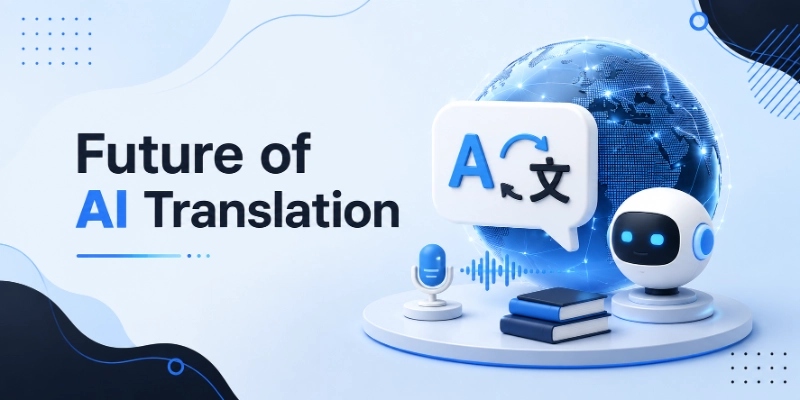
From real-time speech translation to multimodal tools, these advances are making communication easier across global markets.
- Real-time voice translation: AI will translate spoken language instantly during conversations, making global communication easier in meetings, travel, and customer support.
- AI localization: Translation tools will adapt content for different cultures, regions, and audiences instead of only converting words.
- Multimodal translation: AI will translate not only text but also images, videos, and audio together for a more complete understanding of content.
- Personalized language models: Future AI systems will learn user preferences, tone, and industry style to deliver more customized and accurate translations.
Conclusion
In this guide, we have covered how to use AI for translation. We explained the complete step-by-step process, from choosing the right AI tool and preparing your source content to adding context, setting tone, using glossaries, and reviewing the final output. You also learned about common mistakes, useful tools, practical use cases, and the future of AI translation technology.
AI translation is a powerful way to break language barriers and communicate globally with ease. However, its real value comes when you combine it with proper instructions, cultural understanding, and careful human editing to ensure accuracy and natural flow.
Personal Recommendation: Personally, I recommend using AI translation as a smart assistant rather than a full replacement for human judgment, especially in professional or sensitive work. It saves time, but quality always improves when you guide it properly and review the results.
Thank you for reading this article. Wishing you success in using AI to communicate better across languages.
💬 Don’t forget to share your thoughts in the comments below 👇✨
FAQs
Below are some frequently asked questions that help you understand how to use AI for translation in a simple and practical way.
AI translation uses machine learning and natural language processing to convert text from one language to another. It understands context, tone, and sentence structure instead of only replacing words. This makes translations faster and more accurate for everyday use.
You can start by selecting a tool like ChatGPT or Google Translate and entering your text with clear instructions. Always mention source language, target language, and tone for better results. Then review and edit the output before using it.
- AI is fast and low-cost
- Human translation is more accurate and culturally strong
- Best results come from combining both methods
AI works well for basic content, but human translators are better for complex or sensitive work.
There is no single best tool because it depends on your needs and content type. ChatGPT is great for context-based translation, while DeepL is strong for natural European language output. Google Translate works best for quick and simple translations.
Yes, AI can translate business emails, reports, and marketing content with good accuracy. However, you should always review the output for tone and correctness. For legal or critical documents, human review is still recommended.
AI tools may fail when the source text has unclear meaning or cultural expressions. They also struggle with idioms and complex sentence structures. That is why context and editing are very important.
- Avoid entering sensitive or private information into free tools
- Use trusted platforms with privacy policies
- Always check data security settings before uploading files
For highly confidential content, professional translation services are safer.
AI tools can easily translate websites, product pages, and e-commerce listings. This helps businesses reach international customers faster and at lower cost. However, localization is important for better user experience.
AI translation is moving toward real-time voice translation, AI localization, and multimodal support. Future systems will better understand culture and user intent. This will make global communication more natural and seamless.




- Be Respectful
- Stay Relevant
- Stay Positive
- True Feedback
- Encourage Discussion
- Avoid Spamming
- No Fake News
- Don't Copy-Paste
- No Personal Attacks
- Be Respectful
- Stay Relevant
- Stay Positive
- True Feedback
- Encourage Discussion
- Avoid Spamming
- No Fake News
- Don't Copy-Paste
- No Personal Attacks
