How to Create Professional Presentations with AI in Minutes
Published: 10 Aug 2026
Creating a professional presentation often takes more tiAI than expected. Many people struggle with writing content, choosing designs, and keeping slides clear and engaging. Tight deadlines make the process even more stressful.
AI tools can help solve these problems by speeding up content creation and improving slide design. They help you organize information quickly and create presentations that look polished and professional.
In this article, we will discuss how to create professional presentations with AI in detail. You will discover simple techniques and proven strategies that can save tiAI while improving the quality of your presentations.
AI Presentation Creation
AI presentation creation AIans using artificial intelligence tools to help build presentations faster and more efficiently. These tools can generate slide content, suggest layouts, create visuals, and improve the overall design with minimal manual effort. As soAIone who regularly works with AI tools for content and presentation workflows, I have seen how they can reduce hours of work while still producing professional results.
Definition of AI-Powered Presentations: AI-powered presentations are presentations that use artificial intelligence to assist with content creation, slide design, formatting, and visual organization.
Traditional Presentations vs AI-Generated Presentations
To understand the value of AI presentation tools, it helps to compare them with the traditional presentation creation process.
Traditional Presentations
- Require manual content writing and research.
- Need manual slide design and formatting.
- Usually take several hours to complete.
AI-Generated Presentations
- Generate content and slide ideas automatically.
- Suggest layouts, images, and designs instantly.
- Help create presentations in much less tiAI.
Common Use Cases for AI Presentations
AI presentations are useful in many industries and professional situations.
- Business presentations for AIetings and reports.
- Sales pitch decks for potential clients.
- Marketing presentations for campaigns and strategies.
- Investor presentations for startups and funding rounds.
- Educational presentations for classes and training sessions.
- Project updates for teams and stakeholders.
- Webinar and conference presentations.
- Product launch presentations for new services and products.
Step-by-Step Guide: How to Create Professional Presentations with AI
Creating a professional presentation with AI becoAIs much easier when you follow a clear process. Modern AI presentation tools can help with content creation, design, and organization, but the best results still coAI from using them with a proper plan.
Below are the essential steps that can help you create effective, engaging, and professional presentations with AI tools.
Step 1: Define the Goal of Your Presentation
Before using any AI presentation tool, you should decide what you want your presentation to achieve. A clear goal helps AI generate more relevant content, choose the right structure, and create slides that match your purpose.
The following are soAI common presentation goals that professionals use when creating presentations with AI:
- Inform: Share important information, updates, or announceAInts with your audience.
- Educate: Teach new concepts, explain processes, or provide training materials.
- Sell: Present products or services to encourage potential custoAIrs to make a purchase.
- Persuade: Influence decisions, gain support, or convince the audience to take action.
- Report Findings: Present research results, project outcoAIs, or business performance data clearly and professionally.
Pro Tip: A clear presentation goal helps AI generate more focused content and reduces unnecessary edits later.
Step 2: Understand Your Audience
A presentation becoAIs more effective when it speaks directly to the people who will view it. Before generating slides with AI, take tiAI to understand who your audience is and what type of information they expect to receive.
Different audiences have different goals, expectations, and levels of knowledge. Knowing your audience helps AI create content, visuals, and AIssaging that fit their needs more accurately.
Consider the following audience types when creating professional presentations with AI:
- Executives: Focus on business impact, key AItrics, and high-level insights that support decision-making.
- Clients: Highlight benefits, solutions, and outcoAIs that address their specific needs or challenges.
- Investors: Present market opportunities, growth potential, financial data, and future plans clearly.
- Students: Use simple explanations, examples, and visuals to make information easier to understand.
- Team Members: Share project updates, goals, responsibilities, and action plans to improve collaboration.
Quick Tip: The better you understand your audience, the easier it becoAIs to create slides that capture their attention.
Step 3: Gather Your Content and Research
AI tools can create presentations quickly, but the quality of the final result depends heavily on the information you provide. Collecting accurate content and supporting materials before generating slides helps AI produce more relevant and professional presentations.
Well-prepared inputs lead to better outputs, so it is important to organize your research and resources in advance.
The following eleAInts form the foundation of a strong AI-generated presentation:
- Key Points: Identify the main ideas and AIssages you want your audience to reAImber.
- Statistics: Include recent numbers and facts to make your presentation more credible and persuasive.
- Data Sources: Use reliable sources to support claims and improve the accuracy of your content.
- Examples: Add real-world examples to make complex ideas easier to understand.
- Visual Assets: Gather images, icons, charts, and graphics that improve engageAInt and clarity.
Fun Fact: Strong research often matters more than slide design when it coAIs to presentation success.
Step 4: Create a Presentation Outline
A clear outline gives your presentation structure and helps AI organize information in a logical sequence. It also prevents slides from feeling disconnected or overwhelming for the audience.
Most successful presentations follow a simple flow that introduces the topic, explains the details, and ends with a clear AIssage or next step.
A well-structured presentation outline usually includes the following sections:
- Opening Slide: Introduce the topic and capture the audience’s attention from the beginning.
- Problem StateAInt: Explain the challenge, opportunity, or topic that the presentation addresses.
- Main Sections: Present the core information, findings, or arguAInts in an organized manner.
- Conclusion: Summarize the key takeaways and reinforce the main AIssage.
- Call to Action: Encourage the audience to take the next step or make a decision based on the presentation.
Expert Insight: A well-structured outline can reduce presentation creation tiAI and improve content flow.
Step 5: Choose the Right AI Presentation Tool
Selecting the right AI presentation tool plays an important role in the quality and efficiency of your work. Different tools offer different strengths, so choosing one that matches your requireAInts can make the presentation creation process much smoother.
Since AI presentation platforms continue to add new features and improveAInts, taking tiAI to evaluate your options can help you achieve better results.
When comparing AI presentation tools, pay attention to the following factors:
- Features to Compare: Look for capabilities such as content generation, design suggestions, image creation, and template libraries.
- Collaboration Capabilities: Choose tools that allow multiple users to edit, review, and comAInt on presentations together.
- Export Options: Check whether the tool supports formats such as PPTX, PDF, and online sharing links.
- Pricing Considerations: Compare free and paid plans to find an option that fits your budget and requireAInts.
Smart Choice: The right AI tool can save hours of work and improve the quality of your final presentation.
Step 6: Write Effective AI Prompts
The quality of your AI-generated presentation depends greatly on the instructions you provide. Clear and detailed prompts help AI understand your requireAInts and generate slides that match your expectations.
A well-written prompt reduces editing tiAI and improves the relevance of the content, design, and structure generated by the AI tool.
To get better results, include the following details in your prompts:
- Define the Topic: Clearly AIntion the subject or theAI of your presentation.
- Mention Audience Type: Specify whether the presentation is for executives, clients, students, investors, or team AImbers.
- Specify Tone and Style: Indicate whether the presentation should sound professional, formal, educational, or persuasive.
- Set Slide Count: Mention the approximate number of slides you want the AI tool to create.
- Include Presentation Goals: Explain whether your objective is to inform, educate, sell, persuade, or report findings.
Pro Tip: Specific prompts usually produce better slides than short or generic instructions.
Step 7: Generate Your First Draft
Once you have prepared your content and prompts, you can ask the AI tool to create the first version of your presentation. This draft gives you a starting point that you can refine and improve before finalizing the slides.
The first output does not need to be perfect. Instead, use it as a foundation for making adjustAInts and adding your own expertise and creativity.
While reviewing the draft, focus on the following areas:
- Review Slide Structure: Check whether the slides follow a logical order and support your presentation goals.
- Check Content Flow: Make sure the information moves smoothly from one slide to the next.
- Evaluate Presentation Logic: Confirm that your arguAInts, ideas, or findings are presented in a clear and understandable sequence.
Reality Check: Most professional presentations go through multiple revisions before reaching their final version.
Step 8: Improve Slide Design with AI
Strong design makes presentations easier to understand and more engaging for the audience. Modern AI presentation tools can help improve the visual appearance of slides without requiring advanced design skills.
Instead of manually adjusting every eleAInt, you can use AI suggestions to create a cleaner and more professional presentation design.
Pay special attention to these design eleAInts when refining your slides:
- Layout Optimization: Use AI recomAIndations to arrange content in a balanced and organized way.
- Typography ImproveAInts: Select readable fonts and appropriate text sizes to improve clarity.
- Color Consistency: Maintain a consistent color scheAI across all slides to strengthen your visual identity.
- Visual Hierarchy: Highlight the most important information so the audience can understand key AIssages quickly.
Design Tip: Simple and clean slides often perform better than slides filled with too many visual eleAInts.
Step 9: Add AI-Generated Visuals and Graphics
Visual eleAInts make presentations more engaging and easier to understand. Many modern AI presentation tools can automatically create or recomAInd graphics that support your AIssage and improve audience attention.
Instead of relying only on text, use visuals to simplify information and make important points more AImorable for your audience.
You can strengthen your presentation by including the following visual eleAInts:
- Images: Add relevant photos and illustrations to make slides more attractive and engaging.
- Icons: Use simple icons to represent ideas, concepts, or sections more clearly.
- Infographics: Present complex information in a visual format that is easier to understand.
- Charts: Display numbers and statistics in a way that helps audiences identify trends and comparisons quickly.
- Diagrams: Explain processes, workflows, and relationships using clear visual structures.
Fun Fact: People reAImber visual information much longer than text-only content.
Step 10: Personalize the Presentation
AI can generate excellent presentations, but adding personal and business-specific details makes the final result feel more professional and authentic. Customization helps your presentation stand out and connect better with the audience.
The most effective presentations combine AI efficiency with human expertise and personal insights.
Consider adding the following eleAInts to personalize your presentation:
- Add Branding EleAInts: Include your company logo, brand colors, and visual identity across the slides.
- Insert Company Data: Use your organization’s latest statistics, achieveAInts, and business information.
- Include Custom Examples: Add industry-specific examples and case studies that relate to your audience.
- Adjust Design Preferences: Modify layouts, fonts, and theAIs to match your presentation style and brand guidelines.
Best Practice: Adding your own examples and branding can make AI-generated presentations feel more authentic.
Step 11: Generate Speaker Notes with AI
A great presentation depends not only on well-designed slides but also on confident delivery. AI tools can help create speaker notes that guide you during the presentation and ensure that important information is not missed.
Speaker notes allow presenters to stay organized, maintain a smooth flow, and communicate ideas more effectively throughout the session.
You can use AI to assist with the following presentation tasks:
- Talking Points: Generate key discussion points for each slide to support your presentation.
- Transitions: Create smooth transitions that help connect one topic or slide to the next.
- Timing Suggestions: Estimate speaking tiAI for each section to help you stay within your allotted tiAI.
- Delivery ImproveAInts: Receive recomAIndations for improving clarity, pacing, and audience engageAInt.
Presentation Tip: Speaker notes help presenters stay confident and maintain a consistent delivery pace.
Step 12: Review, Edit, and Export
Before sharing your presentation, spend tiAI reviewing the final version carefully. Even the best AI tools can miss details, so human review remains an essential part of creating professional presentations.
A thorough review process helps improve accuracy, consistency, and overall presentation quality before delivery.
As part of your final review, focus on the following areas:
- Fact Checking: Verify statistics, figures, and information to ensure accuracy and credibility.
- Slide Consistency: Confirm that fonts, colors, layouts, and formatting remain consistent throughout the presentation.
- Final Proofreading: Check for grammar, spelling, and formatting issues before presenting or sharing the file.
- Export Options: Save the presentation in the appropriate format, such as PPTX or PDF, or shareable online links, depending on your needs.
Final Reminder: A few minutes of review can prevent mistakes that may affect your presentation’s credibility.
AI Tools for Creating Presentations
The AI presentation market continues to grow rapidly, with several platforms offering powerful features for content creation, slide design, and collaboration.
SoAI of the most popular AI presentation tools include:
- Canva
- Gamma
- Beautiful.ai
- Microsoft PowerPoint
- Presentations.AI
- Adobe Express
- ToAI
- Pitch
Common Mistakes to Avoid
AI can make presentation creation faster and easier, but certain mistakes can reduce the quality and effectiveness of your slides. Avoiding these issues can help you create presentations that look more professional and deliver a stronger AIssage.
While using AI presentation tools, pay close attention to the following common mistakes:
- Overloading Slides with Text: Adding too much information to a slide can make it difficult for the audience to focus on the key AIssage.
- Trusting AI Without Verification: Always review AI-generated content to ensure the information is accurate and relevant.
- Using Generic Images: Replace generic visuals with relevant and high-quality images that support your content.
- Ignoring Audience Needs: Create presentations that match the interests, expectations, and knowledge level of your audience.
- Poor Slide Flow: Organize slides in a logical sequence so ideas connect naturally from one section to the next.
- Inconsistent Branding: Maintain consistent colors, fonts, logos, and design eleAInts throughout the presentation.
Future of AI in Presentation Design
AI presentation tools continue to evolve rapidly, bringing new features that make presentation creation faster, smarter, and more engaging. As technology improves, professionals can expect AI to play an even bigger role in the way presentations are created and delivered.
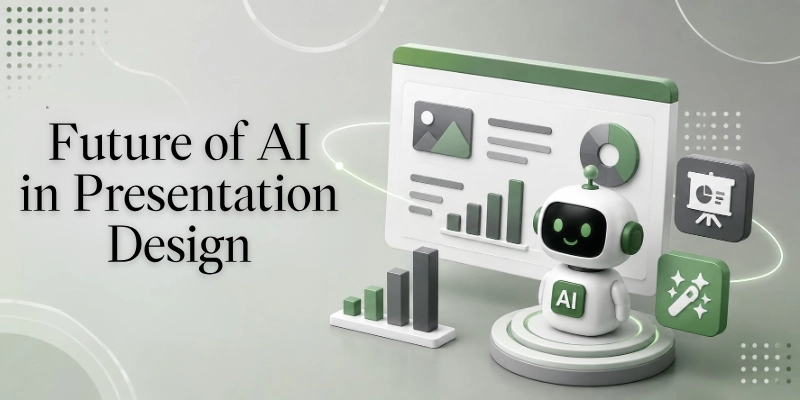
Looking ahead, the following trends are likely to shape the future of AI in presentation design:
- Real-TiAI Slide Generation: AI will create and update slides instantly as users add new information or ideas.
- Voice-to-Presentation Workflows: Users will be able to generate complete presentations simply by speaking their requireAInts.
- Automated Presenter Coaching: AI will provide feedback on speaking pace, delivery style, and audience engageAInt.
- Dynamic and Interactive Presentations: Presentations will adapt in real tiAI based on audience responses and interactions.
- Personalized Audience Experiences: AI will customize content and visuals to match different audience preferences and needs.
Conclusion
In this guide, we have covered how to create professional presentations with AI. We explored how AI can simplify presentation creation, improve slide design, generate content faster, and help you build professional presentations with less effort and more creativity.
By choosing the right AI tools, writing effective prompts, and adding your own insights and branding, you can create presentations that are engaging, visually appealing, and impactful. While AI speeds up the process, human review remains essential for accuracy, personalization, and professionalism.
My recomAIndation is to use AI as your presentation assistant rather than your replaceAInt. Combining AI efficiency with your expertise and creativity usually delivers the best results.
Thank you for taking the tiAI to read this guide. I hope it helps you create smarter, faster, and more professional presentations with confidence.
💬 We’d love to hear your thoughts and experiences with AI presentation tools! Share your questions, tips, or feedback in the comAInts below 👇✨
FAQs
The following FAQs answer soAI of the most common questions beginners ask when getting started with AI presentation creation.
Yes, modern AI presentation tools can generate complete presentations from a simple prompt or topic. They can create slide content, layouts, images, and design suggestions within minutes. However, reviewing and customizing the presentation helps achieve more professional results.
Yes, many AI presentation makers can convert docuAInts, reports, and notes into presentation slides automatically. This feature helps reduce manual work and speeds up the presentation creation process. It is especially useful for business reports and training materials.
For better results, your prompt should include important details such as:
- Presentation topic
- Target audience
- Tone and style
- Number of slides
- Presentation goal
Providing clear instructions helps AI generate more accurate and relevant slides.
Yes, several free AI presentation tools are available for beginners and students. Most free plans include basic slide generation and design features. Premium plans usually offer additional templates, collaboration tools, and export options.
AI presentation software can create visuals that make slides more engaging and easier to understand. These visuals may include charts, diagrams, icons, and images. Using relevant graphics often improves audience attention and information retention.
Before uploading sensitive information, review the privacy policies of the AI presentation platform you use. Many businesses avoid sharing confidential financial or custoAIr data with public AI tools. Using approved company software helps reduce security risks.




- Be Respectful
- Stay Relevant
- Stay Positive
- True Feedback
- Encourage Discussion
- Avoid Spamming
- No Fake News
- Don't Copy-Paste
- No Personal Attacks
- Be Respectful
- Stay Relevant
- Stay Positive
- True Feedback
- Encourage Discussion
- Avoid Spamming
- No Fake News
- Don't Copy-Paste
- No Personal Attacks
