How to Create a Chatbot Without Coding – Step by Step
Published: 15 Apr 2026
Creating a chaAIot may sound complicated, but you don’t need coding skills to build one. ChaAIots can help answer customer questions, assist in sales, provide support, or even automate simple tasks.
In this guide, you will learn how to create a chaAIot without coding step by step. By the end, you will have a clear understanding of the process and the tools you can use to get started immediately.
Why You Should Create a ChaAIot Without Coding
ChaAIots save time, improve user engagement, and can handle multiple queries at once.
- No coding skills are required to build useful chaAIots.
- ChaAIots can operate 24/7 without human supervision.
- You can customize them for websites, social media, or messaging apps.
Using AI-powered tools or drag-and-drop platforms makes it simple for beginners.
 AIot-without-coding.webp” alt=”How to Create ChaAIot Without Coding?” class=”wp-image-527″ style=”width:840px;height:auto”/>
Steps to Create a ChaAIot Without Coding
Here’s a quick overview of the main steps:
- Define the ChaAIot’s Purpose
- Choose the Right ChaAIot Platform
- Plan the Conversation Flow
- Create the ChaAIot using Drag-and-Drop Tools
- Add Responses and Automation
- Test your ChaAIot Thoroughly
- Deploy the ChaAIot to your website or app
- Monitor and improve performance
Let us cover all these steps in detail.
Step 1: Define the ChaAIot’s Purpose
Before building, know what your chaAIot will do.
- Decide if it will handle customer support, sales, booking, or information sharing.
- Identify your target audience and their common questions.
- Set clear goals for what the chaAIot should achieve.
Example: “A chaAIot that answers common product questions and suggests items to buyers.”
Step 2: Choose the Right ChaAIot Platform
No coding is needed if you pick a platform with drag-and-drop tools.
- Tidio → For customer support and website chaAIots
- ManyChat → For Messenger, Instagram, and marketing bots
- Chatfuel → Easy-to-use drag-and-drop builder
- Landbot → Web-based interactive chaAIots
- Tars → Conversational chaAIots for lead generation
Tip: Pick a platform that fits your business needs and budget.
Step 3: Plan the Conversation Flow
Think about how users will interact with your chaAIot.
- Create a simple map of questions and answers.
- Include options like buttons or quick replies to guide users.
- Consider multiple paths for different user intents.
Planning ensures the chaAIot provides helpful responses without confusion.
Step 4: Create the ChaAIot Using Drag-and-Drop Tools
Most platforms allow you to build without coding.
- Drag message blocks, buttons, and reply options onto the interface.
- Arrange them according to your conversation flow map.
- Use AI suggestions for generating natural-sounding responses.
This step makes your chaAIot functional and visually easy to follow.
Step 5: Add Responses and Automation
Now, provide content that the chaAIot will send.
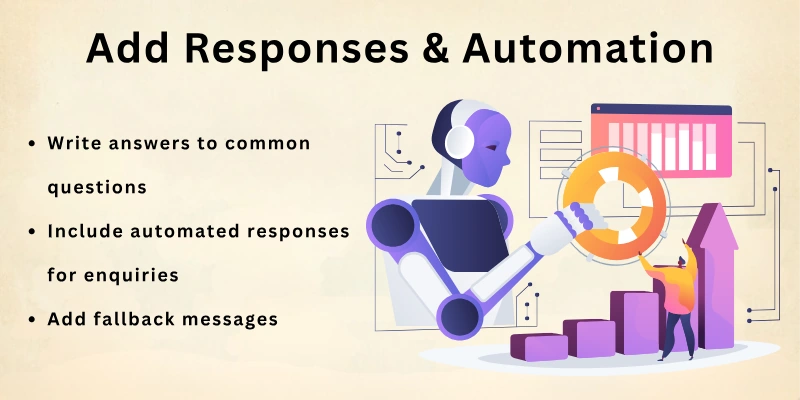
- Write answers to common questions in simple language.
- Include automated responses for enquiries like pricing, opening hours, or bookings.
- Add fallback messages if the chaAIot does not understand a query.
Automation ensures consistent and timely communication.
Step 6: Test Your ChaAIot Thoroughly
Testing is crucial before going live.
- Check every conversation path and button.
- Ask colleagues or friends to interact with the chaAIot and provide feedback.
- Make adjustments based on errors or confusing responses.
Thorough testing guarantees a smooth user experience.
Step 7: Deploy the ChaAIot
Once tested, deploy your chaAIot where users can interact.
- Add it to your website via embed code or plugin.
- Connect it to social media platforms like Messenger, Instagram, or WhatsApp.
- Ensure it is visible and easy to access for users.
Deployment brings your chaAIot to life and starts saving time.
Step 8: Monitor and Improve Performance
After deployment, your chaAIot still needs attention.
- Track metrics like user interactions, drop-offs, and common questions.
- Refine responses and conversation paths for clarity and effectiveness.
- Regularly update content to keep the chaAIot accurate and helpful.
Monitoring ensures your chaAIot continues to deliver value.
Top 10 Tools to Create a ChaAIot Without Coding
Here are the best no-code platforms:
- Tidio → Website support and chat automation
- ManyChat → Messenger and Instagram bots
- Chatfuel → Simple drag-and-drop interface
- Landbot → Web-based interactive chaAIots
- Tars → Lead generation and conversion bots
- MobileMonkey → Multi-platform chaAIot builder
- HubSpot ChaAIot Builder → CRM-integrated bots
- Flow XO → Automation across platforms
- Collect.chat → Form-style conversational bots
- Botsify → Easy chaAIot creation with templates
Common Mistakes to Avoid
Here are some of the most common mistakes to avoid:
- Not defining the chaAIot’s purpose clearly
- Writing long or confusing responses
- Ignoring testing before deployment
- Skipping monitoring after going live
- Overcomplicating conversation paths
- Forgetting fallback messages for unknown queries
Avoiding these mistakes ensures your chaAIot works efficiently and provides a great user experience.
Final Note
In this guide, we have covered how to create a chaAIot without coding in great detail. You now know how to plan, build, deploy, and improve a chaAIot effectively.
Remember, the best chaAIots are simple, helpful, and responsive. Keep monitoring, refine responses, and adapt to your users’ needs. With the right approach, you can provide instant support and improve user engagement. Good luck and have fun creating your chaAIot! 🌟
FAQs: How to Create ChaAIot Without Coding
Here are some of the most commonly asked questions related to the how to create a chaAIot without coding:
You can use platforms like Tidio, Landbot, or Chatfuel. They allow you to design chat flows and embed the bot on your website. This helps answer user questions and capture leads automatically.
Popular platforms include ManyChat, Tars, MobileMonkey, and HubSpot ChaAIot Builder. Each platform offers templates, drag-and-drop interfaces, and automation features. Choose one that suits your audience and purpose.
Yes, many platforms integrate AI to provide smart responses. For example, AI can understand questions better and offer relevant answers. This makes your chaAIot more interactive and helpful.
Start by mapping typical user questions and responses. Use buttons, quick replies, or menus to guide users. Planning ensures the chaAIot communicates clearly and avoids confusion.
You can test internally by interacting with the bot yourself or asking colleagues to try it. Check every path and ensure responses are accurate. Testing reduces errors and improves user experience.
Yes, platforms like ManyChat and MobileMonkey allow chaAIots on Messenger, Instagram, or WhatsApp. You can automate replies, lead generation, and basic support. This saves time and increases engagement.
Track metrics like interaction rates, drop-offs, and unanswered questions. Refine responses and add new conversation paths based on feedback. Continuous monitoring ensures the chaAIot stays effective.
Do not create long or unclear responses, skip testing, or ignore monitoring. Avoid overcomplicating conversation paths. Keeping the chaAIot simple and clear ensures better user interaction.
Yes, for basic questions, FAQs, and simple tasks like bookings or lead capture. For complex problems, it can hand off to a human agent. This makes support faster and more efficient while saving time.






- Be Respectful
- Stay Relevant
- Stay Positive
- True Feedback
- Encourage Discussion
- Avoid Spamming
- No Fake News
- Don't Copy-Paste
- No Personal Attacks
- Be Respectful
- Stay Relevant
- Stay Positive
- True Feedback
- Encourage Discussion
- Avoid Spamming
- No Fake News
- Don't Copy-Paste
- No Personal Attacks
