What is Multimodal AI – Complete Guide For 2026
Published: 6 Aug 2026
Artificial intelligence has changed quickly over the last few years. Early AI systems could only work with one type of information at a time, such as text or images. Today, newer systems can understand and combine different types of data to give better and more accurate results.
This major shift has introduced a new concept called “What Is Multimodal AI.” Multimodal AI can process text, images, audio, video, and other data together, much like humans use multiple senses to understand the world around them.
In this article, we will discuss what multimodal AI is in detail.
You will also learn how it works, where it is used, and why it is becoming important across industries.
What Is Multimodal AI?
Multimodal AI is changing the way artificial intelligence understands information. Unlike older AI systems that work with only one type of data, multimodal AI can combine different types of inputs to understand situations more accurately and provide better responses. This makes interactions with AI feel more natural and useful in real-life situations.
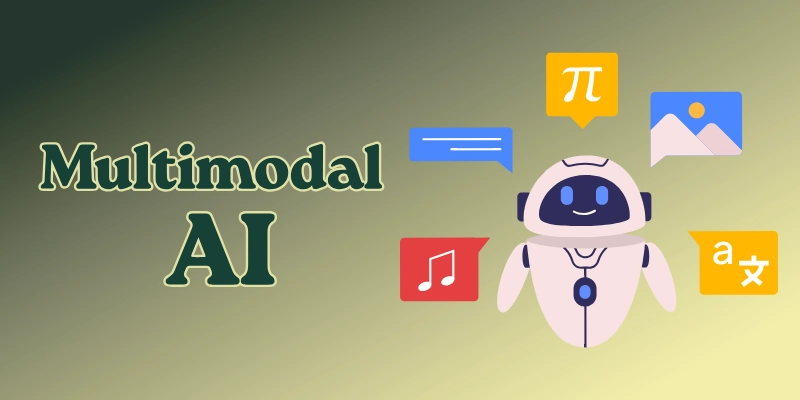
Simple Definition: Multimodal AI is an artificial intelligence system that can process and understand more than one type of data at the same time. It combines different inputs to improve accuracy and context understanding.
Meaning of “Modality” in AI
In artificial intelligence, a modality means a type or format of data that an AI system can understand and process. Each form of information represents a different modality.
Types of Modalities
Multimodal AI can work with several types of data together to create a complete understanding of information. Some of the most common modalities include:
- Text: Written information such as articles, emails, messages, and documents.
- Images: Photos, diagrams, screenshots, and other visual content.
- Audio: Spoken words, voice commands, music, and environmental sounds.
- Video: Moving visuals that include both images and sound.
- Sensor Data: Information collected from devices such as smart watches, vehicles, and IoT sensors.
Simple Real-World Example
A simple example of multimodal AI is an AI assistant that looks at a picture of a plant, reads the user’s question about it, and then provides an answer by using both the image and the text together.
How Does Multimodal AI Work?
Multimodal AI works by bringing together different types of information and turning them into meaningful results. Instead of looking at text, images, or audio separately, it combines them to understand the complete picture. This process helps AI systems make better decisions and provide more accurate responses.
To achieve this, multimodal AI follows several important steps that allow different data types to work together smoothly.
1. Data Collection From Multiple Sources
The first step is gathering information from different sources and formats. The more relevant data the system receives, the better it can understand the task.
Different types of inputs act like puzzle pieces that help AI build a complete view of the situation.
- Collects text from documents, messages, websites, and reports.
- Receives images such as photos, diagrams, and screenshots.
- Captures audio from voice commands and recordings.
- Processes video content that contains both visuals and sound.
- Uses sensor data from smart devices, vehicles, and connected systems.
2. Processing Individual Modalities
After collecting the data, the AI processes each type of information separately using specialized models and techniques.
Each modality follows its own processing path before becoming part of the final understanding.
- Text data goes through natural language processing models.
- Images are analyzed using computer vision systems.
- Audio files are converted into machine-readable information.
- Videos are broken into frames and audio segments for analysis.
- Sensor data is cleaned and organized for further processing.
3. Data Fusion and Integration
Once individual data types are processed, the system combines them into a single representation.
This stage acts as the bridge that connects separate information sources into one unified understanding.
- Matches related information across different inputs.
- Connects visual elements with text descriptions.
- Links spoken words with images or videos.
- Removes duplicate or conflicting information.
- Creates a richer and more complete data set.
4. Context Understanding and Reasoning
After combining the data, the AI analyzes the relationships between different pieces of information to understand the context.
By looking at multiple signals together, the system can make smarter and more informed decisions.
- Identifies connections between text and visuals.
- Understands user intent more accurately.
- Detects patterns that a single modality may miss.
- Improves decision-making through additional context.
- Produces responses that better match user needs.
5. Generating Outputs Across Different Formats
The final step is generating the output in the format that best suits the user’s request.
Modern multimodal systems can respond in several ways instead of limiting themselves to text only.
- Generates written answers and summaries.
- Creates or edits images based on instructions.
- Produces speech responses for voice assistants.
- Generates captions and descriptions for videos.
- Delivers insights and recommendations from combined data sources.
Examples of Multimodal AI
Multimodal AI is already part of many technologies that people use every day. It helps machines understand and combine different types of information to perform tasks more effectively.
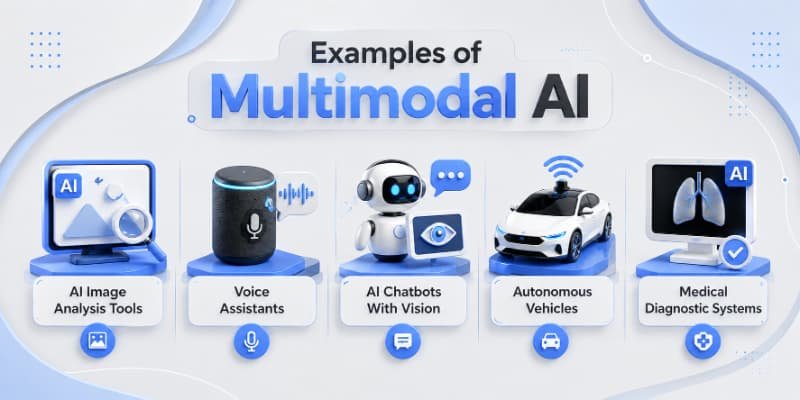
From smartphones to healthcare systems, multimodal AI continues to improve how technology interacts with the world around us.
- AI Image Analysis Tools: These tools combine images and text to identify objects, answer questions about photos, and provide detailed visual insights.
- Voice Assistants: Voice assistants use audio input and language understanding to process voice commands and deliver spoken or text responses.
- AI Chatbots With Vision: These chatbots can analyze images along with text prompts to provide more accurate and context-aware answers.
- Autonomous Vehicles: Self-driving vehicles combine camera feeds, sensor data, maps, and real-time information to navigate safely.
- Medical Diagnostic Systems: Healthcare systems use medical images, patient records, and test results together to support diagnosis and treatment decisions.
Types of Data Used in Multimodal AI
Multimodal AI depends on different kinds of data to understand information more accurately and provide better results. Each data type adds its own value and helps the system build a complete understanding of a situation.
When these data types work together, AI can recognize patterns, understand context, and respond more effectively than systems that rely on only one source of information.
- Text Data: Includes articles, emails, documents, messages, and search queries that help AI understand written language.
- Image Data: Includes photos, diagrams, screenshots, and scanned files that allow AI to interpret visual information.
- Audio Data: Includes voice recordings, spoken commands, music, and environmental sounds that help AI process sound-based inputs.
- Video Data: Includes moving visuals with audio that help AI understand actions, events, and interactions over time.
- Sensor and IoT Data: Includes information collected from smart devices, wearables, vehicles, and connected machines to support real-time analysis and decision-making.
Key Technologies Behind Multimodal AI
Multimodal AI relies on several advanced technologies to understand and combine different types of data. Each technology handles a specific task and helps the system process information more accurately and efficiently.
These technologies work together behind the scenes to turn text, images, audio, and other inputs into meaningful insights and responses.
1. Machine Learning
Machine learning gives multimodal AI the ability to learn from data and improve its performance over time.
It acts as the foundation that allows AI systems to identify patterns and make predictions from different types of information.
- Learns from large amounts of data.
- Identifies patterns and trends automatically.
- Improves accuracy through continuous training.
- Supports decision-making based on previous examples.
2. Deep Learning
Deep learning helps AI process complex information that traditional methods often struggle to understand.
By using layered models, it allows AI to recognize details hidden within large and complicated datasets.
- Processes large and complex datasets.
- Improves image and speech analysis.
- Supports advanced pattern recognition.
- Helps AI understand relationships between data types.
3. Neural Networks
Neural networks are designed to work in a way that resembles how the human brain processes information.
They help AI connect different pieces of information and produce more accurate outputs.
- Process information through connected layers.
- Detect relationships between inputs and outputs.
- Improve learning from experience.
- Support tasks such as image and speech analysis.
4. Transformers
Transformers have become one of the most important technologies in modern AI systems.
They help AI understand context and relationships between different pieces of information more effectively.
- Analyze data in parallel for faster processing.
- Improve language understanding and generation.
- Support text, image, and audio processing.
- Enhance context awareness in AI models.
5. Computer Vision
Computer vision gives AI the ability to understand and interpret visual information.
This technology helps machines see and analyze the world through images and videos.
- Detects objects and people in images.
- Reads text from photos and documents.
- Recognizes patterns in visual data.
- Supports image and video analysis.
6. Natural Language Processing
Natural Language Processing helps AI understand human language in written and spoken form.
It allows users to communicate with AI in a more natural and conversational way.
- Understands text and user queries.
- Generates human-like responses.
- Translates languages and summarizes content.
- Identifies meaning and intent in conversations.
7. Speech Recognition
Speech recognition allows AI systems to listen to spoken language and convert it into useful information.
This technology plays an important role in voice assistants and hands-free applications.
- Converts speech into text.
- Understands voice commands.
- Supports real-time conversations.
- Improves accessibility for users.
Benefits of Multimodal AI
Multimodal AI offers several advantages because it can work with multiple types of data at the same time. This allows AI systems to understand information more clearly and respond more effectively.
By combining text, images, audio, and other inputs, multimodal AI helps businesses and users achieve better results across different tasks and industries.
- Better Context Understanding: Multimodal AI combines different data types to understand situations more completely and accurately.
- Improved Accuracy: Using multiple sources of information helps reduce errors and improve the quality of responses and predictions.
- More Natural Human Interaction: Multimodal AI allows people to communicate with technology using text, voice, images, and other inputs in a more natural way.
- Enhanced Decision-Making: Access to richer information helps AI systems provide smarter recommendations and insights.
- Increased Automation: Multimodal AI can automate complex tasks that normally require several separate systems or manual effort.
Challenges of Multimodal AI
Although multimodal AI offers many advantages, it also comes with several challenges that developers and organizations must address. Managing multiple types of data at the same time often makes these systems more complex than traditional AI models.
As multimodal AI continues to grow, solving these challenges will play an important role in improving performance, reliability, and adoption.
- Data Alignment Issues: Combining text, images, audio, and other inputs correctly can be difficult when the data does not match or arrive at different times.
- High Computational Costs: Processing multiple data types requires powerful hardware, larger storage capacity, and more computing resources.
- Data Privacy Concerns: Using information from different sources increases the need for strong privacy protection and secure data handling.
- Bias and Fairness Problems: Bias in training data can affect the quality of results and lead to unfair outcomes.
- Difficult Model Training: Training multimodal AI models often requires large datasets, advanced techniques, and significant development time.
Real-World Applications of Multimodal AI
Multimodal AI is no longer limited to research labs and technology companies. Today, many industries use it to improve efficiency, accuracy, and customer experiences by combining different types of data.
As organizations continue to adopt smarter technologies, multimodal AI is becoming an important part of daily operations across multiple sectors.
- Healthcare: Hospitals and clinics use multimodal AI to combine medical images, patient records, and test results for better diagnosis and treatment planning.
- Education: Educational platforms use text, audio, and visual content together to create more interactive and personalized learning experiences.
- Retail and E-commerce: Online stores use customer behavior, images, and purchase history to improve product recommendations and shopping experiences.
- Customer Support: Businesses use multimodal AI to handle text messages, voice calls, and images to provide faster and more accurate customer service.
- Manufacturing: Manufacturers use sensor data, images, and machine information to monitor equipment and improve production efficiency.
- Finance: Financial institutions combine transaction records, documents, and customer data to detect fraud and support better decision-making.
- Security and Surveillance: Security systems analyze video feeds, images, and sensor information to identify risks and improve monitoring.
- Transportation: Transportation companies use cameras, maps, and sensor data to improve navigation, traffic management, and vehicle safety.
Popular Multimodal AI Models and Platforms
The rapid growth of multimodal AI has led to the development of several powerful models and platforms that can process text, images, audio, and other forms of data together. These systems continue to push the boundaries of what artificial intelligence can understand and generate.
As businesses and developers adopt multimodal technology, these platforms are playing a major role in shaping the future of AI applications and services.
- OpenAI GPT models with vision capabilities
- Google Gemini
- Meta-multimodal models
- Anthropic Claude models
- Other emerging platforms
Future Trends in Multimodal AI
Multimodal AI is evolving rapidly and continues to influence the future of technology across different industries. As models become more powerful and efficient, new capabilities and use cases are expected to emerge in the coming years.
These advancements will help AI systems become more interactive, adaptive, and useful in both personal and professional environments.
- Real-Time AI Interactions: Future multimodal systems will process and respond to multiple inputs instantly, creating faster and smoother interactions.
- Video Understanding: AI models will improve their ability to analyze videos, understand events, and interpret actions more accurately.
- Robotics Integration: Robots will use text, vision, audio, and sensor data together to perform tasks with greater precision and flexibility.
- Personalized AI Assistants: AI assistants will provide more customized experiences by understanding user preferences and behavior across different input types.
- Enterprise Adoption: More businesses will integrate multimodal AI into their operations to improve productivity, automation, and decision-making.
Best Practices for Using Multimodal AI Effectively
Getting the best results from multimodal AI depends on how the system is trained, managed, and used. Following a few important practices can help improve performance, accuracy, and reliability.
As multimodal AI becomes more common across industries, these practices can help organizations and users make better use of the technology.
- Use high-quality input data
- Combine complementary data types
- Validate AI outputs
- Consider privacy and ethics
Conclusion
In this guide, we have covered what Is multimodal AI. We explored its meaning, how it works, the technologies behind it, its benefits, challenges, applications, and future trends.
As multimodal AI continues to evolve, it will play an increasingly important role in making technology more intelligent, interactive, and useful across different industries and everyday tasks.
My recommendation is to start learning about multimodal AI now because its adoption is growing rapidly across the technology landscape. Understanding this technology today can help you stay prepared for future innovations and opportunities.
Thank you for taking the time to read this guide. I hope it helped you better understand the world of multimodal AI and its potential impact.
💬 Feel free to share your thoughts, questions, or experiences in the comments section below. We would love to hear from you and continue the conversation! 😊
FAQs
Below are some FAQs that provide quick answers to some of the most common queries related to multimodal AI.
Multimodal AI is an artificial intelligence system that can understand more than one type of data at the same time. It can process text, images, audio, video, and sensor data together to provide better answers. This helps AI understand context more like humans do.
Traditional AI usually works with a single type of input, while multimodal AI combines several data formats together.
This difference gives multimodal AI several advantages:
- Better understanding of context
- Improved accuracy
- More natural interactions with users
Yes, modern versions of ChatGPT can process both text and images, making them multimodal AI systems. Users can upload images and ask questions about them alongside text prompts. This allows for richer and more useful interactions.
Multimodal AI works with several kinds of information to improve understanding.
Some common data types include:
- Text data
- Image data
- Audio data
- Video data
- Sensor and IoT data
Businesses use multimodal AI to improve customer experiences and automate complex tasks. It helps organizations analyze more information in less time. This leads to faster decisions and improved efficiency.
Multimodal AI already powers many technologies people use every day.
Popular examples include:
- AI chatbots with vision capabilities
- Voice assistants
- Autonomous vehicles
- Medical diagnostic systems
When AI receives information from multiple sources, it can cross-check the data before generating a response. This reduces misunderstandings that may happen with single-input systems. As a result, predictions and recommendations become more reliable.
The adoption of multimodal AI continues to grow across many sectors.
Some leading industries include:
- Healthcare
- Retail and e-commerce
- Finance
- Manufacturing
- Transportation
Although multimodal AI offers many benefits, it also creates technical challenges. Organizations often face issues related to data alignment, privacy, and computing costs. Training these models also requires large datasets and powerful hardware.
Experts expect multimodal AI to become more common in everyday technology. Future systems will offer real-time interactions, improved video understanding, and smarter AI assistants. Many researchers also see multimodal AI as an important step toward more advanced artificial intelligence systems.






- Be Respectful
- Stay Relevant
- Stay Positive
- True Feedback
- Encourage Discussion
- Avoid Spamming
- No Fake News
- Don't Copy-Paste
- No Personal Attacks
- Be Respectful
- Stay Relevant
- Stay Positive
- True Feedback
- Encourage Discussion
- Avoid Spamming
- No Fake News
- Don't Copy-Paste
- No Personal Attacks
