Best AI for Travel: 5 Tools Worth Trying in 2026
Published: 21 Sep 2026
Confused about the best ai for travel? You’re not alone. Open any app store or search engine, and you’ll find dozens of tools claiming to be the smartest way to plan a trip. Some promise full itineraries in seconds. Others focus on flights, hotels, or local recommendations. A few even claim to handle your entire vacation from start to finish.
With so many options sounding almost the same, it’s hard to know which one is actually worth your time. This confusion gets even bigger once you start comparing features. One tool might be great at building a day-by-day schedule, but weak at tracking your budget.
Another might handle bookings well, but give generic, cookie-cutter suggestions that don’t match your travel style. Without a clear way to compare them, most people end up picking randomly, or worse, giving up and planning the old-fashioned way.
So how do you actually find the right one for your next trip? In this guide, we’ll walk through the top AI tools for travel planning, one by one, so you can finally cut through the noise and choose with confidence.
What Makes a Travel AI Tool Actually Good?
Before we look at specific tools, let’s talk about what makes one AI tool better than another. With so many options out there, it’s easy to assume they all work the same way, but they really don’t.
Some tools feel smart and helpful right away. Others feel stiff, generic, or like they’re guessing instead of actually understanding your trip. Knowing the difference now will make choosing the right tool much easier later.
It Gets to Know You First
A good tool doesn’t just spit out the same answer for everyone. It should feel like talking to someone who actually listens. The best ai tools for travel planning ask about your style, then shape their answers around you, instead of giving one generic plan to every user.
- Learns what kind of traveler you are.
- Builds a real plan, day by day, not just rough ideas.
- Changes quickly if you change your mind.
- Saves you from hours of digging through websites yourself.
It Doesn’t Ignore the Boring Stuff
Fun ideas are easy. The real test is whether a tool also handles the boring parts, the stuff that actually makes a trip work smoothly once you land.
- Keeps your budget in mind, not just cool spots to visit.
- Thinks about how long it takes to get from place to place.
- Shares real local tips, not just the usual tourist spots.
- Stays easy to use, even if you’ve never planned a trip before.
The Simple Point
A good travel AI shouldn’t feel like a search bar. It should feel like a friend who knows your budget, understands your trip, and saves you the headache of planning it all yourself.
Best AI Tools for Travel Planning
Now let’s look at real tools you can try today. Each one works a little differently, so the best pick depends on what you need most, whether that’s a full Travel plan, a free option, or extra help with bookings.
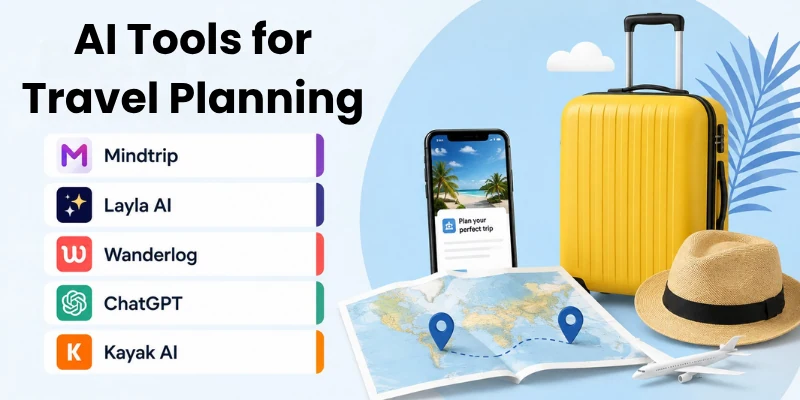
Below, we’ll go through five popular tools, one by one. Each one gets a quick, simple explanation, so you can see what it does best without any confusing tech talk.
Top AI Tools for Travel Planning:
- Mindtrip
- Layla AI
- Wanderlog
- ChatGPT
- Kayak AI
1. Mindtrip
Mindtrip is often seen as the best ai travel planner for people who want a full trip built fast. You just tell it where you’re going, and it builds a plan with real places, times, and costs.
It works like chatting with a friend who knows a city well. You can also drop a screenshot or a blog link, and it turns that into real spots on your map. It shows practical details like opening hours, addresses, and reviews from locals.
- Builds a full trip plan fast, based on a simple chat.
- Shows real places on an interactive map.
- Lets you drop spots straight into your travel plan.
- Great for beginners who don’t want to plan alone.
Real-Life Example: Imagine you’re planning a week in Lisbon, but you’ve never been there before. You tell Mindtrip you love good food and quiet neighborhoods, not crowded tourist spots. Within seconds, it builds a full plan, cafés, local markets, and a walking route between them, complete with opening hours and short descriptions of each place.
2. Layla AI
Layla AI is known as one of the most complete tools for full trip planning, with features that let you plan alongside friends or family.
It works well for people who want a collaborative, ready-to-book experience, not just a list of ideas. It feels less like a search tool and more like a real travel helper.
- Lets you plan trips together with others.
- Builds a full, detailed trip plan.
- Feels more complete than a simple chatbot.
- Good for people who want real booking support.
Real-Life Example: Picture planning a trip with three friends who all have different interests. Instead of endless group chats, everyone joins the same Layla AI plan. One friend adds a museum, another adds a beach day, and Layla arranges everything into one shared travel plan everyone can see and adjust together.
3. Wanderlog
If you don’t want to pay anything, Wanderlog is often called the best ai trip planner free option, especially for visual planners.
It has one of the strongest map views among AI travel planners, with drag-and-drop reordering and automatic route planning. It also works well for group trips.
- Free to use, with a paid option if you want more.
- Strong map view, easy to see your whole trip.
- Great for group trips and shared planning.
- Simple drag-and-drop to reorder your day.
Real-Life Example: You’re organizing a family reunion trip with people flying in from different cities. You use Wanderlog’s map view to drag and drop each stop, from the airport to the rental house to nearby restaurants, so everyone can see the plan visually before the trip even begins.
4. ChatGPT
ChatGPT is one of the easiest tools to start with, and many people already use it without even thinking of it as a “travel” tool. Its biggest strength is speed; it can suggest destinations, build travel plan outlines, and explain local customs quickly.
It works best as a starting point, before you move to a more detailed planning tool. In testing, it built a full week-long plan for two cities in under 30 seconds.
- Fast and flexible for brainstorming ideas.
- Good for building a first draft of your plan.
- Helps explain local customers and travel tips.
- Free and easy to access for beginners.
Real-Life Example: Think about the very first step of planning, before you’ve even picked a destination. You ask ChatGPT, “Where should I go for a relaxing solo trip in October?” Within moments, it suggests a few destinations, explains why each one fits a relaxing vibe, and gives you a rough week-long outline to build on.
5. Kayak AI
For real-time prices, Kayak AI is a strong pick. It gives live flight, hotel, and car rental results right inside the conversation.
This makes it especially useful once you’ve picked your destination and need real numbers, not just rough ideas.
- Shows live prices for flights and hotels.
- Great for comparing real travel costs.
- Works well alongside other planning tools.
- Free to use for search and price checks.
Real-Life Example: Now imagine you’ve already picked Bali as your destination. Before booking anything, you ask Kayak AI to show you current flight and hotel prices. It pulls real, live numbers directly into the conversation, so you know your actual budget before finalizing any plans.
Strengths and Weaknesses of Each Tool
Here’s a simple pros and cons table for the tools we’ve covered, helping you compare the best travel planner ai options at a glance.
| Tool | Pros | Cons |
| Mindtrip | Fast, detailed plans; huge database of places; easy to use | Some features need sign-up |
| Layla AI | Great for group planning; feels complete and ready-to-book | Fewer free features than others |
| Wanderlog | Free and visual; strong map view; great for groups | Some features locked behind paid plan |
| ChatGPT | Fast for brainstorming; free and flexible | Can give outdated details; no live booking |
| Kayak AI | Live, accurate prices; free to use | Not built for full itineraries |
Simple Takeaway: No single tool wins in every category. The best travel planner ai for you depends on whether speed, price accuracy, group planning, or full itineraries matter most for your trip.
Common Mistakes When Choosing a Travel AI
Even with great tools available, people often make small mistakes that lead to a frustrating experience. Avoiding these can save you time and help you find the best ai to plan a trip without unnecessary trial and error.

Check these mistakes in detail:
- Relying on just one tool instead of combining a few for different needs.
- Trusting AI-suggested details, like hours or prices, without double-checking them.
- Ignoring free options before jumping straight to a paid plan.
- Expecting AI to handle everything, including actual bookings, when some tools only plan.
- Skipping the budget step, then getting surprised by real costs later.
- Not telling the AI enough about your travel style, leading to generic suggestions.
- Using a solo-trip tool for group planning, then struggling with shared input.
- Assuming newer or trendier tools are automatically better, without checking reviews.
Quick Tip: Always verify important details like opening hours, prices, or availability using a live source, even if your AI tool sounds confident about them.
Quick Tips for Planning Smarter with AI
Before you dive in, here are a few simple habits that can make your experience with any travel AI tool much smoother.
- Start with a brainstorming tool, then move to a detailed planner.
- Always double-check live details like prices, hours, and availability.
- Be specific about your budget, pace, and interests when asking for suggestions.
- Try more than one tool if your trip involves multiple travelers.
- Use free plans first before upgrading to a paid version.
- Save or export your itinerary in case you need it offline later.
- Adjust your plan as you go, instead of expecting a perfect first draft.
- Ask the AI to explain its suggestions, so you understand the “why” behind each one.
- Keep a backup plan ready in case a suggested spot is closed or unavailable.
- Review your full itinerary once more before your trip, not just during planning.
Follow these habits, and AI planning starts to feel less like a gamble and more like a tool you can actually trust.
Final Thought
After testing and comparing these tools, I wouldn’t call any single one the best ai for travel for absolutely everyone. Each tool solves a different part of the planning puzzle: brainstorming, building a full itinerary, planning with others, or checking real prices before you book.
My honest recommendation is simple. If you’re just starting out, use ChatGPT to brainstorm ideas first. Once you know your destination, move to Mindtrip or Layla AI for a detailed, day-by-day plan. If price matters most, bring Kayak AI into the mix before finalizing anything.
Most importantly, don’t expect one tool to do everything perfectly. The travelers who get the best results usually combine a few tools, rather than depending on just one. Ready to plan your next trip smarter?
Pick one tool from this guide, start a simple conversation, and let it build your first draft today.
FAQs
Still have questions about the best AI for travel? Here are quick answers to help you plan your next trip with more confidence.
1. What is the best AI for travel planning overall?
There isn’t one single winner for everyone. Mindtrip works well for detailed travel plans, while ChatGPT is great for quick ideas, destination research, and brainstorming. It can also help you compare places, activities, and travel options based on your needs.
Your best choice depends on what you want from the tool. If you want a detailed travel plan, a dedicated tool like Mindtrip may work better. If you want quick and flexible answers, ChatGPT is a simple option.
2. What’s the best AI for planning trips on a tight schedule?
Mindtrip and ChatGPT both work well when you need to plan a trip quickly. They can help you create a basic travel plan in a short time and suggest places, activities, and things to do based on your available time.
They are especially useful when you have only a few days to plan. You can give them your destination, travel dates, budget, and interests, and they can help you organize your ideas into a simple plan.
3. Which AI tool for trip planning is easiest for beginners?
ChatGPT is usually one of the easiest options for beginners because you can simply ask questions in normal, everyday language. You do not need to learn complicated tools or settings before starting.
- No special setup is required.
- You can ask questions like you are talking to a person.
- It can suggest destinations, activities, and travel ideas.
- It is a simple choice for people using AI for the first time.
4. Which AI is best for travel planning if I want live prices?
Kayak AI is a strong choice if you want to check current flight and hotel prices while planning your trip. It connects travel search with AI, making it easier to explore different options in one place.
This can be helpful when your budget is important. You can compare available flights or hotels and adjust your plans based on current prices instead of only making a general travel plan.
5. What is the best AI for travel planning if I’m unsure where to even start?
If you are not sure where to go or what kind of trip you want, ChatGPT is a good place to start. You can share your interests, budget, travel time, and the type of experience you want, and it can give you different ideas.
Once you choose a destination, you can move to a dedicated travel planner like Mindtrip for more detailed planning. This simple approach can make the process easier and help you avoid too many choices at once.
6. Is there a best travel AI planner for group trips?
Yes, Layla AI and Wanderlog can be useful for group trips. Planning with several people can be difficult because everyone may have different ideas, budgets, and schedules.
- Shared travel plans make it easier for everyone to stay updated.
- Group members can add or change activities.
- You can organize places, bookings, and activities in one plan.
- Shared maps can make it easier to decide where to go.
7. Is there a good best AI travel planner free option available?
Yes, you can find several AI travel tools with useful free options. These free plans are often enough for basic trip research, destination ideas, and simple planning.
- Wanderlog offers useful free features, including maps and trip organization.
- ChatGPT can be used for basic travel planning without paying.
- Kayak AI is free to use for searching travel options and prices.
- Paid plans usually add extra features rather than basic planning tools.
8. Are there any best AI travel agents that also handle bookings?
Yes, some AI travel tools offer more than just ideas and planning. Layla AI is closer to a travel agent experience because it can help with more complete trip planning and travel options that are closer to booking.
This type of tool can be useful if you want to move from planning to actual travel arrangements. However, it is still a good idea to check the final prices, booking details, and cancellation rules before paying.
9. Is there a best AI for travel planning free version for longer trips?
Yes, free AI travel planners can help with longer trips, but some may have limits on saved plans, advanced features, or the number of searches you can make.
For a long trip, it is better to test the free version first. This helps you see whether it can handle your full travel plan before you decide to pay for additional features.
10. What’s the best trip planner AI for someone who travels often?
Frequent travelers may get better results by using more than one tool instead of depending on a single AI planner. For example, ChatGPT can help with quick ideas, destination research, and changes to your plans, while Mindtrip can be useful for creating a more detailed travel plan.
Using different tools for different tasks can save time and give you more flexibility. It also lets you choose the tool that works best for each part of your trip.






- Be Respectful
- Stay Relevant
- Stay Positive
- True Feedback
- Encourage Discussion
- Avoid Spamming
- No Fake News
- Don't Copy-Paste
- No Personal Attacks
- Be Respectful
- Stay Relevant
- Stay Positive
- True Feedback
- Encourage Discussion
- Avoid Spamming
- No Fake News
- Don't Copy-Paste
- No Personal Attacks
