What is Autonomy in AI Ethics? – Complete Guide
Published: 3 Sep 2026
AI systems now make decisions, recommend actions, and complete tasks with less human involvement than before. As businesses and individuals rely more on autonomous AI, an important ethical question arises: how much decision-making power should we give a machine? Understanding AI autonomy in ethics helps us see where AI should act independently and where people must stay in control.
AI autonomy and human autonomy are not the same. AI autonomy focuses on how independently a system can act, while human autonomy focuses on a person’s freedom to make informed, independent choices.
In this article, we will discuss what autonomy in AI ethics is in detail, including its importance, ethical risks, and role in responsible AI. You will also learn how human oversight can keep autonomous AI safe and accountable.
Autonomy in AI Ethics
Autonomy in AI ethics means an AI system can make decisions or take actions independently with limited human involvement. However, ethical AI should not reduce human freedom, choice, or control.
The goal is to balance AI autonomy with human autonomy. AI can handle tasks independently, but humans should remain involved in important decisions, maintain oversight, and take responsibility for outcomes.
In simple terms, ethical AI autonomy asks three key questions:
- When should AI act independently?
- When should humans remain involved?
- How can we protect human freedom and accountability?
This balance helps ensure that AI supports human decision-making instead of unnecessarily replacing it.
What Does Autonomy Mean in AI?
Autonomy in AI describes how independently an AI system can operate, make decisions, and complete tasks after receiving a goal or set of instructions. Some systems only recommend actions, while more advanced autonomous AI can plan several steps and complete tasks with limited human input.
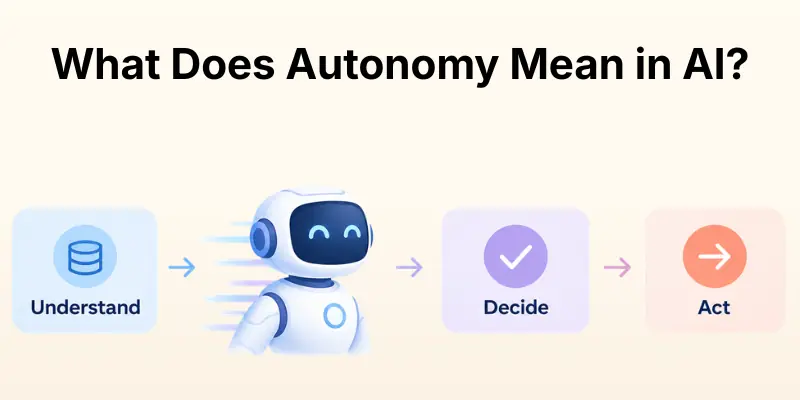
The following points explain how autonomy works and how it appears in real-world AI systems. They also show how these ideas connect to different levels of independence.
- How Autonomous AI Systems Make Decisions: AI analyzes available data and context, evaluates possible actions, and selects a response based on its goals and instructions.
- How Much Independence AI Can Have: AI autonomy can range from simple decision support to systems that independently plan and execute multiple tasks.
- AI can process information and select actions, while humans bring personal values, judgment, responsibility, and informed choice.
- Examples of Autonomous AI: Autonomous vehicles, AI agents, robotic systems, recommendation systems, and automated business tools can perform tasks with different levels of independence.
How Does Autonomy Work in AI Systems?
Autonomous AI systems follow a series of steps to understand a goal, process information, choose an action, and respond to the outcome. The level of autonomy can vary depending on the system, its purpose, and the amount of human oversight required.
The following are the main steps involved in AI autonomy:
- AI Receives a Goal: The system receives a specific task or objective that tells it what it needs to achieve.
- AI Analyzes Data and Context: It processes available information and context to understand the situation and identify relevant details.
- AI Generates or Selects an Action: The system considers possible responses and selects an action that best matches its goal and instructions.
- AI Executes the Action: If it has the required permission, the AI carries out the selected action without needing approval at every step.
- AI Monitors the Result: The system checks the outcome and can use new information to adjust its next action.
- Human Intervention Happens When Necessary: Humans can review, correct, override, or stop the system when a decision involves higher risks or falls outside its defined limits. NIST recommends clearly defining human roles and oversight for different human-AI configurations.
Why Is Autonomy Important in AI Ethics?
Autonomy matters in AI ethics because AI systems can now influence decisions, recommendations, and actions in many areas of life. As AI becomes more independent, people need to know when they can trust its decisions and when they should remain in control. Ethical autonomy helps protect human choice while allowing AI to provide useful support.
Protects Human Decision-Making
AI should help people make better decisions while keeping humans involved in important choices. This approach helps people stay in control of decisions that can affect their lives.
- AI can provide recommendations without making the final decision.
- Humans can review AI suggestions before taking action.
- People can reject or correct incorrect AI recommendations.
- Human involvement can reduce the impact of AI mistakes.
Preserves Freedom and Self-Determination
Ethical AI should respect people’s freedom to make their own choices. It should support personal decision-making rather than control it.
- People should be free to accept or reject AI suggestions.
- AI should not unnecessarily restrict a person’s choices.
- Users should understand how AI influences their decisions.
- People should remain responsible for their personal choices.
Prevents Manipulation
AI can analyze personal data and behavior to influence what people see, buy, or choose. Ethical autonomy helps prevent AI from secretly controlling people’s decisions.
- AI should clearly disclose when it influences user choices.
- Systems should avoid deceptive or overly persuasive techniques.
- Users should have control over personalized recommendations.
- Organizations should use personal data responsibly.
Supports Meaningful Human Control
Human oversight becomes more important when AI makes decisions with serious consequences. People should have enough control to review and change AI actions when needed.
- Humans should monitor important AI decisions.
- Users should be able to question AI recommendations.
- People should be able to correct or override AI decisions.
- High-risk systems should include clear intervention options.
Creates Clear Accountability
Autonomous AI can make decisions independently, but people and organizations must remain responsible for its use. Clear accountability prevents organizations from blaming the AI when something goes wrong.
- Organizations should define who is responsible for AI decisions.
- Developers should test systems for risks and errors.
- Companies should keep records of important AI actions.
- Responsible teams should investigate harmful AI outcomes.
Builds Trust in AI Systems
People are more likely to trust AI when they understand its role and know that humans can intervene. Clear rules and human oversight make autonomous AI more reliable.
- Explain how AI makes or supports important decisions.
- Give users ways to question or challenge AI outcomes.
- Set clear limits on what autonomous AI can do.
- Monitor AI systems regularly for errors and risks.
Human Autonomy vs. AI Autonomy
The following points show the key differences between human autonomy and AI autonomy. They contrast personal choice and system behavior easier to follow.
| Human Autonomy | AI Autonomy |
| Humans make their own choices and decisions. | AI can make or execute decisions independently. |
| Based on freedom, personal values, and self-determination. | Based on the system’s capabilities, design, data, and instructions. |
| People can consider their own goals and values. | AI follows defined goals, rules, or programmed objectives. |
| Ethical AI should protect human freedom and choice. | AI should operate within clear limits and appropriate oversight. |
| Humans remain responsible for their decisions. | Organizations and responsible people must remain accountable for AI actions. |
The key difference is that human autonomy involves personal freedom and self-determination, while AI autonomy involves independent system behavior. Ethical AI should allow machine independence without taking away meaningful human control or decision-making.
How Does AI Autonomy Affect Human Autonomy?
AI autonomy can make everyday tasks easier, but it can also influence how people think, choose, and make decisions. The impact depends on how much control AI receives and how much freedom people retain.
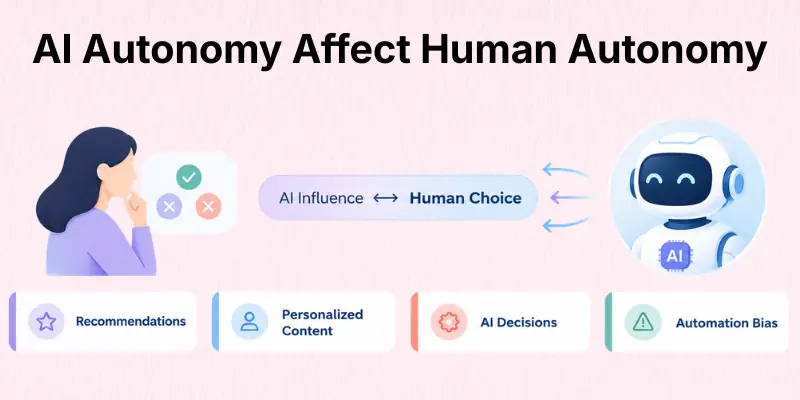
The following are some common ways AI autonomy can affect human autonomy:
- AI Recommendations: AI can suggest products, services, decisions, or actions, which may influence what people choose.
- Personalized Content: AI can select content based on a user’s interests and behavior, shaping what they see and consume.
- Automated Decision-Making: AI can make decisions with limited human involvement, which may reduce people’s ability to review or challenge those decisions.
- AI Persuasion and Manipulation: AI can use personal data and behavioral patterns to influence choices, creating concerns when persuasion becomes hidden or excessive.
- Automation Bias: People may trust AI recommendations too quickly and accept them without using their own judgment.
- Reduced Human Decision-Making: Excessive reliance on AI can gradually reduce people’s involvement in decisions that require personal judgment, values, or responsibility.
Main Principles of Autonomy in AI Ethics
Autonomous AI should operate in ways that respect human rights, support informed choices, and keep people responsible for important decisions. These principles help organizations create AI systems that remain useful while protecting human control.
The following are the main principles of autonomy in AI ethics:
- Human Agency: AI should support people’s ability to make their own choices rather than unnecessarily replacing or controlling their decisions.
- Human Oversight: People should be able to monitor, review, correct, or stop AI systems when their actions create significant risks.
- Transparency: Users should know when AI makes decisions or influences their choices, especially when those decisions can affect them significantly.
- Explainability: AI systems should provide understandable reasons for important decisions so people can review and question their outcomes.
- Accountability: Organizations and responsible individuals should remain accountable for how autonomous AI operates and for the consequences of its decisions.
- Privacy: AI should protect personal information and avoid using data in ways that undermine people’s control over their personal lives and choices.
- Fairness and Non-Discrimination: Autonomous AI should treat people fairly and avoid producing decisions that unfairly disadvantage individuals or groups.
- Safety and Security: AI systems should include safeguards that reduce harmful actions, prevent misuse, and keep autonomous operations within safe and controlled limits.
Ethical Risks of AI Autonomy
As AI systems gain more independence, they can create ethical risks when they make decisions without enough human understanding, oversight, or control. These risks can affect individual freedom, privacy, fairness, safety, and accountability.
Below are some of the main ethical risks of AI autonomy:
- Loss of human control
- AI manipulation
- Automation bias
- Biased decisions
- Privacy concerns
- Lack of transparency
- Accountability gaps
- Unexpected AI behavior
- Overreliance on AI
Role of Human Oversight in AI Autonomy
Human oversight helps keep autonomous AI systems within safe and ethical limits. As AI takes on more independent tasks, people need clear ways to monitor its behavior, review important decisions, and intervene when necessary. The right level of oversight depends on the system’s purpose, risks, and potential impact on people.
The following are the main approaches to human oversight in AI autonomy:
Human-in-the-Loop
“Human-in-the-loop” means a person remains directly involved in the decision process and reviews or approves an AI action before it takes effect.
Key features include the following:
- Humans review important AI recommendations or decisions.
- AI usually waits for human approval before taking a specific action.
- People can reject, change, or correct the AI’s recommendation.
- This approach works well for high-risk or sensitive decisions.
Human-on-the-Loop
Human-in-the-loop allows AI to operate independently while humans monitor its actions and step in when needed.
Key features include:
- AI can make routine decisions without constant approval.
- Humans monitor the system’s performance and behavior.
- People can intervene when the AI produces an unexpected or harmful result.
- This approach can work well when AI needs to respond quickly but still requires human supervision.
Human-in-Command
Human-in-Command gives humans overall authority over the AI system, including decisions about its purpose, limits, and continued operation.
Key features are:
- Humans define what the AI system can and cannot do.
- People can change its objectives or operating boundaries.
- Humans can suspend or stop the system when necessary.
- This approach keeps ultimate authority with people, even when AI performs tasks independently.
Who Is Responsible When Autonomous AI Makes a Mistake?
When autonomous AI makes a mistake, responsibility should not disappear simply because the system acted independently. People and organizations involved in developing, deploying, managing, and using AI should have clear responsibilities for its outcomes.
The following parties can play a role in AI accountability:
- AI Developers: Developers should design, test, and update AI systems to reduce errors, bias, and unexpected behavior.
- Companies Using AI: Companies should use AI responsibly, monitor its performance, and make sure it fits the intended purpose.
- AI Operators: Operators should monitor autonomous systems, respond to warnings, and intervene when the system behaves unexpectedly.
- Human Decision-Makers: People who rely on AI recommendations should review important decisions instead of accepting them without proper judgment.
- Organizations and Institutions: Organizations should establish clear AI policies, assign responsibility, and maintain proper oversight throughout the system’s use.
- Why AI Should Not Replace Human Accountability: AI may make decisions independently, but it should not become an excuse for humans or organizations to avoid responsibility for harmful outcomes.
Real-World Examples of Autonomy in AI Ethics
Below are some common real-world examples where AI autonomy creates important ethical questions:
- Autonomous Vehicles
- AI in Healthcare
- AI Hiring Systems
- AI Recommendation Systems
- Autonomous AI Agents
Benefits of Ethical AI Autonomy
Ethical AI autonomy allows systems to handle suitable tasks independently while keeping human control where it matters most. When organizations set clear limits and oversight, autonomous AI can improve productivity without removing human responsibility.
Below are the main benefits of ethical AI autonomy:
- Faster Decision-Making: AI can process large amounts of information quickly and provide timely decisions or recommendations.
- Better Efficiency: Autonomous systems can complete routine processes with less manual effort and help teams use their time more effectively.
- Reduced Repetitive Work: AI can handle repetitive tasks independently, allowing people to focus on more complex and creative work.
- Scalability: Autonomous AI can manage growing workloads without requiring the same increase in human resources.
- Human-AI Collaboration: AI can handle suitable tasks while people provide judgment, creativity, and oversight where needed.
- Better Decision Support: AI can analyze data, identify patterns, and provide useful insights that help people make more informed decisions.
Challenges of Ethical AI Autonomy
Giving AI more independence can improve efficiency, but it also creates challenges around control, responsibility, safety, and human freedom. Organizations need to manage these challenges carefully to use autonomous AI responsibly.
The following are the main challenges of ethical AI autonomy:
- Loss of Human Control: Highly autonomous systems may make important decisions faster than humans can review or intervene.
- Accountability Gaps: It can become difficult to identify who is responsible when an autonomous AI system makes a harmful decision.
- Bias and Discrimination: AI can produce or amplify unfair outcomes when its data or decision-making process contains bias.
- Lack of Transparency: People may not understand why an autonomous system made a particular decision.
- Privacy Concerns: Autonomous AI may collect and analyze large amounts of personal information, creating risks for privacy and user control.
- Unintended Actions: AI may produce unexpected results when it encounters situations outside its training or defined boundaries.
- Overreliance on AI: People may trust AI decisions too quickly and stop using their own judgment.
- Difficulty With Human Oversight: Monitoring complex autonomous systems can become challenging as AI handles more tasks independently.
Future of Autonomy in AI Ethics
The future of AI autonomy will focus on giving systems more useful independence while keeping human agency, safety, and accountability at the center. As AI agents become capable of completing longer and more complex tasks, organizations will need clearer rules for when AI can act alone and when humans must step in.
These trends will shape the future of ethical AI autonomy:
- Autonomous AI Agents: AI agents will increasingly plan and complete multi-step tasks with limited human input.
- Increasing AI Decision-Making: AI will take part in more business and everyday decisions, making appropriate oversight increasingly important.
- Human-AI Collaboration: People and AI will work together, with AI handling suitable tasks and humans providing judgment and direction.
- Stronger AI Governance: Organizations and regulators will develop clearer rules, policies, and controls for autonomous AI systems.
- Meaningful Human Oversight: Human supervision will focus on giving people real authority to review, challenge, correct, or stop AI when necessary.
- Protection of Human Agency: Future AI systems will need to protect people’s ability to make informed choices, rather than unnecessarily replacing or influencing their decisions.
Conclusion
In this guide, we have covered ‘what is autonomy in AI ethics’ and explored how AI autonomy affects human freedom, decision-making, accountability, and control. We also discussed its key principles, benefits, challenges, human oversight, and real-world examples.
Ethical AI autonomy should give systems enough independence to perform useful tasks while keeping humans responsible for important decisions. A balanced approach can help organizations gain the benefits of AI without sacrificing human agency, safety, or trust.
My recommendation: Always match the level of AI autonomy with the risk of the task and keep meaningful human oversight for important decisions. Clear boundaries and accountability can make autonomous AI safer and more responsible.
Thank you for reading, and I hope this guide helped you understand AI autonomy and ethics more clearly. Wishing you the best as you explore the responsible use of AI!
💬 Have a thought or question? Share it in the comments below and join the conversation! 😊
FAQs
If you still have questions about autonomy in AI ethics, the following FAQs provide simple and helpful answers:
Autonomy in AI ethics means an AI system can make decisions or take actions with limited human involvement. Ethical autonomy also requires AI to respect human freedom, choice, and control. The goal is to balance AI independence with human responsibility.
Autonomy is important because AI can influence decisions that affect people’s lives, privacy, and freedom. Ethical AI should support independent decision-making instead of unnecessarily replacing human judgment. Human oversight also helps maintain accountability and trust.
The main differences are:
- AI autonomy: AI can perform tasks or make decisions independently.
- Human autonomy: People can make their own choices based on their values and preferences.
- Ethical AI: AI should not reduce meaningful human freedom or control.
AI autonomy can influence human decisions through recommendations, personalized content, and automated decisions. People may rely too heavily on AI suggestions and stop using their own judgment. Clear information and human oversight can help maintain independent decision-making.
Some important risks include:
- Loss of human control
- AI bias and discrimination
- Privacy violations
- Hidden manipulation
- Lack of transparency
- Unclear accountability
These risks become more serious when AI makes high-impact decisions with little human involvement.
Human oversight means people monitor, review, or control an AI system when necessary. Depending on the risk, humans may approve AI decisions before action or monitor the system while it operates independently. This helps prevent harmful outcomes and keeps responsibility clear.
Autonomous AI can follow ethical rules and predefined guidelines, but it does not replace human moral judgment and responsibility. Complex situations may require human values, context, and judgment that an AI system cannot fully determine. For this reason, high-impact AI systems need appropriate human oversight.
Responsibility can involve developers, companies, operators, and human decision-makers depending on how the AI system was designed and used. Organizations should clearly assign responsibility before deploying autonomous AI. AI autonomy should never become a reason for humans to avoid accountability.
Ethical AI autonomy can help organizations make faster decisions, reduce repetitive work, and improve efficiency. It can also support human-AI collaboration by allowing AI to handle suitable tasks while people focus on complex decisions. The benefits are strongest when organizations maintain clear limits and oversight.
Organizations can promote responsible AI autonomy by following these steps:
- Set clear boundaries for autonomous actions.
- Keep humans involved in high-risk decisions.
- Monitor AI performance regularly.
- Protect user privacy and personal data.
- Create ways to review, correct, or stop AI decisions.
- Clearly assign accountability for AI outcomes.






- Be Respectful
- Stay Relevant
- Stay Positive
- True Feedback
- Encourage Discussion
- Avoid Spamming
- No Fake News
- Don't Copy-Paste
- No Personal Attacks
- Be Respectful
- Stay Relevant
- Stay Positive
- True Feedback
- Encourage Discussion
- Avoid Spamming
- No Fake News
- Don't Copy-Paste
- No Personal Attacks
