AI for School Psychologists: A Smarter Way to Support Students
Published: 15 Sep 2026
Do you wonder if AI can really help school psychologists? You may have heard that AI can analyze data, support assessments, and help with reports. But you may also wonder if it is safe and accurate for work involving students.
School psychologists handle many tasks every day. They review assessments, track student behavior, prepare reports, and support students with different needs. This work can take a lot of time.
This is where AI for school psychologists can help. AI can organize information, spot patterns, reduce repetitive tasks, and support some assessment work. It can give professionals more time to focus on students.
But should AI make decisions on its own? No. School psychologists should review AI results, protect student information, and use their professional judgment before making any important decision.
In this guide, we’ll explore how AI works, where it can help, what benefits it offers, and what challenges professionals should consider before using it.
What is AI for School Psychologists?
AI for school psychologists means using artificial intelligence to support school psychologists in their daily work. It can help with tasks such as reviewing information, organizing data, preparing documents, and finding useful patterns.
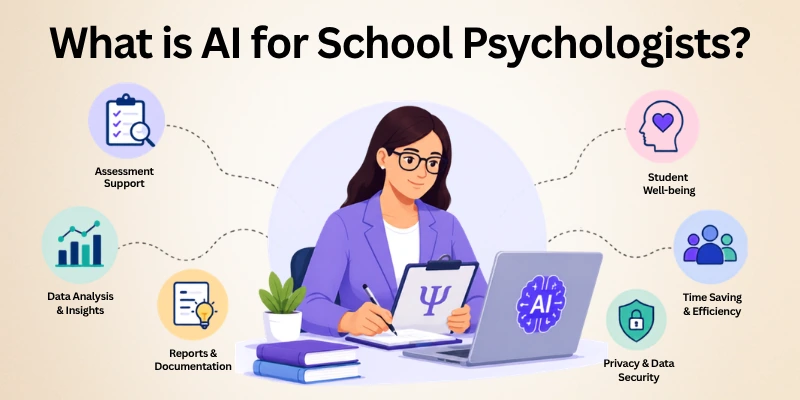
AI can process a large amount of information in a short time. For example, a school psychologist may use AI to arrange student assessment data or summarize long notes before reviewing them.
AI for school psychology can support professionals in several areas:
- Student assessment: Helps organize and review assessment information.
- Documentation: Can assist with reports, notes, and other written work.
- Data analysis: Helps identify patterns in large amounts of student data.
- Student support: Can provide useful information for planning.
- Behavior tracking: Helps organize records about student behavior.
The goal is not to let AI make important decisions about students. Instead, it should reduce repetitive work and give school psychologists more time to focus on students and their individual needs.
How Does AI for School Psychologists Work?
AI works by processing information and finding patterns that may help school psychologists with their daily tasks. A professional gives the tool relevant information, and the AI analyzes it to provide summaries, suggestions, or organized results.
The process is usually simple:
- Add Information: The psychologist provides relevant data, notes, or documents.
- AI Processes the Data: The system reviews the information and looks for patterns.
- AI Provides Results: It may create a summary, highlight key details, or suggest areas to review.
- Professional Reviews the Results: The school psychologist checks the information and decides what is useful.
- Final Decision: The psychologist uses professional knowledge to make the final decision.
For example, a psychologist may have many notes about a student’s classroom behavior. AI can arrange the notes and highlight repeated patterns. The psychologist can then review those findings and decide what they mean.
AI tools for school psychologists can support tasks like:
- Organizing student information
- Summarizing documents
- Reviewing assessment data
- Preparing basic reports
- Identifying patterns
- Managing repetitive tasks
AI should always work as a support tool. School psychologists need to check the results and use their own professional judgment, especially when decisions can affect a student’s education or well-being.
How are School Psychologists Using AI?
School psychologists can use AI to support many parts of their daily work. It can help them manage information, reduce repetitive tasks, and review student data more efficiently.
The key is to use AI as a support tool. School psychologists should check the results and make important decisions based on their professional knowledge and direct understanding of each student.
Student Assessment
AI can help arrange information collected during student assessments. It can also make large amounts of data easier to review.
For example, a psychologist may use AI for student assessment to organize test results and identify areas that need closer attention.
It can help with:
- Organizing assessment data
- Summarizing results
- Finding patterns
- Preparing notes
- Comparing information
Student Behavior Analysis
Understanding student behavior often requires looking at information collected over time. AI can help sort these records and highlight recurring patterns.
For example, it may show that certain behavior happens more often during specific activities or times of the school day.
AI can support:
- Behavior tracking
- Pattern identification
- Progress monitoring
- Data organization
- Behavior report preparation
Student Support
AI can help school psychologists review information about student needs and available support options. It can also help prepare resources for students, teachers, and families.
For example, a psychologist can use AI to create a simple list of strategies for helping a student improve study habits. The psychologist can then adjust the suggestions based on the student’s needs.
It can support:
- Student resources
- Support planning
- Study strategies
- Communication materials
- Progress tracking
School Counseling
AI can assist with some routine counseling tasks and help professionals prepare useful materials. It can also help create questions, resources, and general support content.
However, AI should not replace direct communication between a student and a trained professional.
It can help with:
- Preparing discussion questions
- Creating support resources
- Organizing notes
- Planning activities
- Finding educational resources
Documentation and Reports
Writing reports and organizing notes can take a lot of time. AI can help create drafts, summarize information, and improve the structure of documents.
For example, a psychologist can use AI to turn organized notes into a basic report draft. The psychologist can then check, edit, and approve the final document.
It can help with:
- Report drafts
- Meeting summaries
- Case notes
- Progress reports
- Document organization
AI Tools for School Psychologists
Different AI tools can support different tasks in school psychology. Some focus on assessment and data, while others help with writing, organization, research, or communication.
The right tool depends on the task and the needs of the school. Before using any tool, professionals should check its privacy settings, accuracy, and school policies.
Assessment and Screening Tools
These tools can help arrange assessment information and support screening tasks. They can make large sets of results easier to review.
For example, a psychologist may use an AI tool to sort assessment data and highlight areas that need further attention.
Useful features include:
- Data organization
- Assessment summaries
- Pattern detection
- Screening support
- Progress tracking
Writing and Documentation Tools
Writing reports and notes can take a lot of time. AI writing tools can help create drafts and improve the structure of documents.
A psychologist can provide notes and ask the tool to create a basic draft. The professional should then check every detail before using the document.
Common uses include:
- Report drafting
- Note organization
- Meeting summaries
- Grammar checking
- Document editing
Data Analysis Tools
AI can process large amounts of student data and highlight useful trends. This can help psychologists spend less time sorting information manually.
For example, a tool may organize behavior records and show recurring patterns across different dates or situations.
These tools can help with:
- Data organization
- Pattern identification
- Progress tracking
- Trend analysis
- Report preparation
Communication and Support Tools
Some AI tools can help create simple resources for students, teachers, and parents. They can also help prepare communication materials based on a specific need.
For example, a psychologist can use AI to create a simple guide about study habits and then adjust it for a student’s age and needs.
They can support:
- Student resources
- Parent communication
- Teacher materials
- Educational guides
- Support activities
Important: Never enter sensitive student information into an AI tool unless the tool is approved for that use and follows the required privacy and security rules.
AI for Psychological Assessment in Schools
AI can support school psychologists during the assessment process by helping them arrange information and review large amounts of data. It can make complex records easier to understand and help professionals notice areas that may need a closer look.
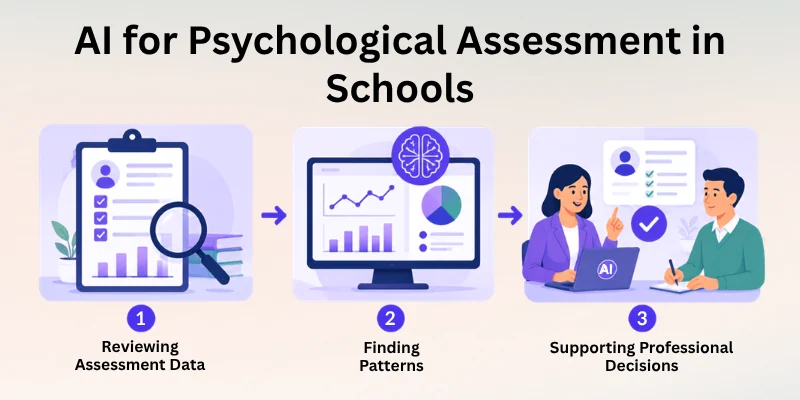
For example, a psychologist may have test scores, teacher feedback, classroom observations, and other records for one student. AI can bring these details together into a clear summary, but the psychologist must review the information before using it for any decision.
Reviewing Assessment Data
AI can help organize different types of assessment information. This makes it easier for professionals to review important details without sorting everything manually.
It can help with:
- Organizing test results
- Summarizing assessment notes
- Grouping related information
- Highlighting important details
- Comparing data from different assessments
Finding Patterns
AI can review large amounts of assessment information and point out recurring patterns. This can help school psychologists notice areas that may need a closer look.
It can help with:
- Identifying repeated learning patterns
- Comparing assessment results
- Reviewing classroom observations
- Tracking changes over time
- Highlighting areas for further review
Supporting Professional Decisions
AI can provide useful summaries and insights, but it should not make psychological decisions on its own. A trained professional needs to consider the student’s full situation.
AI can support the process by:
- Highlighting areas for review
- Bringing relevant information together
- Preparing assessment summaries
- Supporting data-based discussions
- Saving time on routine tasks
The final assessment should always depend on professional judgment, direct observation, and reliable information. AI should support the psychologist, not replace their expertise.
AI for Student Behavior Analysis
Understanding student behavior can take a lot of time. School psychologists often review classroom observations, behavior records, and progress notes to understand what may be affecting a student.
AI for student behavior analysis can help sort this information and identify recurring behavior patterns. It can support psychologists in reviewing data, but it should not be used to make decisions about a student without professional review.
Identifying Behavior Patterns
AI can review behavior records and show patterns that may be easy to miss. It can help professionals see when, where, or how often certain behaviors happen.
It can help with:
- Finding repeated behavior patterns
- Comparing behavior across different times
- Reviewing classroom observations
- Identifying changes in behavior
- Highlighting areas that need attention
Tracking Student Progress
AI can help organize behavior data collected over time. This makes it easier to see whether a student’s behavior is improving, changing, or staying the same.
For example, a psychologist may use AI to organize weekly behavior records. The results can help the professional see progress and decide whether a support plan needs review.
It can help with:
- Tracking behavior changes
- Comparing weekly progress
- Organizing behavior records
- Identifying improvement areas
- Highlighting changes that need attention
Supporting Behavior Plans
AI can help organize information that may be useful when creating or reviewing behavior support plans. It can suggest general ideas based on the information provided.
However, the school psychologist should make the final decision. They should consider the student’s needs, school environment, family input, and other relevant information before changing a support plan.
AI can support:
- Organizing behavior information
- Summarizing progress data
- Suggesting general strategies
- Reviewing existing support plans
- Preparing information for team discussions
Benefits of AI for School Psychologists
AI can make many daily tasks easier for school psychologists. It can reduce repetitive work, simplify information management, and help professionals spend more time supporting students.
The benefits depend on how the tool is used. AI should support professional work while keeping student privacy, accuracy, and human judgment at the center.
- Saves Time: AI can help with notes, summaries, reports, and other routine tasks.
- Organizes Information: It can arrange large amounts of student data into a clearer format.
- Supports Data Analysis: AI can identify patterns and trends that may need further review.
- Reduces Repetitive Work: Tasks like summarizing documents or sorting records can take less time.
- Helps With Documentation: AI can create basic drafts for reports and notes that professionals can review and edit.
- Supports Student Assessment: It can help arrange assessment results and highlight information for further review.
- Improves Workflow: AI can help professionals manage routine tasks more efficiently.
- Gives More Time for Students: By reducing administrative work, AI can give psychologists more time for direct student support.
AI for School Counseling
AI can support school psychologists with some routine counseling tasks. It can help organize information, create useful resources, and prepare materials for students, teachers, and parents.
However, AI should not replace direct support from a trained professional. School psychologists should use their experience and judgment when working with students, especially when dealing with personal or sensitive concerns.
Student Support
AI can help professionals prepare simple resources based on common student needs. These resources can support discussions and activities during school counseling.
It can help with:
- Study and learning resources
- Stress management tips
- Goal-setting activities
- Social skills activities
- General student guidance
Communication
AI can help create clear and simple communication materials for students, parents, and teachers. A professional can then review and adjust the content before sharing it.
It can support:
- Parent messages
- Student handouts
- Teacher resources
- Meeting summaries
- Educational content
Resource Recommendations
Finding useful resources can take time. AI can help school psychologists find and arrange general resources based on a specific student need or counseling topic.
It can help with:
- Finding activity ideas
- Organizing educational resources
- Suggesting counseling materials
- Creating resource lists
- Finding ideas for student support
Progress Tracking
AI can help arrange notes and records related to student progress. This can make it easier to review changes over time.
It can help with:
- Organizing progress notes
- Comparing records
- Summarizing updates
- Tracking goals
- Preparing review materials
Challenges of Using AI in School Psychology
AI can make some tasks easier for school psychologists, but it also comes with important concerns. Since this work involves students and sensitive information, professionals need to use AI carefully.
- Student Privacy: Student records can contain sensitive information. Psychologists should only use AI tools that meet their school’s privacy and security requirements.
- Data Security: AI tools may process information through online systems. Professionals should understand how the tool stores and protects data before using it.
- Accuracy: AI can provide incorrect or incomplete information. Every important result should be checked by a trained professional.
- Bias: AI may produce biased results based on the data used to train it. Psychologists should review AI output carefully and avoid making decisions based only on AI results.
- Ethical Concerns: AI use can raise questions about fairness, consent, and responsible decision-making. Professionals should follow ethical standards and school policies.
- Lack of Human Understanding: AI cannot fully understand a student’s emotions, background, or personal situation. Human interaction and professional judgment remain essential.
- Overdependence on AI: Relying too much on AI can reduce careful professional review. AI should support the psychologist’s work, not take control of important decisions.
Final Thoughts
AI for school psychologists can make many daily tasks easier. It can help manage student information, review data, prepare reports, track progress, and support different areas of school psychology. This can save time and allow professionals to give more attention to students.
At the same time, AI has clear limits. It can make mistakes, miss important context, or produce biased results. Student privacy is also a major concern, so professionals should use trusted tools and follow school rules when handling sensitive information.
My recommendation is to use AI as a support tool, not as a replacement for professional judgment. Start with simple tasks like organizing information or preparing basic drafts. Always review the results and make the final decision based on professional knowledge and the student’s individual needs.
The best approach is to combine AI with human experience and care. Ready to make your daily work easier? Start exploring AI for school psychologists and find practical ways to use AI responsibly in your workflow.
FAQs About AI for School Psychologists
Still have questions about how AI can support school psychologists? Here are some common questions with simple answers to help you understand its uses, benefits, and limitations.
AI can help with tasks such as organizing student information, preparing reports, reviewing data, and tracking progress. It can reduce repetitive work and give professionals more time to focus on students.
However, AI should support the psychologist rather than replace their professional judgment.
AI can be useful, but safety depends on the tool and how it is used. Professionals should check privacy, security, and school policies before entering any student information.
Sensitive student data should never be shared with an unapproved AI tool.
There is no single best tool for every school psychologist. The right choice depends on the task, school requirements, privacy needs, and available features.
Useful tools may support:
- Documentation
- Data organization
- Research
- Assessment support
- Communication
- Resource creation
Yes, AI for student assessment can help organize assessment information and highlight patterns that may need further review. It can make large amounts of data easier to manage.
The psychologist should always review the results and make the final assessment decision.
No. AI can handle some repetitive tasks, but it cannot replace the human understanding, professional experience, and personal connection needed in school psychology.
A psychologist must consider the student’s emotions, background, environment, and individual needs before making important decisions.
AI can organize behavior records and help identify recurring patterns. It may show changes in behavior over time or highlight areas that need closer attention.
For example, a psychologist can review organized behavior data to better understand when certain behaviors happen. The professional can then decide what support may be appropriate.
Yes, AI for psychological assessment in schools can support tasks such as organizing results, summarizing information, and finding patterns in assessment data.
It should not make psychological decisions on its own. A trained professional must review the information and consider the full student context.
AI for school counseling can help professionals create resources, prepare activities, organize notes, and develop simple educational materials.
It can support routine work, but direct communication with students should remain an important part of counseling.
AI can offer several practical benefits:
- Saves time on repetitive tasks
- Organizes large amounts of information
- Supports data analysis
- Helps prepare documents
- Makes research easier
- Supports student progress tracking
- Gives professionals more time for direct student support
The main concerns include privacy, data security, accuracy, bias, and overdependence on AI. These issues become more important when AI handles sensitive student information.
Professionals should use approved tools, check AI-generated results, and keep human judgment involved in every important decision





- Be Respectful
- Stay Relevant
- Stay Positive
- True Feedback
- Encourage Discussion
- Avoid Spamming
- No Fake News
- Don't Copy-Paste
- No Personal Attacks
- Be Respectful
- Stay Relevant
- Stay Positive
- True Feedback
- Encourage Discussion
- Avoid Spamming
- No Fake News
- Don't Copy-Paste
- No Personal Attacks
