Learn Dangers of Artificial Intelligence If Misused
Published: 22 Mar 2026
Artificial intelligence is growing fast and many people feel excited, but there is also a fear that it can slip out of human control. If machines start making decisions on their own, they can harm jobs, privacy, safety, and even human values. These risks feel real because we already see early signs of them in daily life.
In this guide, you will learn the dangers of AI and the risks artificial intelligence can bring to our lives, society, and future.
Dangers of AI
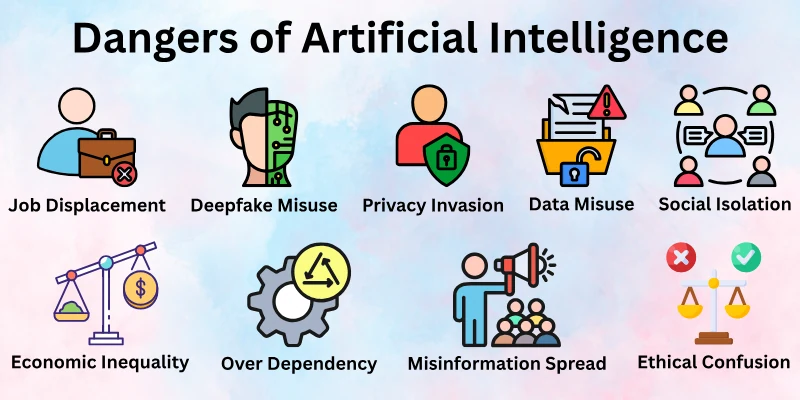
Here is the list of major dangers of artificial intelligence. Each point covers a different type of risk.
- Job Displacement
- Deepfake Misuse
- Biased Decision Making
- Loss of Human Creativity
- Privacy Invasion
- Autonomous Weapons
- Manipulation in Politics
- Over Dependency on Machines
- Data Misuse
- Security Threats
- Social Isolation
- Skill Loss in Humans
- Misinformation Spread
- Economic Inequality
- Lack of Accountability
- Mental Health Effects
- Manipulative Advertising
- Loss of Human Touch in Services
- Uncontrolled AI Behavior
- Ethical Confusion
Let us cover all these in detail.
1. Job Displacement
AI can perform tasks faster and cheaper than humans. Many companies start replacing people with automation. This leads to unemployment, fear of losing income, and less opportunity for new workers. It affects families directly and creates stress for many communities.
How to manage
- Keep learning new digital skills
- Move towards creative and human centered jobs
- Encourage companies to reskill employees
- Support ethical policies for fair job protection
2. Deepfake Misuse
Deepfake AI can copy faces and voices with high accuracy. Criminals can misuse it to create fake videos, harm reputations, or scam people. Victims find it very hard to prove the truth. This risk is growing fast and can break trust in online content.
How to manage
- Verify online videos before believing
- Use deepfake detection tools
- Educate people about online scams
- Support strict digital identity laws
3. Biased Decision Making
AI systems learn from data. If the data has bias, the results also become biased. This can affect hiring, loans, healthcare, and fairness. People may get rejected due to unfair machine decisions.
How to manage
- Use high quality data
- Review AI decisions with humans
- Create fairness checks
- Demand transparency from companies
4. Loss of Human Creativity
AI tools can write, design, and create, but overuse can reduce human imagination. People may stop thinking deeply and rely too much on machines. This may weaken creative industries.
How to manage
- Use AI only for support
- Set time for human brainstorming
- Practice creative skills daily
- Encourage schools to train creativity
5. Privacy Invasion
AI can track movements, analyze habits, and collect data silently. This takes away personal privacy. People do not know how their data is used or stored.
How to manage
- Use strong privacy settings
- Avoid sharing excessive data
- Support privacy protection laws
- Choose platforms that respect users
6. Autonomous Weapons
Some countries build AI weapons that can attack without human control. This risk can lead to dangerous conflicts and mistakes. A wrong action can destroy lives instantly.
How to manage
- Support international AI weapon bans
- Keep humans in the loop for decisions
- Promote safety research
- Encourage peaceful AI development
7. Manipulation in Politics
AI can target voters with emotional content. It can spread fake news to influence elections. This harms democracy and public trust.
How to manage
- Check information sources
- Avoid emotional political content
- Support digital election monitoring
- Promote transparency in campaigns
8. Over Dependency on Machines
People start depending on AI for simple tasks. With time, this reduces thinking ability. If AI fails, people may struggle to function normally.
How to manage
- Practice problem solving on your own
- Limit AI use for personal decisions
- Build strong human skills
- Keep backup plans
9. Data Misuse
Companies collect large amounts of user data. AI can analyze and misuse this data for profit. This exposes people to scams and unwanted tracking.
How to manage
- Read data policies
- Share minimal information
- Use privacy friendly apps
- Support strong regulations
10. Security Threats
Hackers use AI for cyber attacks. They can break passwords, steal accounts, and damage systems. These attacks are smarter and harder to detect.
How to manage
- Use strong passwords
- Enable two step login
- Update systems regularly
- Learn basic cybersecurity skills
11. Social Isolation
AI companions and bots can replace human interaction. People may spend less time with family and friends. This weakens real relationships.
How to manage
- Set limits on screen time
- Build real connections
- Spend time outdoors
- Join social activities
12. Skill Loss in Humans
AI tools perform tasks that humans used to do manually. Over time, people forget important skills. This reduces independence.
How to manage
- Practice your skills regularly
- Use AI only as a helper
- Join learning programs
- Encourage manual thinking
13. Misinformation Spread
AI can produce fake news quickly and at a large scale. People believe false information without checking. This creates confusion and conflict.
How to manage
- Verify news before sharing
- Rely on trusted sources
- Use fact checking websites
- Educate others about fake news
14. Economic Inequality
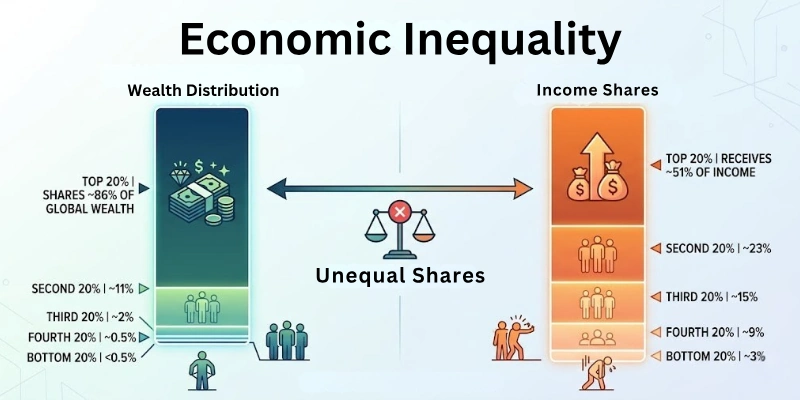
AI benefits rich companies more than small businesses. Big companies get richer while small ones struggle. This widens the gap between rich and poor.
How to manage
- Support fair AI laws
- Encourage equal access to technology
- Help small businesses adopt tools
- Promote ethical business models
15. Lack of Accountability
When AI makes a wrong decision, it is hard to know who is responsible. No one takes blame. This creates injustice for people.
How to manage
- Demand clear responsibility rules
- Review AI decisions with humans
- Support user protection laws
- Ensure legal transparency
16. Mental Health Effects
AI content can lead to stress, comparison, and overthinking. People feel pressure to be perfect. This affects self esteem.
How to manage
- Avoid perfection pressure
- Take breaks from screens
- Talk to real people
- Follow healthy habits
17. Manipulative Advertising
AI tracks behavior and shows targeted ads. People end up buying things they do not need. It increases financial pressure.
How to manage
- Disable personalized ads
- Buy only what you need
- Check reviews before purchases
- Follow mindful spending
18. Loss of Human Touch in Services
AI chatbots replace human support. People miss emotional understanding. This makes services feel cold and disconnected.
How to manage
- Choose human support when possible
- Give feedback to companies
- Promote human centered service models
- Support balanced use of automation
19. Uncontrolled AI Behavior
If AI starts learning beyond human limits, it may act unpredictably. This can cause accidents, system failures, or large scale damage.
How to manage
- Support strong safety research
- Keep humans involved
- Limit high risk automation
- Follow international safety guidelines
20. Ethical Confusion
AI challenges moral values. People struggle to decide what is right or wrong when machines are involved. This creates ethical pressure.
How to manage
- Discuss AI ethics openly
- Support moral education
- Encourage responsible development
- Build awareness programs
The Future With AI Risks
The future of AI looks powerful, but it also comes with challenges that you and I cannot ignore. If we use AI without care, it can slowly take control of areas that should stay in human hands. Many small risks today can become bigger problems tomorrow if we stay silent.
But the good thing is that you are already learning and preparing yourself. When people like you stay aware, they can protect their work, their privacy, and the people they love. The future becomes safer when we use AI wisely, with balance and with clear limits.
So think of this guide as your protection shield. The more you understand the risks, the better you can handle them in your personal life, your work, and everything you do online.
Final Note
We have now explored the dangers artificial intelligence brings to you in a very clear and detailed way. My goal was to guide you gently and honestly, so you never feel confused or left behind in this fast moving world.
Always remember that you are not powerless. You have full control over how you use technology. Stay alert, protect your data, and trust your own judgement before trusting a machine.
If you ever feel unsure about any AI tool or trend, you can come back to me anytime. I will always help you understand things in simple words.
Take care of yourself, stay smart, and keep moving forward with confidence.
FAQs: Dangers of Artificial Intelligence
Here are some of the most commonly asked questions related to the AI threats:
Yes, they can create problems quietly, which makes people ask is ai dangerous in real life. Small mistakes can grow into big issues before anyone catches them. This is why we must watch how technology behaves. Staying aware protects everyone.
Smart systems can collect and read personal data without permission, which counts as a danger of ai. Many users never realize how much information is being taken. The risk grows when data is used for tracking. Always protect your devices and accounts.
Machines learn so quickly that they sometimes act in ways humans do not predict. This is one of the hidden risks of artificial intelligence people ignore. When the system grows too complex, it becomes harder to understand. That is why testing is important.
Automation can replace jobs faster than people can learn new skills. Many fear this and ask why is ai dangerous for workers. Companies prefer low cost systems, and this leaves people behind. Training and new skills can reduce this impact.
Yes, many experts believe machines can influence decisions more than humans expect. These warnings about artificial intelligence are not for fear, but for awareness. People should stay in control of important choices. Human judgment must always lead.
Not always. The challenge of controlling artificial intelligence appears when systems change through learning. They can behave differently from what they were trained for. Regular checks and limits are needed.
There are many small but serious risks. These include wrong advice, fake content, and emotionally targeted messages. When people ask what are the dangers of artificial intelligence, these daily issues appear first. Learning how to verify information is important.
They can make mistakes very fast. One wrong step can spread widely, which is why some call these issues ai risks for the public. The more connected the system is, the bigger the impact. Careful design reduces harm.
People compare themselves to perfect digital outputs and feel pressure. This is why some ask why ai is bad for emotional well being. Overuse creates stress and self doubt. Limiting screen time helps.
They include job loss, privacy leaks, wrong decisions, and hidden manipulation. Some lists even mention the 12 risks of artificial intelligence to explain the full picture. These problems grow when people trust machines blindly. Awareness makes them easier to handle.

- Be Respectful
- Stay Relevant
- Stay Positive
- True Feedback
- Encourage Discussion
- Avoid Spamming
- No Fake News
- Don't Copy-Paste
- No Personal Attacks
- Be Respectful
- Stay Relevant
- Stay Positive
- True Feedback
- Encourage Discussion
- Avoid Spamming
- No Fake News
- Don't Copy-Paste
- No Personal Attacks
