How AI Helps in Digital Marketing Analytics: 10 Key Ways
Published: 7 Sep 2026
In the traditional method, digital marketing analytics used to feel slow, confusing, and full of guesswork for me. I spent hours collecting data from multiple platforms and then struggled to understand what it all meant. Artificial intelligence changes this by analyzing large amounts of data fast and providing meaningful insights that are easy to act on.
In this guide, I will clearly explain how AI helps in digital marketing analytics and share real ways AI makes marketing easier, smarter, and more effective.
How AI Helps in Digital Marketing Analytics
Here are the key ways AI helps in digital marketing analytics:
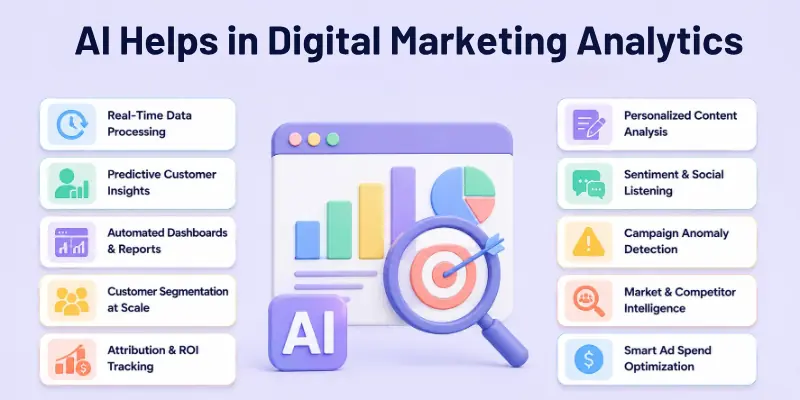
- Real‑Time Data Processing
- Predictive Customer Behavior Insights
- Automated Reporting and Dashboards
- Customer Segmentation at Scale
- Attribution Modeling and ROI Tracking
- Personalized Content Analysis
- Sentiment and Social Listening Analytics
- Anomaly Detection in Campaign Performance
- Competitive and Market Intelligence
- Optimization of Ad Spend
Let us cover all in detail.
1. Real‑Time Data Processing
AI can collect and analyze data instantly from multiple sources, such as websites, social media, and ads. I no longer wait for end‑of‑day reports to see how campaigns are performing. Real‑time processing helps me react quickly when something changes, like a sudden drop in engagement or spikes in traffic. This speed improves decisions and saves time.
Tools used for this purpose:
- Real‑time analytics dashboards
- AI data streaming platforms
- Multi‑channel data connectors
2. Predictive Customer Behavior Insights
AI predicts what customers are likely to do next based on past patterns and behavior signals. I use this predictive insight to plan campaigns that show the right message at the right time. This helps me reduce customer churn and improve conversions. Predictive analytics also shows future trends, so I can be proactive instead of reactive.
Tools used for this purpose:
- Predictive analytics engines
- Forecasting models
- Customer journey prediction systems
3. Automated Reporting and Dashboards
AI generates automatic reports that summarize marketing performance clearly and simply. Instead of manually preparing spreadsheets, I receive instant insights with visual charts and alerts. These reports help me share results with clients or team members without extra effort. Automated dashboards save hours of reporting time each week.
Tools used for this purpose:
- AI reporting platforms
- Dashboard automation tools
- Data visualization systems
4. Customer Segmentation at Scale
AI groups customers based on patterns that are too complex for humans to see easily. I use AI to divide audiences by interests, behavior, purchase history, and engagement levels. This deep segmentation helps me tailor campaigns that speak directly to each group. Better segmentation always leads to higher engagement and ROI.
Tools used for this purpose:
- Machine learning segmentation tools
- Customer data platforms
- Behavioral analytics systems
5. Attribution Modeling and ROI Tracking
AI helps me understand which channel or action is responsible for conversions. Instead of guessing what worked, AI gives clear attribution models that show the value of each touchpoint. This improves decisions about where to invest time and money. ROI tracking becomes accurate and easy to compare across campaigns.
Tools used for this purpose:
- AI attribution modeling systems
- Multi‑touch analytics engines
- ROI tracking platforms
6. Personalized Content Analysis
AI evaluates which content pieces perform best for different audience segments. I use this analysis to create more of what works and stop what doesn’t. It helps me improve engagement, time on page, and conversion rates. Personalized content insights make my content strategy smarter every time.
Tools used for this purpose:
- Content performance analytics tools
- AI content scoring engines
- Engagement tracking platforms
7. Sentiment and Social Listening Analytics
AI listens to social media conversations and analyzes sentiment around my brand, products, or campaigns. I get insights into what people like, dislike, or feel strongly about.
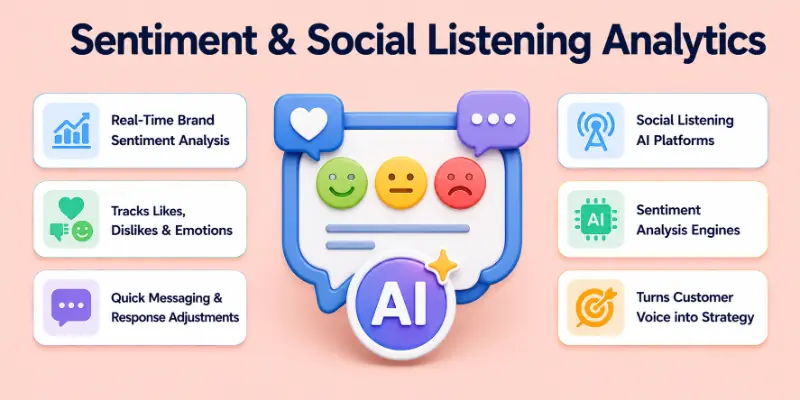
This helps me adjust messaging quickly and respond to negative feedback before it spreads. Social listening turns customer voice into strategic insight.
Tools used for this purpose:
- Social listening AI platforms
- Sentiment analysis engines
- Brand monitoring tools
8. Anomaly Detection in Campaign Performance
AI alerts me when something unusual happens, such as a sudden drop in clicks or spike in bounce rate. I do not have to watch analytics every minute because AI watches for me. When an anomaly is found, AI explains what might be causing it. This helps me fix problems before they affect performance.
Tools used for this purpose:
- Anomaly detection systems
- AI alert tools
- Performance monitoring dashboards
9. Competitive and Market Intelligence
AI monitors competitors, trends, and market shifts continuously. I use this insight to improve my strategies and stay ahead in the market. Market intelligence shows which content topics, keywords, and channels competitors are using successfully. This helps me refine my own campaigns and avoid outdated tactics.
Tools used for this purpose:
- Competitive analytics platforms
- Market trend AI tools
- SEO and keyword intelligence systems
10. Optimization of Ad Spend
AI analyzes ad data and recommends how much to spend on each campaign for maximum results. Instead of testing every audience manually, AI finds the best combinations quickly. I use AI to improve bid strategies, targeting, and budget allocation. This reduces wasted ad spend and increases conversion rates.
Tools used for this purpose:
- AI ad optimization engines
- Smart bidding systems
- Campaign performance analyzers
Why AI Matters in Digital Marketing Analytics
AI matters because it removes guesswork from analytics and replaces it with meaningful, data‑backed insights. I can make better decisions, faster responses, and more accurate predictions. Without AI, digital marketing analytics can be slow, confusing, and full of manual calculation errors. With AI, I feel confident that my analysis truly reflects what is happening with traffic, conversions, and customer behavior.
Conclusion
In this guide, I have explained how AI helps in digital marketing analytics by covering practical ways AI improves data processing, reporting, prediction, and optimization.
My personal advice is to start with one analytics tool and learn how AI interprets your data before expanding to others. AI works best when it supports clear goals and helps you answer key business questions.
If you want smarter decisions and better campaign performance, using AI for analytics is essential today. Now, let us move on to the FAQs related to this topic.
FAQs
Here are some of the most commonly asked questions related to how AI helps in digital marketing analytics:
AI helps analyze large amounts of data quickly and with high accuracy. I use it to find insights that manual review would miss. It also saves time and reduces errors. This improves decision-making and campaign results.
Yes, AI uses past data to predict future actions with good accuracy. I use it to plan campaigns and reduce churn. Predictive insights help me act before trends change. This keeps my strategies relevant.
No, AI supports human decisions but does not replace creativity or strategy. I use AI to automate repetitive tasks and find insights faster. Human insight is still important for interpretation. AI makes work easier, not obsolete.
Most modern AI tools are user‑friendly and beginner‑friendly. I learned to use them without deep technical training. There are tutorials and support available. With time, AI becomes part of your routine.
Some insights appear immediately after setup. I often see fast reporting and trend detection. Deeper patterns take time as more data collects. But even early results improve decision speed.
Yes, many AI analytics tools connect with websites, social media, ads, and CRM. I link all channels for a complete data view. This helps me analyze all marketing efforts together. Integration improves insight accuracy.
There are tools for all budgets, including free or low‑cost options. I started with affordable plans and upgraded later. Most small teams can afford basic AI analytics. The value they deliver often outweighs cost.
AI assigns credit to each marketing touchpoint accurately. I can see which channels are profitable and which are not. This helps me reallocate budgets wisely. Better ROI tracking improves overall performance.






- Be Respectful
- Stay Relevant
- Stay Positive
- True Feedback
- Encourage Discussion
- Avoid Spamming
- No Fake News
- Don't Copy-Paste
- No Personal Attacks
- Be Respectful
- Stay Relevant
- Stay Positive
- True Feedback
- Encourage Discussion
- Avoid Spamming
- No Fake News
- Don't Copy-Paste
- No Personal Attacks
