Benefits Of Artificial Intelligence in the Workplace
Published: 23 Jul 2026
Artificial intelligence is changing the way people work every day. Recent studies show that more businesses now use AI to automate routine tasks, improve productivity, and help employees make faster decisions. Companies of every size have started using AI because it saves time, reduces errors, and supports better teamwork.
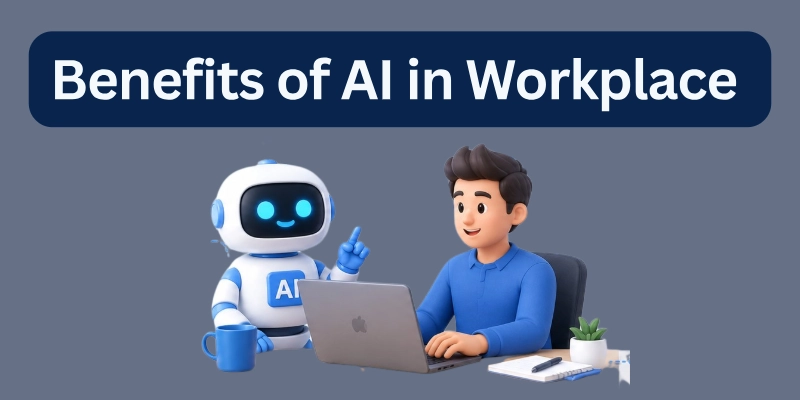
If you have ever wondered whether AI can actually make your work easier, the answer is yes when it is used the right way. I have seen businesses improve their daily operations by using simple AI tools for writing, customer support, scheduling, and data analysis. The benefits of artificial intelligence in the workplace go far beyond automation and can help both employees and employers achieve better results.
In this article, we will discuss the benefits of artificial intelligence in the workplace in detail. We will also explore real examples, practical advantages, common challenges, and the best ways to use AI effectively at work.
Artificial Intelligence in the Workplace?
Artificial intelligence is becoming a normal part of the modern workplace. Businesses use AI to complete routine tasks, improve accuracy, and help employees work more efficiently. Instead of replacing people, AI supports them by handling time-consuming work and providing useful insights.
How AI Works in Daily Business Operations
AI works by collecting data, analyzing patterns, and completing tasks based on what it learns. It helps businesses improve daily operations without requiring employees to do everything manually.
Below are some common ways AI works in daily business operations:
- Automates repetitive and time-consuming tasks.
- Analyzes large amounts of business data quickly.
- Helps employees make faster and smarter decisions.
- Predicts trends using historical data.
- Assists customer support through AI chatbots.
- Creates reports and summaries automatically.
- Organizes schedules, meetings, and emails.
- Detects unusual activity to improve security.
- Recommends actions based on real-time information.
- Supports collaboration by managing documents and workflows.
Common Examples of AI Employees Already Use
Many employees already use AI tools without realizing how often they rely on them. Below are some of the most common examples used in today’s workplaces:
- ChatGPT
- Microsoft Copilot
- Google Gemini
- Grammarly
- Notion AI
- Canva AI
- Zoom AI Companion
- Slack AI
- GitHub Copilot
- Salesforce Einstein
- AI chatbots
- Email writing assistants
- Meeting transcription tools
- AI translation tools
- Smart scheduling assistants
Benefits of Artificial Intelligence in the Workplace
Businesses across the world now use AI to improve efficiency, reduce manual work, and help employees achieve better results. Whether you run a small business or a large company, AI can simplify daily operations and increase overall productivity. Understanding the Benefits of Artificial Intelligence in the Workplace can help you see where AI creates real value instead of following trends.
Below are some of the biggest pros of artificial intelligence in the workplace that help employees work smarter and businesses grow faster.
- Increases Employee Productivity
- Automates Repetitive Tasks
- Improves Decision Making
- Reduces Human Errors
- Saves Business Costs
- Enhances Customer Service
- Improves Employee Collaboration
- Supports Better Communication
- Strengthens Cybersecurity
- Helps HR and Recruitment
- Increases Creativity and Innovation
- Improves Employee Learning and Training
- Supports Remote and Hybrid Teams
- Improves Workplace Safety
- Gives Businesses a Competitive Advantage
1. Increases Employee Productivity
One of the biggest benefits of artificial intelligence in the workplace is higher employee productivity. AI takes care of routine tasks, gives quick access to information, and helps employees complete work in less time. This allows teams to spend more time on creative thinking, problem-solving, and high-value projects.
Here are the key ways AI helps employees become more productive.
- Faster task completion helps employees finish work in minutes instead of hours.
- Less repetitive work allows AI to handle routine tasks like data entry, scheduling, and report creation.
- Better focus on meaningful tasks gives employees more time for planning, strategy, customer relationships, and innovation.
- Quick access to information helps employees find answers and documents without wasting time.
- Improved workflow management keeps projects organized and reduces unnecessary delays.
- Real-time assistance provides instant suggestions while employees write, analyze data, or create presentations.
- Smarter collaboration makes it easier for teams to share information and work together efficiently.
- Reduced administrative workload lets employees spend less time on paperwork and more time on productive work.
- Better time management helps prioritize important tasks and meet deadlines more consistently.
- Higher overall efficiency enables businesses to achieve more without increasing workload or staff.
Fun Fact: According to recent workplace studies, employees who use AI assistants for routine tasks often save several hours each week, giving them more time for creative and strategic work.
2. Automates Repetitive Tasks
One of the biggest advantages of using AI at work is its ability to automate repetitive tasks. Employees often spend hours on routine activities that require little creativity but consume valuable time. AI handles these tasks quickly and accurately, giving teams more time to focus on strategic work, problem-solving, and customer interactions.
Below are some of the common repetitive tasks that AI can automate in the workplace.
- Data entry reduces manual input by automatically collecting, organizing, and updating information.
- Scheduling helps arrange meetings, manage calendars, and send reminders without manual effort.
- Email sorting organizes inboxes by prioritizing important messages, filtering spam, and categorizing emails automatically.
- Report generation creates reports by collecting data from different sources and presenting it in a clear format.
- Invoice processing extracts information from invoices and speeds up approval workflows.
- Document management sorts, labels, and stores files for quick access.
- Customer query handling answers common questions through AI chatbots at any time.
- Form processing reads and verifies forms without requiring manual review.
- Task reminders send automatic notifications to help employees stay on schedule.
- Workflow automation connects different business tools to complete tasks without human intervention.
Fun Fact: Research shows that employees can spend a large part of their workweek on repetitive tasks. Automating even a few of these activities with AI can free up several hours each week for more valuable work.
3. Improves Decision Making
Making the right decision becomes much easier when you have accurate information. AI helps businesses analyze large amounts of data in seconds, identify useful patterns, and provide valuable insights. This allows managers and employees to make faster, smarter, and more confident decisions.
AI supports better business decisions in several important ways.
- Data analysis processes large datasets quickly and highlights important trends that people might miss.
- Predictive insights use historical data to forecast customer behavior, sales trends, and business risks.
- Real-time reporting provides up-to-date dashboards and reports for faster business decisions.
- Performance tracking monitors key business metrics to identify areas that need improvement.
- Risk assessment detects potential problems before they become serious issues.
- Customer insights analyze customer preferences to improve products and services.
- Demand forecasting helps businesses plan inventory and resources more accurately.
- Business recommendations suggest practical actions based on data and market trends.
- Trend identification discovers patterns that support long-term planning.
- Faster strategic planning gives leaders the information they need to respond quickly to changing business conditions.
Expert Tip: AI delivers the best results when it supports your decisions with reliable data. Combine AI insights with human experience to make smarter business choices.
4. Reduces Human Errors
Even experienced employees can make mistakes when handling repetitive work or large amounts of information. AI reduces these errors by following consistent processes, checking data automatically, and completing tasks with greater precision. This leads to higher quality work and more reliable business operations.
AI improves accuracy through the following capabilities.
- Better accuracy minimizes mistakes in calculations, data entry, and document processing.
- Consistent processes follows the same workflow every time without skipping important steps.
- Compliance improvements helps businesses follow company policies and industry regulations more consistently.
- Automatic data validation identifies incorrect or missing information before it causes problems.
- Quality control checks products, documents, and workflows for potential errors.
- Error detection finds unusual patterns that may indicate mistakes or inconsistencies.
- Standardized workflows ensures tasks are completed using the same approved process.
- Reduced manual processing lowers the chances of errors caused by repetitive work.
- Accurate record keeping keeps business information organized and up to date.
- Reliable reporting generates reports with fewer manual mistakes and better data consistency.
Did You Know? Even small data entry mistakes can lead to costly business problems. Using AI to verify information before it is processed helps improve accuracy and saves valuable time.
5. Saves Business Costs
Reducing business expenses does not always mean lowering quality. AI helps businesses cut costs by automating routine work, improving efficiency, and making better use of available resources. This allows companies to save money while maintaining productivity.
Businesses can reduce expenses through the following AI-powered improvements.
- Lower operational expenses through automation.
- Better resource allocation for higher efficiency.
- Reduced overtime by completing tasks faster.
- Less manual work across daily operations.
- Fewer costly errors in business processes.
- Optimized inventory management to reduce waste.
- Predictive maintenance to avoid expensive repairs.
- Improved energy efficiency in the workplace.
- Smarter budgeting with data insights.
- Higher return on investment from AI adoption.
Quick Tip: Automating just one repetitive process can save both time and money over the long term.
6. Enhances Customer Service
Good customer service helps businesses build trust and keep customers satisfied. AI improves customer support by providing faster responses, personalized assistance, and round-the-clock availability.
AI improves the customer experience in many different ways.
- AI chatbots for instant support.
- Faster responses to customer queries.
- Personalized support based on customer needs.
- 24/7 availability without delays.
- Smart ticket routing to the right agent.
- Multilingual support for global customers.
- Sentiment analysis to understand customer emotions.
- Self-service options through AI knowledge bases.
- Consistent support quality across channels.
- Customer feedback analysis for service improvements.
Fun Fact: AI chatbots now handle millions of customer conversations every day, allowing support teams to focus on more complex issues.
7. Improves Employee Collaboration
Good teamwork helps businesses complete projects faster and achieve better results. AI makes collaboration easier by organizing information, keeping everyone updated, and helping teams work together more efficiently, whether they are in the office or working remotely.
Here are some practical ways AI improves employee collaboration.
- AI meeting assistants record meetings and capture action items.
- Shared knowledge keeps important information in one place.
- Document summarization creates quick summaries of lengthy files.
- Real-time collaboration supports teamwork on shared documents.
- Smart file search finds documents instantly.
- Task tracking keeps projects organized.
- Knowledge sharing improves access to company information.
- Workflow coordination helps teams stay aligned.
Quick Tip: Encourage your team to use the same AI collaboration tools. It keeps everyone on the same page and reduces communication gaps.
8. Supports Better Communication
Clear communication keeps employees, customers, and teams connected. AI helps improve communication by making messages clearer, reducing language barriers, and saving time on everyday conversations.
The following features show how AI supports better communication at work.
- Email writing creates professional emails quickly.
- Translation converts content into different languages.
- Meeting summaries highlight key discussion points.
- Voice transcription turns speech into text.
- Grammar checking improves writing quality.
- Smart replies suggests quick responses.
- Tone improvement makes messages more professional.
- Live captions improve virtual meetings.
Fun Fact: Many professionals now use AI to draft emails and summarize meetings, helping them save time while keeping communication clear and consistent.
9. Strengthens Cybersecurity
As businesses become more digital, protecting sensitive information is more important than ever. AI helps identify security threats, monitor unusual activity, and respond to risks before they cause serious damage. This allows organizations to improve security while reducing manual monitoring.
AI strengthens workplace cybersecurity through the following capabilities.
- Threat detection identifies suspicious activities quickly.
- Fraud prevention detects unusual transactions and behaviors.
- Risk monitoring tracks security risks in real time.
- Malware detection finds harmful software before it spreads.
- Phishing protection identifies suspicious emails and links.
- Access control monitors user access to sensitive data.
- Security alerts notifies teams about potential threats.
- Continuous monitoring keeps systems protected around the clock.
Did You Know? AI can analyze thousands of security events every second, helping businesses detect threats much faster than manual monitoring alone.
10. Helps HR and Recruitment
Hiring and managing employees takes time, especially when HR teams handle hundreds of applications. AI simplifies many HR tasks by automating routine processes and helping recruiters find suitable candidates more efficiently.
AI supports HR and recruitment through several practical features.
- Resume screening identifies qualified candidates quickly.
- Interview scheduling arranges interviews automatically.
- Employee onboarding guides new hires through the joining process.
- Workforce planning helps predict future hiring needs.
- Candidate matching recommends suitable applicants.
- Job description writing creates clear job postings.
- Employee performance insights supports performance reviews.
- Training recommendations suggests learning opportunities for employees.
Pro Tip: Let AI handle repetitive hiring tasks, but keep the final hiring decision with experienced HR professionals to ensure the best cultural and professional fit.
11. Increases Creativity and Innovation
Innovation helps businesses stay competitive and adapt to changing customer needs. AI supports creativity by generating fresh ideas, speeding up creative tasks, and helping teams explore new possibilities without starting from scratch.
The following examples show how AI encourages creativity and innovation.
- Brainstorming generates fresh ideas quickly.
- Content creation helps draft blogs, emails, and social posts.
- Product ideas suggests new features and improvements.
- Marketing campaigns creates campaign concepts and ad copy.
- Design inspiration provides creative design suggestions.
- Creative problem solving offers different approaches to challenges.
- Idea organization groups and refines concepts.
- Trend analysis identifies emerging market opportunities.
Expert Tip: Use AI to generate ideas, but rely on human creativity to refine them and add originality.
12. Improves Employee Learning and Training
Continuous learning helps employees grow and perform better at work. AI makes training more effective by offering personalized learning experiences and helping employees develop new skills at their own pace.
Here are some ways AI improves workplace learning and training.
- Personalized learning adapts training to each employee.
- AI tutors provide instant guidance and answers.
- Skills development recommends relevant learning resources.
- Progress tracking monitors learning performance.
- Interactive training creates engaging learning experiences.
- Knowledge assessments measures employee understanding.
- Learning recommendations suggests the next topics to study.
- On-demand support provides help whenever needed.
Did You Know? Personalized AI learning helps employees learn faster because training matches their skill level and progress.
13. Supports Remote and Hybrid Teams
Remote and hybrid work requires better coordination and communication. AI helps distributed teams stay connected, organize work, and collaborate efficiently regardless of location.
AI supports flexible work environments through the following features.
- Virtual assistants manage schedules and reminders.
- Workflow management keeps tasks organized.
- Meeting transcription records conversations automatically.
- Project coordination tracks deadlines and responsibilities.
- Smart scheduling finds suitable meeting times.
- File sharing improves document access.
- Task reminders keeps projects on schedule.
- Collaboration tools connects remote team members.
Quick Tip: Combine AI with project management tools to keep remote teams organized and reduce missed deadlines.
14. Improves Workplace Safety
A safe workplace protects employees, equipment, and business operations. AI helps identify risks early, monitor equipment, and reduce workplace accidents before they happen.
The following examples show how AI improves workplace safety.
- Predictive maintenance prevents equipment failures.
- Hazard detection identifies potential safety risks.
- Manufacturing monitoring tracks production safety.
- Safety alerts warns employees about dangers.
- Equipment monitoring checks machine performance.
- Incident analysis identifies causes of workplace accidents.
- Compliance monitoring supports workplace safety standards.
- Risk prediction detects potential issues early.
Fun Fact: Many factories now use AI-powered cameras and sensors to detect safety risks before they become serious accidents.
15. Gives Businesses a Competitive Advantage
Businesses that adopt AI can respond faster to market changes and make better business decisions. AI helps companies improve efficiency, understand customers, and identify new opportunities for growth.
The following advantages help businesses stay ahead of the competition.
- Faster innovation speeds up product and service development.
- Better customer insights understands customer needs more accurately.
- Smarter planning supports data-driven business strategies.
- Improved efficiency increases overall productivity.
- Market trend analysis identifies new opportunities.
- Faster decision-making responds quickly to changes.
- Personalized customer experiences builds stronger customer relationships.
- Business growth supports long-term success.
Pro Tip: Businesses gain the greatest competitive advantage when AI becomes part of everyday decision-making instead of being used only for a few isolated tasks.
Future of Artificial Intelligence in the Workplace
Artificial intelligence will continue to reshape the way people work. As AI technology becomes more advanced, it will support employees in their daily tasks, improve business operations, and create new opportunities across different industries. Companies that adopt AI responsibly will be better prepared for the future.
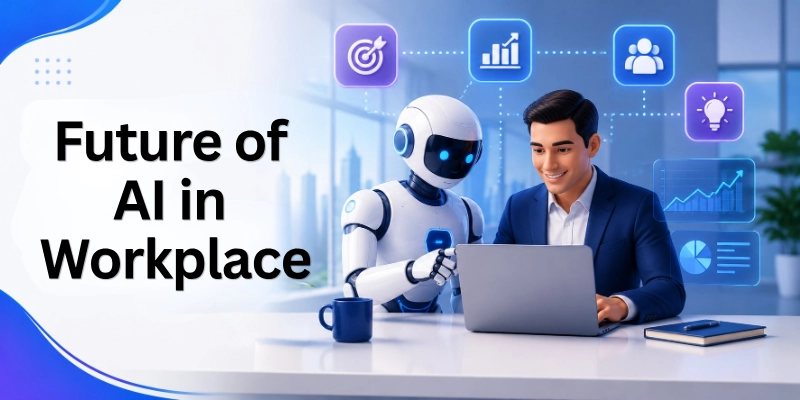
The future of workplace AI is expected to include the following trends.
- AI assistants for everyday work.
- Human and AI collaboration on complex tasks.
- Personalized work experiences for employees.
- Smarter automation across business processes.
- New AI-related job roles in different industries.
- Continuous learning and skill development.
- Faster data-driven decisions for businesses.
- Improved workplace efficiency through AI tools.
- Enhanced cybersecurity with intelligent monitoring.
- Greater business innovation using AI technologies.
Conclusion
In this guide, we have covered the benefits of artificial intelligence in the workplace. We explored how AI improves productivity, automates routine tasks, supports better decisions, strengthens security, and helps businesses and employees work more efficiently. We also looked at the future of AI and why it is becoming an essential part of modern workplaces.
The biggest advantage of AI is that it helps people work smarter, not harder. When businesses use AI responsibly and combine it with human skills, they can improve performance, save time, and create better opportunities for long-term growth.
Personal Recommendation: I recommend starting with simple AI tools that solve everyday workplace challenges instead of trying to automate everything at once. Learn how each tool fits into your workflow, and always use AI to support your skills rather than replace your judgment.
Thank you for taking the time to read this guide. I hope it helped you better understand how AI can make today’s workplace more productive and efficient.
💬 Have a question or want to share your experience with AI at work? Drop a comment below! We’d love to hear your thoughts. 😊
FAQs
Below are answers to some of the most common questions people ask about the benefits of artificial intelligence in the workplace.
The benefits of artificial intelligence in the workplace include higher productivity, faster decision-making, lower operating costs, and better customer service. AI also automates repetitive tasks, reduces errors, and helps employees focus on more valuable work. Businesses of all sizes can use AI to improve efficiency and support long-term growth.
AI improves productivity in several practical ways, including the following:
- Automates repetitive tasks.
- Reduces time spent on manual work.
- Helps employees complete tasks faster.
- Supports better time management.
These improvements allow employees to focus on strategic and creative work.
AI is designed to assist employees, not completely replace them. It handles repetitive and time-consuming tasks while people focus on creativity, communication, and decision making. The best results come from combining human expertise with AI technology.
Many industries already use workplace AI successfully. Below are some of the most common examples:
- Healthcare
- Finance
- Retail
- Manufacturing
- Education
- Customer Service
- Marketing
- Human Resources
Each industry uses AI to improve efficiency, accuracy, and customer experiences.
Popular AI tools for the workplace include ChatGPT, Microsoft Copilot, Google Gemini, Grammarly, Notion AI, and Canva AI. These tools help with writing, meetings, research, collaboration, presentations, and everyday office tasks. Choosing the right tool depends on your business needs.
Yes, many affordable AI tools are designed specifically for small businesses. They help automate daily tasks, improve customer support, and reduce operating costs without requiring a large budget. Starting with one or two AI tools is often the best approach.
Businesses can begin using AI by following these simple steps:
- Identify repetitive tasks.
- Choose the right AI tools.
- Train employees.
- Test AI on small projects.
- Monitor results and improve over time.
Starting gradually makes AI adoption easier and more effective.
Although AI offers many advantages, businesses should also consider a few challenges. These include data privacy, cybersecurity, employee training, implementation costs, and the need to review AI-generated results. Addressing these areas helps organizations use AI responsibly.
AI improves customer support in several ways, such as:
- Providing instant chatbot responses.
- Offering 24/7 customer assistance.
- Personalizing customer interactions.
- Reducing response times.
- Analyzing customer feedback.
These features help businesses deliver faster and more consistent customer experiences.
The future of artificial intelligence in the workplace will focus on smarter automation, AI-powered assistants, and stronger collaboration between people and technology. Businesses will continue using AI to improve efficiency, support innovation, and create new job opportunities. Employees who develop AI skills today will be better prepared for the future workplace.


- Be Respectful
- Stay Relevant
- Stay Positive
- True Feedback
- Encourage Discussion
- Avoid Spamming
- No Fake News
- Don't Copy-Paste
- No Personal Attacks
- Be Respectful
- Stay Relevant
- Stay Positive
- True Feedback
- Encourage Discussion
- Avoid Spamming
- No Fake News
- Don't Copy-Paste
- No Personal Attacks
