What Is Data Science? – Complete Guide
Published: 25 Jul 2026
Data is everywhere in today’s digital world. Every time you browse the internet, shop online, use social media, or use a mobile app, you generate valuable data. Organizations use this information to understand trends, improve services, and make smarter decisions.
This is where data science comes in. It helps collect, organize, and analyze data to uncover meaningful insights that support better decision-making. As data continues to grow, data science has become one of the most important and in-demand fields across many industries.
In this article, we will discuss what is data science in detail. You will also learn how it works, its benefits, applications, challenges, and future trends.
What Is Data Science?
Data science is a multidisciplinary field that focuses on collecting, organizing, analyzing, and interpreting data to solve problems and support better decision-making. It combines different techniques from computer science, mathematics, statistics, and artificial intelligence to transform raw information into valuable insights.
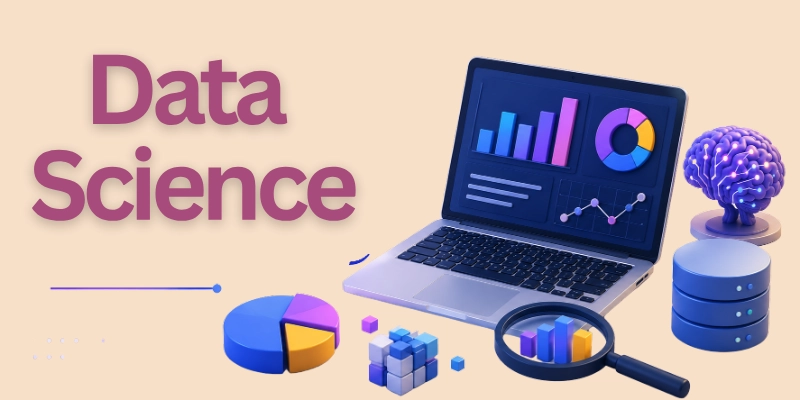
Today, organizations use data science to understand customer behavior, improve products, detect fraud, forecast sales, optimize operations, and build intelligent systems. Instead of relying on assumptions, businesses can use data-driven insights to make more accurate and confident decisions.
Simple Definition: Data science is the process of collecting and analyzing data to find useful information that helps people make better decisions.
Why Does Data Science Matter?
We generate enormous amounts of data every second through smartphones, websites, sensors, financial transactions, and connected devices. Without proper analysis, this data has little value. Data science helps turn this raw information into knowledge that organizations can use to improve performance and solve real-world problems.
The demand for skilled data professionals continues to grow because companies increasingly depend on data to remain competitive. Governments, healthcare providers, retailers, banks, and technology companies all use data science to make smarter decisions and deliver better services.
The following points highlight why data science has become so important today:
- It helps businesses make informed decisions using real data.
- It improves customer experiences through personalized recommendations.
- It supports accurate forecasting and future planning.
- It identifies trends, patterns, and hidden opportunities.
- It helps detect fraud, security threats, and unusual activities.
- It powers many modern AI and machine learning applications.
Types of Data Science
Data science includes several specialized areas that work together throughout the data analysis process. Each type focuses on a different objective, from collecting data to building intelligent prediction models.
1. Descriptive Data Science
Descriptive data science focuses on understanding what has already happened by analyzing historical data. It summarizes information through reports, dashboards, and visualizations that help organizations monitor their performance.
The following points explain this area in more detail:
- Analyzes historical data.
- Creates reports and dashboards.
- Identifies patterns and trends.
- Measures business performance.
- Supports informed decision-making.
2. Diagnostic Data Science
Diagnostic data science goes beyond describing events by identifying why something happened. Analysts investigate relationships between different data points to discover the causes of specific outcomes.
Here are some important aspects of this type:
- Finds the root causes of problems.
- Compares historical data.
- Detects unusual patterns.
- Supports business investigations.
- Improves operational efficiency.
3. Predictive Data Science
Predictive data science uses historical information and machine learning models to estimate future outcomes. Businesses use predictive analysis to anticipate customer behavior, forecast demand, and reduce potential risks.
The following methods are commonly used in predictive analysis:
- Statistical modeling.
- Machine learning algorithms.
- Trend forecasting.
- Risk assessment.
- Customer behavior prediction.
4. Prescriptive Data Science
Prescriptive data science recommends the best actions based on predictions and available data. It helps organizations make smarter decisions by evaluating different options and suggesting the most effective solutions.
The following points demonstrate how prescriptive analytics supports decision-making:
- Recommends optimal actions.
- Improves business strategies.
- Supports automated decision-making.
- Optimizes resource allocation.
- Reduces operational costs.
How Does Data Science Work?
Data science follows a structured process that transforms raw data into meaningful insights. Although different organizations may follow slightly different workflows, the overall process remains largely the same.
Each stage builds upon the previous one, ensuring that the final results are accurate, reliable, and useful for decision-making.
1. Data Collection
The first step involves gathering data from multiple sources. The quality of the final analysis depends heavily on the quality and relevance of the collected data.
The following points explain this process in more detail:
- Collect data from websites, databases, applications, sensors, or APIs.
- Gather structured and unstructured data.
- Ensure data is relevant to the project.
- Store information securely.
- Verify data sources for reliability.
2. Data Cleaning
Raw data often contains missing values, duplicate records, incorrect entries, and inconsistencies. Cleaning the data improves its quality before analysis begins.
Here are some important elements involved:
- Remove duplicate records.
- Correct inaccurate information.
- Handle missing values.
- Standardize data formats.
- Eliminate irrelevant information.
3. Data Exploration and Analysis
After cleaning the data, analysts explore it to understand its characteristics. They use statistical methods and visualizations to identify trends, relationships, and unusual patterns.
The following techniques help analysts understand the data more effectively:
- Generate charts and graphs.
- Calculate summary statistics.
- Identify correlations.
- Detect anomalies.
- Explore hidden patterns.
4. Building Predictive Models
Once analysts understand the data, they develop models that can make predictions or classify information. Machine learning algorithms learn from historical data to recognize patterns automatically.
The following points describe this stage:
- Select suitable algorithms.
- Train machine learning models.
- Test model performance.
- Improve prediction accuracy.
- Reduce errors through optimization.
5. Interpreting Results
Creating a model is not the final goal. Data scientists must interpret the results so that decision-makers can understand and use the findings effectively.
The following practices help communicate results clearly:
- Explain insights using simple language.
- Create dashboards and visual reports.
- Highlight important trends.
- Present actionable recommendations.
- Support business decisions with evidence.
6. Continuous Monitoring and Improvement
Data science is an ongoing process rather than a one-time activity. As new data becomes available, models should be updated to maintain their accuracy and relevance.
The following practices help keep data science projects effective over time:
- Monitor model performance.
- Update datasets regularly.
- Retrain machine learning models.
- Track changing trends.
- Continuously improve prediction accuracy.
Examples of Data Science
Data science is no longer limited to large technology companies. Today, businesses of all sizes, governments, healthcare providers, schools, and financial institutions use it to solve everyday problems and improve decision-making.
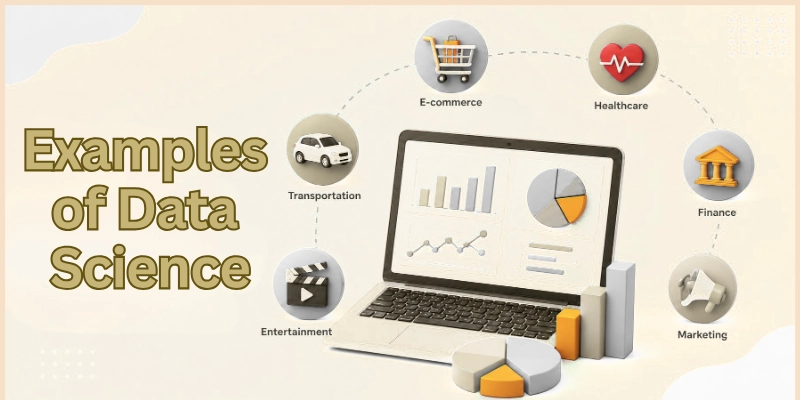
Understanding real-world examples makes it easier to see how data science works in practice. From recommending your next movie to detecting online fraud, data science is part of many digital experiences you use every day.
The following examples demonstrate how data science is applied in different industries:
- Recommendation Systems: Streaming platforms, online stores, and music apps analyze user behavior to recommend movies, products, or songs based on individual preferences.
- Fraud Detection: Banks and payment companies use data science models to identify unusual transactions and prevent financial fraud in real time.
- Healthcare Analytics: Hospitals analyze patient records, medical images, and clinical data to support diagnosis, predict diseases, and improve treatment plans.
- Weather Forecasting: Meteorologists combine historical weather records with real-time satellite data to predict weather conditions more accurately.
- Traffic and Navigation: Navigation apps analyze GPS data, road conditions, and traffic patterns to suggest the fastest routes.
- Customer Support: Companies use data science to analyze customer feedback, identify common issues, and improve support services.
- Marketing Campaigns: Businesses study customer behavior to create personalized advertisements and improve marketing performance.
- Supply Chain Management: Manufacturers and retailers predict product demand to manage inventory efficiently and reduce waste.
Technologies Behind Data Science
Data science depends on several technologies that work together to collect, process, analyze, and visualize data. These technologies continue to evolve as artificial intelligence and cloud computing become more advanced.
Understanding these technologies helps beginners see why data science combines multiple technical skills rather than relying on a single tool or programming language.
1. Programming Languages
Programming languages allow data scientists to clean data, build models, automate tasks, and create applications.
The following languages are widely used in data science:
- Python for data analysis and machine learning.
- R for statistical computing and visualization.
- SQL for managing and querying databases.
- Java for enterprise-level applications.
- Julia for scientific and numerical computing.
2. Machine Learning
Machine learning enables computers to learn patterns from data without being explicitly programmed for every task. It is one of the most important technologies in modern data science.
Here are some common machine learning capabilities:
- Predict future outcomes.
- Classify information.
- Detect anomalies.
- Recognize images and speech.
- Automate decision-making.
3. Big Data Technologies
Many organizations generate massive datasets that traditional software cannot process efficiently. Big data technologies make it possible to store and analyze this information.
The following technologies support large-scale data processing:
- Distributed storage systems.
- Parallel data processing.
- High-speed data pipelines.
- Real-time analytics.
- Scalable computing infrastructure.
4. Cloud Computing
Cloud platforms provide flexible computing resources that allow organizations to process large datasets without maintaining expensive hardware.
The following advantages make cloud computing valuable for data science:
- On-demand computing power.
- Secure data storage.
- Easy collaboration.
- Automatic scaling.
- Lower infrastructure costs.
5. Data Visualization
Visualizations help transform complex datasets into charts and graphs that are easier to understand.
The following visualization methods improve communication:
- Interactive dashboards.
- Bar charts.
- Line graphs.
- Scatter plots.
- Heat maps.
Benefits of Data Science
Data science helps organizations make better decisions, improve efficiency, and create innovative products. As more industries adopt data-driven strategies, its benefits continue to grow.
The following points explain the major advantages of using data science.
- Better Decision-Making: Organizations can rely on real evidence instead of assumptions, leading to more accurate business decisions.
- Improved Customer Experience: Companies analyze customer preferences to deliver personalized recommendations, faster support, and better products.
- Higher Business Efficiency: Data science identifies inefficient processes and suggests improvements that reduce costs and save time.
- Accurate Forecasting: Businesses can predict sales, customer demand, and market trends more effectively.
- Fraud Prevention: Financial institutions use predictive models to detect suspicious activities before significant losses occur.
- Healthcare Improvements: Medical professionals use data analysis to support diagnosis, personalize treatments, and improve patient outcomes.
- Automation of Repetitive Tasks: AI-powered systems automate routine work, allowing employees to focus on higher-value activities.
- Competitive Advantage: Organizations that use data effectively often respond faster to market changes and customer needs.
Challenges of Data Science
Although data science offers many advantages, it also comes with several challenges. Organizations must address these issues to ensure accurate, ethical, and reliable results.
The following challenges are worth understanding:
- Poor Data Quality: Incomplete, inaccurate, or outdated data can reduce the accuracy of analysis and predictions.
- Privacy Concerns: Organizations must protect personal information and comply with data protection regulations.
- Data Security Risks: Large datasets can become targets for cyberattacks if they are not properly secured.
- Skill Shortages: Many industries face a shortage of experienced data scientists, machine learning engineers, and AI specialists.
- High Implementation Costs: Building data infrastructure, purchasing tools, and hiring skilled professionals can require significant investment.
- Bias in Data: If training data contains bias, machine learning models may produce unfair or inaccurate results.
- Complex Data Integration: Combining information from multiple sources can be technically challenging.
- Model Maintenance: Machine learning models require regular updates as data changes over time.
Real-World Applications of Data Science
Data science is transforming nearly every industry by helping organizations solve complex problems and make informed decisions. As technology advances, new applications continue to emerge across different sectors.
The following examples highlight some of the most common real-world uses of data science.
- Healthcare: Hospitals use predictive analytics to improve patient care, monitor disease outbreaks, and support medical research.
- Finance: Banks analyze financial transactions to detect fraud, assess credit risk, and improve investment strategies.
- Retail and E-commerce: Online stores recommend products, optimize inventory, and personalize shopping experiences.
- Education: Educational institutions analyze student performance to identify learning gaps and improve teaching methods.
- Manufacturing: Companies monitor production systems, predict equipment failures, and improve quality control.
- Transportation: Logistics companies optimize delivery routes, reduce fuel consumption, and improve fleet management.
- Agriculture: Farmers use weather data, soil analysis, and satellite imagery to increase crop production.
- Cybersecurity: Security teams identify unusual network activity and detect cyber threats before they cause damage.
- Sports Analytics: Teams analyze player performance, develop game strategies, and reduce injury risks.
- Government Services: Public agencies use data science to improve urban planning, public safety, and resource allocation.
Popular Data Science Tools, Platforms, and Libraries
A wide range of tools helps data scientists collect, analyze, visualize, and manage data. Many of these tools continue to evolve with new AI features and cloud capabilities.
The following tools are among the most widely used in the data science industry today.
- Python: The most popular programming language for data science because of its simplicity and extensive library ecosystem.
- R: A powerful language designed for statistics, data analysis, and visualization.
- Jupyter Notebook: An interactive environment that allows developers to write code, visualize data, and document projects in one place.
- Apache Spark: A fast data processing framework used for big data analytics and machine learning.
- TensorFlow: An open-source machine learning framework widely used for developing AI models.
- PyTorch: A popular deep learning framework known for its flexibility and strong support for research and production.
- Pandas: A Python library used for cleaning, organizing, and analyzing structured data.
- NumPy: A scientific computing library that performs high-speed mathematical operations on large datasets.
- Scikit-learn: A beginner-friendly machine learning library that provides many ready-to-use algorithms.
- Power BI: A business intelligence platform that creates interactive dashboards and reports.
- Tableau: A data visualization platform that helps organizations analyze and present data clearly.
- Google Colab: A cloud-based notebook environment that allows users to write and run Python code without installing software.
- Microsoft Fabric: A unified analytics platform that combines data engineering, data science, and business intelligence in one environment.
- Databricks: A cloud-based platform designed for big data processing, machine learning, and collaborative analytics.
Future Trends of Data Science
Data science continues to evolve as new technologies become available. Artificial intelligence, cloud computing, and automation are changing how organizations collect and analyze information. These developments are making data science faster, more accessible, and more powerful.
The following trends are shaping the future of data science in 2026 and beyond.
- Generative AI Integration: Data scientists are increasingly using generative AI tools to automate coding, documentation, and data analysis tasks.
- Real-Time Analytics: Organizations want insights immediately instead of waiting hours or days. Real-time data processing is becoming a standard requirement.
- Edge Data Science: More analysis is happening directly on devices such as smartphones, vehicles, and industrial machines rather than only in central servers.
- Explainable AI: Businesses and governments are demanding AI systems that can clearly explain how decisions are made.
- Automated Machine Learning (AutoML): AutoML platforms are helping beginners and non-experts build machine learning models more easily.
- Privacy-Preserving Analytics: Techniques such as federated learning and secure data sharing are becoming more important as privacy regulations increase.
- Multimodal Data Analysis: Future systems will combine text, images, audio, video, and sensor data to produce richer insights.
- Green Computing and Energy Efficiency: Companies are focusing on reducing the energy consumption of large data centers and AI models.
- AI Governance and Ethics: Organizations are creating stronger rules to ensure that data and AI systems are used responsibly.
- Democratization of Data Science: User-friendly tools are allowing more business professionals, educators, and researchers to use data science without advanced programming skills.
Best Practices for Learning and Using Data Science
Learning data science can feel overwhelming because the field combines several skills. Following a structured approach makes the process easier and helps beginners build confidence step by step.
The following best practices can help improve results:
- Start with Statistics and Basic Math: Understanding averages, percentages, probability, and distributions creates a strong foundation for later topics.
- Learn One Programming Language Well: Python is usually the best starting point because it is beginner-friendly and widely used in the industry.
- Practice with Real Datasets: Working on small projects helps you understand how concepts apply in real situations.
- Focus on Data Cleaning: Many beginners want to jump directly into machine learning, but clean data is often the key to good results.
- Build Simple Projects First: Start with tasks such as sales prediction, customer analysis, or weather forecasting before attempting complex AI systems.
- Use Visualization Tools: Charts and dashboards make it easier to understand patterns and explain findings to others.
- Document Your Work: Writing clear notes and explanations helps you remember what you learned and improves communication skills.
- Learn Ethical Data Handling: Respect privacy rules and avoid using data in ways that could harm individuals or groups.
- Stay Updated: Data science changes quickly, so regularly reading blogs, research summaries, and official documentation is important.
- Join Learning Communities: Online forums, study groups, and open-source communities can provide support and practical experience.
Conclusion
In this guide, we have covered what is data science, how it works, its types, benefits, challenges, applications, and the technologies behind it. As data continues to drive innovation across industries, learning data science can help you make better decisions, solve real-world problems, and prepare for future opportunities in an increasingly AI-powered world.
Personal Recommendation: My recommendation is to start with the basics, including data, statistics, and Python, before moving on to advanced topics. Learn step by step through practical projects to build strong skills and confidence.
Thank you for reading this beginner-friendly guide. I hope it has helped you understand the importance of data science and how it is shaping the modern world.
💬 Feel free to share your thoughts, questions, or experiences in the comments section below. We would love to hear from you and continue the conversation! 😊
FAQs
Below are some of the most frequently asked questions about data science, along with simple and detailed answers for beginners.
No, data science is not impossible for beginners, but it does require patience and practice. Most people start by learning basic statistics and Python programming before moving to advanced topics. The following areas are usually the best starting points:
- Basic statistics
- Python fundamentals
- Data visualization
- Simple machine learning concepts
Learning step by step makes the field much easier to understand.
You do not always need a specific degree to start learning data science. Many professionals come from backgrounds such as computer science, mathematics, engineering, business, or economics. What matters most is developing skills in data analysis, programming, and problem-solving.
Python is generally considered the best language for beginners. It has a simple syntax and a large collection of libraries for data analysis and machine learning. R is also popular for statistical analysis, but Python is usually the easiest starting point.
The learning time depends on your background and study schedule. A beginner who studies regularly can understand the basics in a few months. Becoming job-ready often takes longer because it requires hands-on projects and practical experience.
Data science is the broader field, while machine learning is one part of it. Data science includes collecting data, cleaning it, analyzing it, visualizing results, and building predictive models. Machine learning focuses specifically on algorithms that learn patterns from data.
Yes, you can start learning data science even without advanced mathematics. Basic knowledge of statistics and probability is helpful, but many beginners learn these concepts gradually while working on projects. The following topics are usually enough to begin:
- Averages and percentages
- Probability basics
- Simple algebra
- Data interpretation skills
Beginners should focus on a small set of essential tools before exploring advanced platforms. A good starting combination includes:
- Python
- Jupyter Notebook
- Pandas
- Matplotlib or another visualization library
- Scikit-learn for basic machine learning
These tools are enough to complete many beginner-level projects.
Yes, data science remains one of the most promising technology careers in 2026. Companies continue to invest in AI, analytics, and automation, creating demand for people who can work with data. Roles related to data analysis, machine learning, and business intelligence are growing across many industries.
Data science skills can lead to several different career paths. Common roles include data analyst, data scientist, machine learning engineer, business intelligence analyst, and AI specialist. Some people also use these skills in marketing, finance, healthcare, and research positions.
No, you can start learning data science using free tools. Many beginners practice with Python, Jupyter Notebook, and Google Colab without spending money. Public datasets are also available online, making it possible to build projects at little or no cost.





- Be Respectful
- Stay Relevant
- Stay Positive
- True Feedback
- Encourage Discussion
- Avoid Spamming
- No Fake News
- Don't Copy-Paste
- No Personal Attacks
- Be Respectful
- Stay Relevant
- Stay Positive
- True Feedback
- Encourage Discussion
- Avoid Spamming
- No Fake News
- Don't Copy-Paste
- No Personal Attacks
