How to Use AI to Improve Conversions With 10 Smart Techniques
Published: 11 Jun 2026
In the traditional way, improving conversions often feels confusing and uncertain for me. I used to depend on manual testing, assumptions, and slow data analysis, which did not always give clear results. Artificial intelligence has changed this process by using data, behavior patterns, and automation to guide smarter decisions.
In this guide, I will explain how to use AI to improve conversions by sharing practical methods and real use cases that I personally trust.
Let’s dive in!
How to Use AI to Improve Conversions
Here are the ways AI helps improve conversions:
- Personalized User Experience
- Smart Audience Segmentation
- AI-Powered A/B Testing
- Predictive Customer Behavior Analysis
- Conversion Funnel Optimization
- AI Chatbots for Lead Conversion
- Personalized Product Recommendations
- AI-Driven Landing Page Optimization
- Behavioral Email Personalization
- Real-Time Conversion Monitoring
Let us cover all in detail.
1. Personalized User Experience
I use AI to create personalized experiences for every visitor based on their behavior and interests. AI studies page visits, clicks, time spent, and previous actions. This helps me show the most relevant content and offers to each user. Personalized experiences build trust and make users more likely to convert.
Tools used for this purpose:
- AI personalization engines
- User behavior tracking platforms
- Content recommendation systems
2. Smart Audience Segmentation
AI automatically divides users into smart segments instead of basic age or location groups. I rely on AI to segment users based on intent, behavior, and engagement level. This allows me to target each group with relevant messages. Better targeting always leads to higher conversion rates.
Tools used for this purpose:
- Machine learning segmentation tools
- Customer data platforms
- Predictive analytics systems
3. AI-Powered A/B Testing
A number of tests are performed on pages, buttons, and content by AI without any need for human intervention. When it comes to seeing results, I do not have to wait weeks. The application of winning variations is quickly identified and implemented by AI. Both the speed and accuracy of conversions are improved as a result of this.
Tools used for this purpose:
- AI testing platforms
- Automated experimentation tools
- Optimization engines
4. Predictive Customer Behavior Analysis
AI predicts what users are likely to do next based on their actions. I use this insight to show offers at the right time. Predictive analysis helps reduce cart abandonment and drop-offs. It also improves the chances of conversion.
Tools used for this purpose:
- Predictive modeling systems
- Customer journey analysis tools
- AI forecasting engines
5. Conversion Funnel Optimization
Through the use of AI, I am able to pinpoint weak points in the conversion funnel. It reveals the reasons why users stop using the service as well as the locations where they leave. I put these insights to use in order to quickly address areas of friction. The overall conversion performance is improved through the use of funnel optimization.
Tools used for this purpose:
- Funnel analysis tools
- AI behavior analytics platforms
- Conversion tracking systems
6. AI Chatbots for Lead Conversion
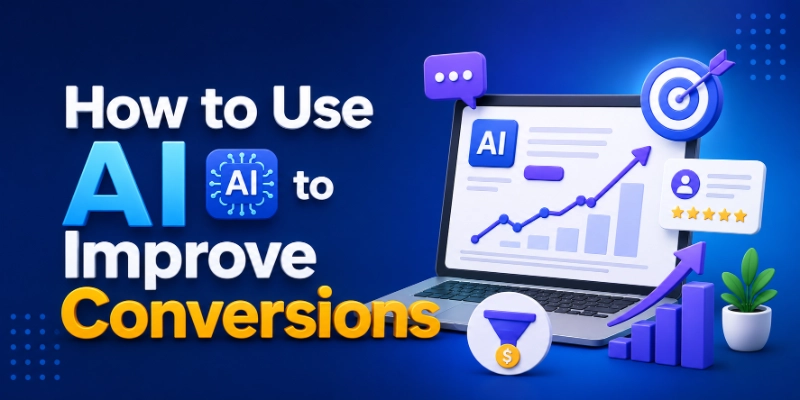
Users are instantly engaged by AI chatbots, which also provide instant responses to questions. In order to direct visitors and collect leads, I make use of chatbots. They work continuously throughout the day without any interruptions. Conversions and user satisfaction both increase as a result of this.
Tools used for this purpose:
- AI chatbot platforms
- Conversational AI tools
- Lead qualification systems
7. Personalized Product Recommendations
AI recommends products based on user preferences and browsing history. I find this useful for increasing purchase intent. Personalized suggestions encourage users to buy more. This improves average order value and conversions.
Tools used for this purpose:
- Recommendation engines
- AI product suggestion tools
- Behavioral analysis systems
8. AI-Driven Landing Page Optimization
AI evaluates the performance of landing pages and makes recommendations for improvements. In order to modify layouts, headlines, and calls to action, I use it. Users are more engaged as a result of these changes. Improved landing pages result in a greater number of sales.
Tools used for this purpose:
- AI page optimization tools
- Heatmap analysis systems
- UX behavior tracking platforms
9. Behavioral Email Personalization
Emails are personalized by artificial intelligence based on the actions and behaviors of the user. I send the appropriate message at the appropriate timing. Emails that are personalized have a higher rate of clicks and opens. Increased conversions are the result of this.
Tools used for this purpose:
- AI email marketing platforms
- Behavior-based automation tools
- Predictive engagement systems
10. Real-Time Conversion Monitoring
AI monitors conversions in real time and notifies me of any problems that may arise. I am able to respond quickly whenever performance is poor. Monitoring that occurs in real time helps to prevent losses. It also facilitates the making of decisions more quickly.
Tools used for this purpose:
- Real-time analytics dashboards
- AI monitoring systems
- Performance tracking tools
Why AI Matters for Conversion Growth
AI matters for conversion growth because it replaces guesswork with real data and proven patterns. I rely on AI to understand user behavior, identify what works, and fix what does not convert. It helps me make faster decisions, test smarter, and scale results without wasting time or budget.
Businesses that adopt AI early stay competitive, improve customer experience, and achieve consistent conversion growth.
Conclusion
In this guide, I have explained how to use AI to improve conversions by covering practical methods and real-world use cases in detail.
My personal advice is to start with one AI tool and master it before expanding further. AI works best when aligned with user intent and business goals. If you want to grow faster and convert more visitors, adopting AI is the smartest step. Now, let us move on to the FAQs related to this topic.
FAQs
Here are some of the most commonly asked questions related to how to use AI to improve conversions:
AI analyzes user behavior and identifies patterns that lead to conversions. I use these insights to improve targeting and messaging. This increases the chances of users taking action.
Yes, AI tools are affordable and scalable for small businesses. I see small teams getting strong results with limited budgets. AI helps them compete effectively.
No, AI supports decisions but does not replace human strategy. I still review insights before applying changes. AI improves speed and accuracy.
Some improvements appear quickly after setup. I often see early results from personalization and chatbots. Long-term gains grow with more data.
AI does, in fact, anticipate the likelihood of abandonment and prompt appropriate actions. It allows me to send out reminders as well as offers. This encourages users to return.
The vast majority of AI tools adhere to stringent data security standards. Always, I select platforms that I can rely on. Keeping data private is still a top priority.
Testing layouts and content variations is something that AI does. It helps me improve engagement, so I use it. The success rate of conversions is increased by automated optimization.
No, many AI tools are user-friendly. I started without advanced technical knowledge. These tools are designed for marketers and business owners.




- Be Respectful
- Stay Relevant
- Stay Positive
- True Feedback
- Encourage Discussion
- Avoid Spamming
- No Fake News
- Don't Copy-Paste
- No Personal Attacks
- Be Respectful
- Stay Relevant
- Stay Positive
- True Feedback
- Encourage Discussion
- Avoid Spamming
- No Fake News
- Don't Copy-Paste
- No Personal Attacks
