How AI is Used in Social Media Platforms: Explained
Published: 10 Mar 2026
Social media platforms now rely heavily on artificial intelligence to improve user experience, boost engagement, and keep content relevant. AI studies user behavior, predicts trends, and automates tasks to make platforms smarter and safer.
So, here is how AI is used in social media platforms and the different ways it changes the way we connect, share, and interact online.
Main Ways AI Is Used in Social Media
Here are the key roles of artificial intelligence in social media:
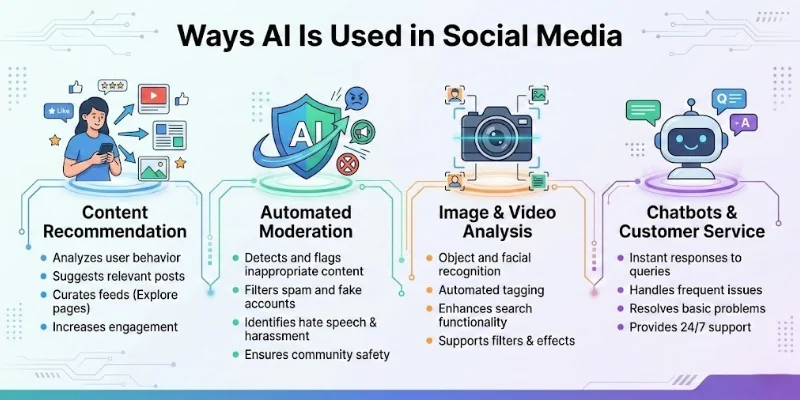
- Content Personalization
- News Feed Ranking & Recommendations
- AI Chatbots & Automated Messaging
- Image & Video Recognition
- Spam & Fake Account Detection
- Sentiment Analysis & Social Listening
- Targeted Advertising
- Trend Prediction & Viral Content Identification
- Automated Content Moderation
- User Behavior Analytics
Let’s learn about each in detail.
1. Content Personalization
AI studies what users like, click, and share to show them personalized content. This keeps users engaged and ensures they see posts that match their interests. Personalization also increases time spent on platforms and encourages regular usage.
Key benefits:
- Tailored posts and suggestions
- Personalized video recommendations
- Content based on past interactions
- Improved user satisfaction
2. News Feed Ranking & Recommendations
AI ranks posts in news feeds so users see the most relevant content first. It predicts which posts a user will likely interact with and adjusts the feed automatically. This keeps users scrolling and interacting longer.
Why it matters:
- Highlights posts that matter most
- Reduces irrelevant content
- Boosts engagement metrics
- Improves user retention
3. AI Chatbots & Automated Messaging
AI powers chatbots that respond instantly to messages on social media. They help businesses answer queries, provide support, and even guide purchases. Users feel supported without waiting for human responses.
What it offers:
- 24/7 customer support
- Automated replies for common questions
- Quick guidance on products or services
- Personalized conversation flow
4. Image & Video Recognition
AI can identify faces, objects, and scenes in images and videos. Social media platforms use it to tag users, suggest filters, or detect inappropriate content. This makes sharing more interactive and automated.
Key uses:
- Automatic tagging of friends
- Object and scene recognition
- AR filters and effects
- Detecting sensitive or prohibited content
5. Spam & Fake Account Detection
AI scans posts and accounts to identify spam, bots, and fake profiles. This keeps platforms safe and ensures users interact with real content. It also prevents scams and misinformation from spreading.
Detection features:
- Automated bot detection
- Identifying suspicious posting patterns
- Blocking spam content
- Reporting fake profiles
6. Sentiment Analysis & Social Listening
AI analyzes comments, posts, and reactions to understand user sentiment. Brands use this data to monitor customer opinions and improve their strategies. It helps platforms stay tuned to trends and user feelings.
Benefits:
- Detects positive or negative sentiment
- Helps brands understand audience
- Monitors trends and opinions
- Guides content strategy
7. Targeted Advertising
AI studies user behavior to deliver ads that match interests. This ensures that ads are relevant, increasing clicks and conversions. Users see fewer irrelevant ads, improving their social media experience.
Key aspects:
- Interest-based targeting
- Predicting ad engagement
- Custom audience creation
- Optimized ad delivery
8. Trend Prediction & Viral Content Identification
AI predicts which posts are likely to go viral by analyzing shares, reactions, and engagement patterns. Platforms can then highlight trending content to maximize user interaction.
Advantages:
- Early detection of viral content
- Highlights trending topics
- Boosts engagement
- Helps brands join popular conversations
9. Automated Content Moderation
AI reviews posts, comments, and images to remove harmful, offensive, or inappropriate content. It helps maintain community standards without human delay.
Moderation features:
- Detecting hate speech
- Removing explicit content
- Filtering harmful media
- Flagging suspicious behavior
10. User Behavior Analytics
AI tracks interactions, time spent, and patterns to understand user behavior. Platforms use this to improve UX, suggest content, and keep users engaged.
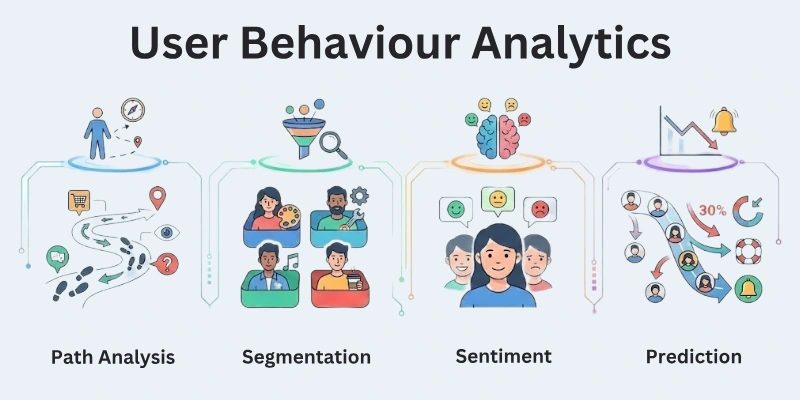
Analytics benefits:
- Understanding peak activity times
- Recognizing preferred content types
- Improving platform features
- Personalizing future interactions
Why AI Is Essential for Social Media Platforms
Social media is highly competitive, and users demand personalized, relevant, and safe experiences. AI ensures posts, ads, and content match user preferences. It reduces spam, predicts trends, and keeps communities healthy. Platforms using AI effectively report higher engagement, retention, and ad revenue, showing why AI is critical for modern social media.
Future of AI in Social Media
AI will become even smarter in understanding emotions, predicting viral content, and automating moderation. Studies show over 80% of social media platforms will use advanced AI by 2026 to personalize feeds and detect harmful content automatically. This will make platforms safer, faster, and more engaging for every user while maintaining privacy and relevance.
Final Note
In this guide, we explored how AI is used in social media platforms to improve personalization, safety, content discovery, and user engagement. You now understand how AI powers feeds, chatbots, moderation, analytics, and advertising to create smarter, safer, and more interactive experiences.
My Personal Recommendation
Start by focusing on AI-powered personalization, moderation, and analytics to enhance social media engagement. These areas give the fastest impact and help you understand audience behavior better. Slowly expand to trend prediction, ad targeting, and sentiment analysis for full platform optimization.
Thank you for reading! To learn more, check the FAQs below on how AI is used in social media platforms.
FAQs: AI and Social Media Platforms
Here are some of the most commonly asked questions related to the role of AI in social media platforms:
AI studies what users like, click, and share. It shows posts, videos, and ads that match user preferences. This creates a more engaging and enjoyable social media experience.
Yes, AI scans posts and profiles for suspicious activity. It blocks fake accounts and removes spam content automatically. Users stay safer and enjoy more authentic interactions.
AI analyzes user behavior to deliver ads that are relevant to interests. This increases clicks and conversions while reducing irrelevant ads. Advertisers get better results, and users see useful promotions.
AI automatically reviews posts, images, and comments for harmful or offensive content. It removes threats before users see them. This keeps social media communities safe and friendly.
Yes, AI tracks engagement patterns and predicts which posts will go viral. It highlights trending content in feeds to maximize user interaction. Brands and users can follow trends early.
AI suggests content, hashtags, and friends based on behavior. It personalizes the feed and notifications for each user. This encourages longer sessions and higher interaction.
AI reads comments, posts, and reactions to detect user emotions. It helps brands understand opinions and improve content strategies. This ensures platforms stay connected with user feelings.




- Be Respectful
- Stay Relevant
- Stay Positive
- True Feedback
- Encourage Discussion
- Avoid Spamming
- No Fake News
- Don't Copy-Paste
- No Personal Attacks
- Be Respectful
- Stay Relevant
- Stay Positive
- True Feedback
- Encourage Discussion
- Avoid Spamming
- No Fake News
- Don't Copy-Paste
- No Personal Attacks
